


Use Shallow Containers
Grow plants in wide, shallow tubs or basins so the floating rosettes can spread and access light evenly, and so you can easily remove excess plant mass without disturbing the whole setup.

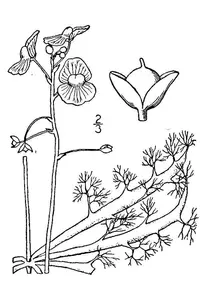
Swollen bladderwort (Utricularia inflata) is a free-floating aquatic carnivorous plant that lives entirely in water, without true roots. It forms airy, wheel-like whorls of inflated bladders and fine filaments that trap tiny aquatic animals.
In nature it occurs in still or slow-moving freshwater, such as ponds, lakes, and quiet wetlands, mainly in the southeastern United States. Its carnivorous habit and need for clean, low-nutrient water make it more challenging than typical aquarium plants.
Those looking to learn how to care for swollen bladderwort should know it prefers full light, soft, nutrient-poor water, and no standard soil or gravel substrate.

Care Difficulty
Hard Care

Light Preference
Full Sun

Water Requirements
Aquatic

Temperature Preference
Warm Climate

Hardiness Zone
7–10

Soil Texture
Sandy, Peaty, Organic-rich

Soil pH
Strongly acidic (4.5–5.5)

Soil Drainage
Waterlogged tolerant

Fertilization
Minimal (feed rarely)
Scan your plant to receive care tips personalized for your specific plant
Available on iOS and Android
This floating carnivorous plant needs abundant light to fuel growth and trap production.
Utricularia inflata lives in water and depends on stable, clean, low‑nutrient aquatic conditions.
This species prefers warm, frost‑free aquatic conditions for reliable growth and flowering.
This aquatic carnivorous species prefers constantly high ambient humidity around its water surface.
This species grows best in nutrient-poor, soft, organic aquatic substrates rather than conventional potting soil.
This floating aquatic bladderwort can adapt well to container culture when water depth and surface area are managed correctly.
This aquatic carnivorous species gains most nutrients from prey, so swollen bladderwort needs only very light supplemental fertilization in culture.
Pruning Utricularia inflata is mainly about removing old or decaying material to keep water quality high and growth manageable.
In cultivation, this free-floating or lightly anchored aquatic is moved or divided more often than traditionally repotted.
This species is most often propagated vegetatively, using divisions of its floating stems rather than seed.
Cold tolerance varies with location, so winter care depends on whether plants grow outdoors year-round or in containers.

Plant Health Check
Not sure what's wrong with your plant? Check your plant's health inside the app.
This species forms buoyant, spoke-like whorls of inflated leaf stalks that act as a floating raft, supporting the flowers and trapping structures at the water surface in still, acidic lakes and ponds.
Along its submerged filaments, it bears tiny bladder-like traps that use rapid suction to capture small aquatic prey such as microcrustaceans and mosquito larvae when trigger hairs are disturbed.
Although native to parts of the southeastern United States, it has become invasive in some water bodies outside its core range, where dense floating mats can alter light penetration, displace native plants, and affect aquatic habitats.

This species lacks true roots and instead relies on its highly divided, filamentous leaves and inflated structures for both nutrient uptake and buoyancy, an unusual strategy among freshwater plants.
Lack of flowers usually comes from insufficient light, water that is too nutrient-rich, or water that is too cool. This species blooms best in warm, sunny, low-nutrient, still or gently moving water during late spring and summer.
Keep your plants happy and healthy with plant identification, disease detection, and easy care guidance.

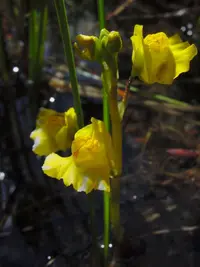
Common bladderwort
Utricularia macrorhiza

Florida yellow bladderwort
Utricularia floridana
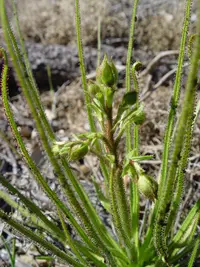
Portuguese sundew
Drosophyllum lusitanicum
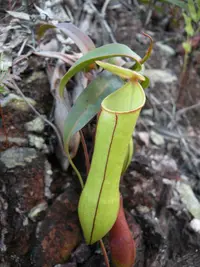
slender pitcher plant
Nepenthes × neglecta

turkey tangle fogfruit
Phyla nodiflora
Utricularia jamesoniana
Utricularia jamesoniana
Texas Star hibiscus
Hibiscus coccineus
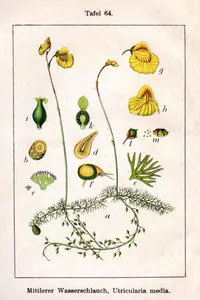
flatleaf bladderwort
Utricularia intermedia