Shear After Flowering
Cut spent flower stems back by 5–8 cm after the main flush to encourage a denser mat and a lighter second bloom without exhausting the plant.

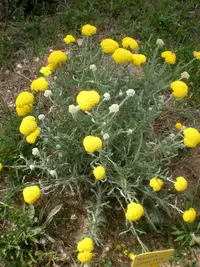
Achillea coarctata is a compact, mat-forming perennial herb in the daisy family, valued mainly as a hardy rock garden or groundcover plant. It forms dense cushions of finely divided, often gray-green foliage, with small clustered flower heads held just above the leaves.
This species occurs naturally in parts of southeastern Europe, often in rocky, dry, and sunny habitats. Its tolerance of poor, well-drained soils and low to moderate moisture makes it relatively easy to maintain once established.
Gardeners who want to care for Achillea coarctata should focus on providing ample light, sharp drainage, and avoiding prolonged wet conditions around the roots.

Care Difficulty
Easy Care

Light Preference
Full Sun

Water Requirements
Low Water

Temperature Preference
Cold Hardy

Hardiness Zone
5–8

Soil Texture
Sandy, Loamy, Rocky

Soil pH
Slightly acidic (6.5–7.0), Slightly alkaline (7.0–7.5)

Soil Drainage
Well-drained

Fertilization
Minimal (feed rarely)
Scan your plant to receive care tips personalized for your specific plant
Available on iOS and Android
This sun-loving perennial performs best in open, bright positions.
This drought-tolerant species prefers infrequent, deep watering rather than frequent light applications.
This hardy perennial tolerates a wide temperature range once established.
This species is highly tolerant of dry air and humidity is rarely a concern outdoors.
Achillea coarctata thrives in lean, well-drained mineral soils that never stay waterlogged.
This species can be grown in containers if the potting setup keeps roots aerated and relatively dry.
This drought-tolerant perennial needs only modest feeding for healthy growth and flowering.
Pruning helps maintain a compact, floriferous clump and extends the display.
This species is usually grown in the ground, so transplanting clumps is more common than container repotting.
Propagation of this yarrow is straightforward and often done during routine maintenance.
This hardy perennial usually needs minimal winter attention in most temperate climates.

Plant Health Check
Not sure what's wrong with your plant? Check your plant's health inside the app.
This species forms tight, mat-like cushions on rocky slopes in parts of the Balkans, an adaptation to exposed, windy sites with thin, fast-draining soils.
Its leaves are densely covered in fine hairs that give a silvery, woolly appearance and help reduce water loss and protect tissues from intense sun.
The plant’s low, compact growth and tolerance of poor, stony substrates make it particularly valued in alpine and rock garden collections focused on growing Achillea coarctata.
This species forms slowly expanding clumps via short rhizomes, but it is not usually invasive in well-managed gardens. It may self-seed lightly. Division or edging every few years keeps spread under control when growing Achillea coarctata.
Keep your plants happy and healthy with plant identification, disease detection, and easy care guidance.