


Encourage natural curling
Mount the plant so that the base is secure but the long leaves hang freely, which lets them develop their characteristic spirals instead of kinking or breaking on shelves or in tight containers.

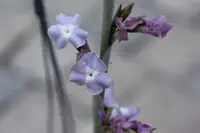
Tillandsia duratii is an epiphytic air plant from dry regions of Bolivia, Paraguay, Argentina, and nearby areas. It naturally clings to trees or rocks rather than growing in soil.
This species forms long, curling, fragrant flower spikes and stiff, twisting leaves that often coil around supports. Its sculptural shape makes it popular in mounted or hanging displays.
It is adapted to bright light, good air movement, and brief wet–dry cycles, which can make it easier to manage indoors than many leafy houseplants once conditions are stable. Understanding how to care for Tillandsia duratii mainly involves providing strong light and thorough but infrequent hydration.

Care Difficulty
Moderate Care

Light Preference
Partial Sun

Water Requirements
Low Water

Temperature Preference
Tropical / Frost Sensitive

Hardiness Zone
10–12

Soil Texture
Rocky, Sandy

Soil pH
Acidic (5.5–6.5)

Soil Drainage
Well-drained

Fertilization
Minimal (feed rarely)
Scan your plant to receive care tips personalized for your specific plant
Available on iOS and Android
This species prefers bright, indirect light with brief periods of gentle direct sun.
Watering focuses on thorough wetting followed by complete drying of the plant.
This air plant thrives in warm, frost-free conditions with good air movement.
This species prefers moderately humid air but tolerates short dry spells if watered correctly.
Tillandsia duratii is an epiphytic air plant and should never be planted in traditional potting soil.
This species can be grown in containers if treated as a mounted air plant rather than a rooted potted plant.
Air plants like Tillandsia duratii benefit from light, periodic feeding rather than heavy fertilization.
Pruning Tillandsia duratii is minimal and focuses on hygiene rather than shaping.
This species is usually mounted rather than potted, so transplanting focuses on remounting and adjusting support.
Propagation of this air plant is usually done by division of offsets rather than by seed at home.
This subtropical air plant is frost sensitive and needs careful winter management in cooler climates.

Plant Health Check
Not sure what's wrong with your plant? Check your plant's health inside the app.
This species produces long, wiry, heavily curved leaves that naturally coil around branches or wires, allowing the plant to anchor itself without roots in its native dry forests and scrublands of Bolivia, Paraguay, and northern Argentina.
Mature plants produce tall, arching inflorescences with large violet flowers that release a strong, sweet scent, especially at night and in the early morning, which is thought to help attract nocturnal or crepuscular pollinators such as moths.
The thick, gray leaves are densely covered with trichomes, specialized scale-like hairs that rapidly absorb water from brief mists or dew and reduce water loss, an adaptation to very dry, high-light environments.

Tillandsia duratii can form spectacular, long-lived clumps where multiple rosettes spiral and twist together over time, creating large sculptural masses that may persist on the same host tree or support for many years in habitat and in cultivation.
This species often needs several years to reach flowering size. Inadequate light intensity, poor air movement, and nutrient depletion after long-term growth can delay blooms. Stable warmth and a slight day–night temperature difference also support bud formation.
Keep your plants happy and healthy with plant identification, disease detection, and easy care guidance.

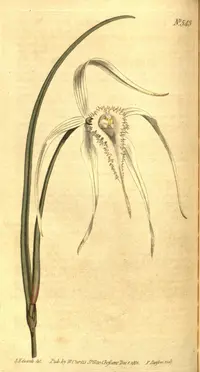
Daddy longlegs orchid
Brassavola cucullata
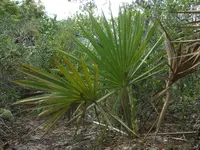
scrub palmetto
Sabal etonia
 POPULAR
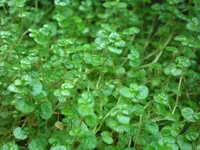
Baby's Tears
Soleirolia soleirolii
Angraecum mauritianum
Angraecum mauritianum
Columnea purpurata
Columnea purpurata

Pothos
Epipremnum aureum 'Global Green'
Alocasia Frydek
Alocasia micholitziana
Straggly pencil orchid
Dendrobium bowmanii