honey mesquite Care (Prosopis glandulosa)

Also known as: torrey mesquite
honey mesquite

About honey mesquite

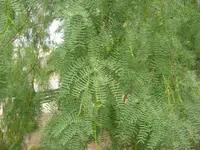
Honey mesquite, Prosopis glandulosa, is a drought-tolerant, woody legume native to arid and semi-arid regions of the southern United States and northern Mexico. It typically grows as a multi-stemmed shrub or small tree with fine, feathery leaves and long, sometimes sharp thorns.

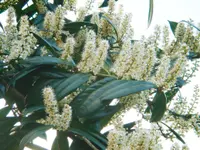
The plant develops fragrant, creamy flower spikes followed by narrow pods that provide food and habitat for wildlife. Its deep root system and high heat tolerance make it a resilient choice for dry landscapes.

Honey mesquite prefers full sun, well-drained soils, and low to moderate moisture, which influences how to care for honey mesquite in cultivation.

Main Plant Requirements

Care Difficulty

Easy Care

Light Preference

Full Sun

Water Requirements

Low Water

Temperature Preference

Warm Climate

Hardiness Zone

7–11

Soil Texture

Sandy, Loamy, Rocky

Soil pH

Neutral (7.0), Alkaline (7.5–8.5)

Soil Drainage

Well-drained

Fertilization

Minimal (feed rarely)

Get Personalized Care Plan

Scan your plant to receive care tips personalized for your specific plant

Available on iOS and Android

How to Care for the honey mesquite

This desert tree prefers intense, direct light to maintain compact, healthy growth.

  • Provide full sun with at least 8–10 hours of direct exposure daily; open, unobstructed sites suit honey mesquite best.
  • It tolerates light partial shade (3–4 hours direct sun) but may grow thinner, with reduced flowering and pod production.
  • Monitor for scorch on young plants during extreme heat; temporary afternoon shade in the first 1–2 summers can reduce stress in very hot regions.

This drought-adapted species needs infrequent, deep watering once established.

  • For in-ground plants, water only when the top 10–15 cm of soil is completely dry, then soak deeply to encourage a strong taproot.
  • In the first 1–2 growing seasons, increase watering during hot, dry periods but still let the soil fully dry between soakings.
  • Signs of overwatering include yellowing leaves and dieback; very limp, browning foliage and twig tip dieback often indicate prolonged drought stress.

This desert native handles heat well but has limits with cold, especially when young.

  • Optimal growth occurs around 75–95°F (24–35°C), with best establishment in warm, dry conditions.
  • Mature plants can survive brief drops near 10°F (-12°C), but young Prosopis glandulosa may be damaged below 20°F (-6°C).
  • It tolerates extreme summer heat above 100°F (38°C) if soil is well-drained; avoid planting in frost pockets where cold air settles in winter.

This desert tree tolerates very low humidity and rarely needs special humidity management in cultivation.

Prosopis glandulosa prefers very lean, fast-draining, often sandy soil that mimics arid habitats.

  • Use a gritty mix such as 50–70% coarse sand or small gravel with the remainder a low-organic, loamy substrate.
  • Ensure rapid drainage; water must pass through the profile quickly without pooling or creating a sticky, compact layer.
  • Aim for slightly alkaline to neutral pH, roughly 7.0–8.0, avoiding strongly acidic mixes rich in peat.
  • Avoid dense clay, heavy compost, or water-retentive potting blends that reduce aeration around the root zone.

This species can be grown in containers, but only with careful attention to root space and stability.

  • Choose a deep, heavy container to anchor the plant and prevent tipping as the crown becomes large and wind-catching.
  • Use a very coarse, mineral-based potting mix so water exits quickly and the lower root zone does not stay damp.
  • Position the container where it will not be shaded by other pots, since reduced light encourages weak, top-heavy growth in honey mesquite.

Prosopis glandulosa is adapted to poor soils and usually needs minimal fertilization in the landscape.

  • Use a light application of compost or a low-dose balanced NPK (such as 10-10-10) only in very poor or depleted soils.
  • Feed once in early spring during active growth; avoid multiple applications through the season.
  • Apply fertilizer at half the label strength to prevent excessive, weak growth and salt buildup.
  • Skip feeding in fall and winter, when growth slows and added nutrients are not required for honey mesquite.

Pruning Prosopis glandulosa focuses on safety, structure, and clearance rather than constant shaping.

  • Carry out main pruning in late winter to early spring before new growth starts.
  • Remove dead, damaged, crossing, or low-hanging branches to improve airflow and access under the canopy.
  • Use clean, sharp loppers or a pruning saw, making smooth cuts just outside the branch collar.
  • Thin crowded interior branches to maintain a strong, open form and reduce storm damage risk.

Prosopis glandulosa is usually grown in the ground, so transplanting young trees is more common than long-term container repotting.

  • Transplant in late winter to early spring, while the tree is dormant and temperatures are mild.
  • Move only young plants; older trees with deep taproots respond poorly to disturbance and establish slowly.
  • Check for circling roots in nursery containers and gently loosen or cut them before planting.
  • Water deeply before and after transplanting, then maintain consistent moisture for several weeks to reduce root stress.

Propagation of Prosopis glandulosa is most reliable from seed, with vegetative methods used less often.

  • Collect ripe pods in late summer to fall, then dry and extract the seeds for storage or sowing.
  • Scarify hard seed coats by lightly sanding or nicking, then soak seeds in warm water for 12–24 hours to improve germination.
  • Sow in a well-drained, gritty mix with warm soil temperatures around 70–85°F and bright light.
  • Use deep containers to accommodate the developing taproot and transplant carefully once seedlings are sturdy.

Prosopis glandulosa is cold hardy in much of its range and usually needs little special winter care in-ground.

  • Mature trees tolerate light to moderate frost, but young plants may be more vulnerable in exposed sites.
  • Apply a 5–8 cm layer of dry mulch around, but not touching, the trunk in colder regions to moderate soil temperature.
  • Move container plants to a bright, frost-free location and keep soil slightly dry during winter dormancy.

Care Tips

Root zone establishment

In the first 2–3 years, keep a 60–90 cm grass- and weed-free ring around the trunk so young roots do not have to compete for water and nutrients during establishment.

Single-leader training

During early growth, select one strong central stem and remove competing leaders and low, narrow-angle branches to build a stable, wind-resistant canopy for long-term structural safety.

Controlled canopy thinning

Every 2–4 years, selectively thin crowded inner branches rather than topping, which improves airflow, reduces limb breakage risk in storms, and keeps the tree more manageable near buildings or driveways.

Dripline protection zone

Avoid heavy vehicle traffic, trenching, or construction within the dripline of the canopy, since compacted or cut roots in this area can lead to delayed limb dieback and increased susceptibility to stress.

Thorn and debris management

Regularly collect fallen pods and thorns from paths and play areas and, when possible, site new trees away from high-traffic zones, as this reduces puncture hazards and makes caring for honey mesquite in residential landscapes safer.

Common Pests and Diseases

Honey mesquite borer

This pest is the larval stage of longhorn beetles that tunnel within trunks and larger branches, disrupting water and nutrient flow. Symptoms include dying branches, frass (sawdust-like material), and exit holes in the wood.

Solution

Prune and destroy heavily infested or dead branches, cutting back to healthy wood, and disinfect tools between cuts. Maintain tree vigor through proper watering and avoid trunk injury; in high-value trees, consult an arborist about timing trunk or soil-applied systemic treatments to protect against new larval infestations.

Pod gall midge

These insects cause galls and distortion on developing seed pods, reducing seed quality and sometimes pod production. Symptoms include swollen, misshapen, or aborted pods with small larvae inside.

Solution

Collect and destroy affected pods before adults emerge to break the life cycle. Encourage beneficial insects by reducing broad-spectrum insecticide use and, in small plantings, prioritize sanitation and removal of heavily affected branches at the end of the season when planning Prosopis glandulosa care.

Nectria canker

This disease is caused by opportunistic fungi that infect through wounds, creating sunken, discolored cankers on branches and sometimes the trunk. Symptoms include dieback beyond the canker, cracked bark, and sometimes small orange fungal structures on the surface in humid conditions.

Solution

Prune out infected branches several inches below visible symptoms during dry weather and destroy the material, avoiding cuts during wet periods. Reduce stress through appropriate watering, avoid mechanical injuries, and disinfect pruning tools between cuts to limit spread.

Texas root rot

This disease, caused by the soilborne fungus Armillaria (also known as Armillaria root rot in some regions), infects roots in poorly drained or compacted soils, leading to sudden wilting, yellowing, and plant collapse. Symptoms include poor growth, dieback, and white fungal growth under the bark at the root collar.

Solution

Remove and destroy severely affected plants including as much root material as possible, and avoid replanting susceptible woody species in the same spot. Improve soil drainage and aeration, avoid overwatering, and select more resistant species or varieties for replanting in known problem areas.

Mistletoe infestation

This parasitic plant attaches to branches and taps into the host’s water and nutrient supply, gradually weakening the tree. Symptoms include dense clumps of evergreen shoots in the canopy, dieback around the infestation, and reduced vigor over time.

Solution

Prune out infested branches at least 30–45 cm below the attachment point when possible and dispose of them away from the site. For heavy infestations where full removal is not possible, repeatedly cut back mistletoe growth to reduce stress on the tree and combine this with general tree health management such as proper irrigation and avoiding additional wounding.

Interesting Facts

Nitrogen-fixing desert tree

Honey mesquite forms symbioses with rhizobial bacteria in its root nodules, allowing it to fix atmospheric nitrogen and enrich very poor, arid soils where many other trees cannot survive.

Deep taproot system

It develops an exceptionally deep taproot relative to its height, which allows the tree to access groundwater far below the surface and explains its persistence in hot, drought-prone rangelands.

High-sugar seed pods

The sweet, protein- and carbohydrate-rich pods have long been used by Indigenous peoples in the southwestern United States and northern Mexico as a traditional food, often ground into meal for porridges and flatbreads.

Botan icon

Did you know?

In parts of the southern Great Plains and southwestern United States, honey mesquite has shifted from a scattered native component of grassland ecosystems to a dominant woody species due to fire suppression and grazing, significantly altering rangeland structure, water balance, and habitat for grazing animals.

FAQs about honey mesquite

Growth is moderately fast in warm, dry climates. Young trees often add 30–60 cm per year, sometimes more with supplemental water. In very poor, unirrigated sites, growth slows significantly but the deep root system still develops steadily.

Grow Healthy Plants with Botan Care

Keep your plants happy and healthy with plant identification, disease detection, and easy care guidance.

Botan plant care app — identify plants on mobile

Explore More Plants