dove pincushions Care (Scabiosa columbaria)

Also known as: small scabious, lesser scabious, pigeon scabious, Morning Bride, Scabiosa, Wild Scabiosa
dove pincushions

About dove pincushions

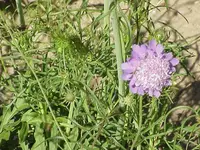
Dove pincushions (Scabiosa columbaria) is a compact, clump-forming perennial grown mainly for its soft, pincushion-like flowers and fine, airy foliage. Plants usually form neat mounds topped with many slender stems carrying pale, pastel-toned blooms.

This species is native to dry grasslands and open slopes in parts of Europe, Asia, and Africa, so it adapts well to sunny, well-drained garden sites. It is generally easy to grow, with good flowering over a long season if conditions are not too wet or humid.

Gardeners who want to care for dove pincushions should know it prefers full sun, moderate moisture, and soil that drains quickly rather than staying heavy or waterlogged.

Main Plant Requirements

Care Difficulty

Easy Care

Light Preference

Full Sun

Water Requirements

Moderate Water

Temperature Preference

Cold Hardy

Hardiness Zone

4–9

Soil Texture

Sandy, Loamy, Rocky

Soil pH

Acidic (5.5–6.5), Slightly acidic (6.5–7.0)

Soil Drainage

Well-drained

Fertilization

Minimal (feed rarely)

Get Personalized Care Plan

Scan your plant to receive care tips personalized for your specific plant

Available on iOS and Android

How to Care for the dove pincushions

This perennial prefers bright conditions with several hours of direct sun for reliable flowering.

  • Provide 6–8 hours of sun daily, with morning sun and light afternoon shade ideal in hot summer climates.
  • Plant dove pincushions in an open spot; it tolerates light partial shade, but too much shade causes weak, floppy growth and fewer blooms.
  • In regions with intense summer sun, protect from harsh late-afternoon exposure to reduce leaf scorch and drying of flower stems.

This plant prefers evenly moist but not saturated soil, especially during establishment and peak flowering.

  • Allow the top 3–5 cm of soil to dry before watering, then water deeply so moisture reaches the root zone, supporting Scabiosa columbaria without causing rot.
  • During hot, dry periods, check soil every 2–3 days; in cool or rainy weather, extend intervals and skip watering if soil feels damp.
  • Watch foliage for cues: yellowing, limp leaves in soggy soil suggest overwatering, while dull, drooping leaves in dry soil signal underwatering.

This species is a hardy perennial suited to temperate climates with cool to warm summers.

  • Optimal growth occurs around 60–75°F (16–24°C), with steady flowering when nights stay above about 50°F (10°C).
  • Mature plants tolerate cold down to about 0–5°F (-18 to -15°C) with good drainage, but young plants benefit from mulch in their first winter.
  • In summer heat above 85–90°F (29–32°C), flowering may slow; provide mulch and avoid reflected heat from walls or paving to limit stress.

This species prefers relatively dry air and usually does not need special humidity control.

  • Target 30–50% humidity, similar to typical indoor and outdoor conditions in many homes and gardens.
  • Plants tolerate dry air well, but prolonged hot drafts can crisp leaf edges and flower buds.
  • If air is extremely dry and hot, provide light shade and water the soil slightly more often instead of misting.

Soil for Scabiosa columbaria should be light, well-drained, and never waterlogged.

  • Use a lean mix such as 50–60% sandy or gritty loam with 20–30% coarse sand or fine gravel and 10–20% compost.
  • Aim for slightly alkaline to neutral pH around 6.8–7.5 to support strong growth and flowering.
  • Improve drainage and aeration by blending in coarse sand, grit, or perlite, especially in heavier native soils.
  • Avoid heavy clay, compacted areas, or beds that stay wet after rain, which quickly cause root and crown rot.

This species suits container growing when drainage and root space are managed carefully.

  • Choose a pot at least 25–30 cm deep so the taproot can extend downward without curling tightly.
  • Select a slightly heavy, stable container if exposed to wind, since mature flower stems can make the plant top-heavy.
  • Raise the pot on feet or bricks so drainage holes stay clear and excess water runs off quickly after rain or watering.

Scabiosa columbaria benefits from modest feeding to support flowering without producing overly lush, weak growth.

  • Use a balanced, slow-release fertilizer (e.g., 10-10-10) or light compost top-dressing at the start of spring for dove pincushions.
  • Apply granular or slow-release fertilizer once in spring and once in midsummer during active growth.
  • Dilute liquid feeds to 1/2 strength if used between main applications to avoid salt buildup in the soil.
  • Stop feeding in late summer to fall so the plant can harden growth before winter dormancy.

Pruning Scabiosa columbaria keeps plants compact, encourages reblooming, and maintains a tidy clump.

  • Deadhead faded flower stems through summer by cutting back to a strong leaf node to extend blooming.
  • Remove dead, diseased, or damaged stems whenever seen, using clean, sharp hand pruners or scissors.
  • In late autumn or very early spring, cut back old, woody, or crowded growth to just above the basal rosette.
  • Lightly shape plants in spring by trimming uneven stems, which improves air flow and supports upright new growth.

This species is more often transplanted in garden beds than kept in long-term containers.

  • Transplant or repot in early spring or early fall when temperatures are mild and soil is workable.
  • Look for roots circling the pot, water running straight through, or declining vigor as signs a container plant needs a larger pot.
  • Move to a container only 1–2 in wider, using well-drained soil, and keep the crown at the same depth to limit stress.
  • Water thoroughly after transplanting, then keep soil lightly moist for 1–2 weeks and shade from intense sun to aid root recovery.

Scabiosa columbaria is commonly propagated by seed and by careful division of mature clumps.

  • Sow seeds in late winter to early spring in trays with well-drained mix, keeping 65–70°F and bright, indirect light for germination.
  • Surface-sow or cover seeds very lightly, then keep the medium evenly moist but not waterlogged.
  • Divide established clumps in early spring or early fall, ensuring each division has healthy roots and several shoots.
  • Plant divisions at the same depth as before and water in well to settle soil around the roots.

This perennial is generally cold hardy in temperate climates and needs only light winter care in the ground.

  • Scabiosa columbaria tolerates typical winter frosts in USDA zones where it is commonly grown, once established.
  • After the first hard frost, cut back spent stems to a low rosette, leaving some stubble to trap insulating snow or mulch.
  • Apply a 5–7 cm layer of mulch around, but not over, the crown to buffer freeze–thaw cycles.
  • Move containers to a sheltered, unheated but frost-sheltered area, and water sparingly so the soil does not stay saturated.

Care Tips

Deadhead With Timing

Remove spent flower heads weekly but leave the last flush of late-season blooms to set some seed if you want gentle self-sowing without the plant becoming weedy.

Pinch For Bushiness

When young plants reach about 10–15 cm tall, pinch out the top 1–2 cm of growth to encourage more side shoots and a higher number of flowering stems later in the season.

Staggered Planting Blocks

Plant in small, spaced groups rather than a single dense mass so air can move between clumps, reducing mildew risk and making it easier to inspect each group for pests or decline.

Renewal By Division

Every 3–4 years, lift and divide older clumps in early spring, discarding the woody center and replanting only vigorous outer pieces to maintain strong flowering and compact growth.

Support In Windy Sites

In exposed gardens, place low ring supports or small twiggy branches around plants early in the season so stems grow through them and stay upright without snapping in strong wind, which is especially helpful when growing dove pincushions in open borders.

Common Pests and Diseases

Aphids

These insects feed on young shoots and flower stalks, causing curling, distortion, and sticky honeydew on foliage and buds.

Solution

Spray plants with a strong stream of water to dislodge colonies, then treat remaining clusters with insecticidal soap or a neem oil solution, repeating weekly until controlled and encouraging beneficial insects like lady beetles in the garden.

Powdery mildew

This disease produces white, powdery patches on leaves and stems, often during warm days with cool, damp nights, leading to yellowing and reduced flowering.

Solution

Improve air circulation by spacing and thinning plants, avoid overhead watering, remove heavily infected leaves, and apply a sulfur- or potassium bicarbonate-based fungicide at the first signs of infection if conditions remain favorable for the disease.

Leaf spot

This disease causes brown to purplish spots on leaves that may merge into larger blotches, leading to premature leaf drop on stressed plants.

Solution

Remove and discard affected leaves, keep foliage as dry as possible by watering at soil level, improve drainage, and if spotting recurs each season, use a labeled ornamental fungicide early in the season to protect new growth.

Spider mites

These pests thrive in hot, dry conditions, causing fine speckling, dull foliage, and delicate webbing on leaves and stems.

Solution

Rinse plants thoroughly with water, focusing on leaf undersides, raise ambient humidity around plantings if possible, and use insecticidal soap or horticultural oil applied at 5–7 day intervals until mite activity subsides as part of overall Scabiosa columbaria care.

Interesting Facts

Specialist butterfly host

This species is an important larval food plant for the marsh fritillary butterfly (Euphydryas aurinia) in parts of its range, linking its survival directly to the conservation of this threatened insect.

Chalk and limestone preference

In the wild it occurs mostly on calcareous soils, such as chalk grasslands and limestone slopes, where its deep roots exploit thin, nutrient-poor substrates that many other perennials cannot tolerate.

Long flowering season

Under suitable conditions it can produce its pincushion-like flower heads from late spring well into autumn, providing a prolonged nectar and pollen source for bees, hoverflies, and other pollinators.

Botan icon

Did you know?

In traditional European falconry, dried flower heads of this species were sometimes used decoratively in equipment and costume, reflecting its long association with open landscapes where falconers hunted.

FAQs about dove pincushions

This species is highly attractive to bees, butterflies, and other beneficial insects due to its nectar-rich flowers. Planting groups of clumps extends bloom time and supports pollinators throughout the warmer months in most temperate gardens.

Grow Healthy Plants with Botan Care

Keep your plants happy and healthy with plant identification, disease detection, and easy care guidance.

Botan plant care app — identify plants on mobile

Explore More Plants