Support Sprawling Stems
In open sites, place low wire hoops or small branchy twigs over young plants so stems can weave through them, which keeps foliage off wet soil and reduces rot and slug damage when growing Spanish clover.

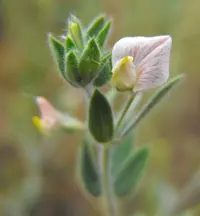
Spanish clover (Acmispon americanus) is a small, herbaceous legume native to dry, open habitats across much of North America. It often grows in prairies, roadsides, and light woodlands.
The plant has slender, branching stems, small divided leaves, and delicate yellow to orange pea-like flowers that attract bees and other pollinators. It typically has a low, somewhat sprawling growth habit.
As a nitrogen-fixing legume, it can tolerate relatively poor soils and helps improve soil fertility over time. It generally prefers sunny conditions, well-drained soil, and moderate moisture.
These traits make it a relatively low-maintenance option for naturalistic gardens and restoration sites, as long as basic needs are met and you understand how to care for Spanish clover.

Care Difficulty
Easy Care

Light Preference
Full Sun

Water Requirements
Low Water

Temperature Preference
Cold Hardy

Hardiness Zone
4–9

Soil Texture
Sandy, Loamy, Rocky

Soil pH
Slightly acidic (6.5–7.0), Neutral (7.0)

Soil Drainage
Well-drained

Fertilization
Minimal (feed rarely)
Scan your plant to receive care tips personalized for your specific plant
Available on iOS and Android
This drought-tolerant native legume prefers open, bright conditions with direct sun.
This species is adapted to dry, well-drained sites and is sensitive to prolonged soil saturation.
This plant is adapted to variable outdoor conditions but responds best within a moderate temperature band.
This drought-adapted species tolerates a wide humidity range, so humidity control is rarely critical.
This species prefers lean, fast-draining mineral soils that do not stay wet.
This species can be grown in containers if provided with very sharp drainage and a relatively shallow, wide root zone.
This nitrogen-fixing native shrub needs very little feeding, so fertilizer use for Spanish clover should stay light and infrequent.
Pruning Acmispon americanus focuses on light shaping and removal of dead material rather than heavy cutting.
This species is usually grown in the ground, so care focuses on thoughtful transplanting rather than frequent repotting.
Propagation of this native legume is most practical from seed, with simple conditions and timing.
This hardy native generally needs little special winter care in its normal outdoor range.

Plant Health Check
Not sure what's wrong with your plant? Check your plant's health inside the app.
This native legume hosts symbiotic rhizobia bacteria in its root nodules, allowing it to fix atmospheric nitrogen and improve soil fertility in disturbed or nutrient-poor sites across western North America.
It serves as a larval food plant for several native blue and hairstreak butterflies, making it an important component of nectar and caterpillar habitat in dry grasslands and open woodland edges.
The species occurs from lowland coastal scrub to montane slopes and dry forest clearings, tolerating a wide range of soils and moisture regimes as long as drainage is good.

Acmispon americanus often acts as an early-successional species in post-fire habitats, quickly reestablishing in burned areas and helping stabilize soil while longer-lived shrubs and trees recover.
Insufficient light, poor soil fertility, or heavy, wet conditions commonly reduce flowering. Light pruning after a bloom flush, avoiding excess nitrogen fertilizer, and maintaining moderate moisture usually improve bud formation and support growing Spanish clover in home gardens.
Keep your plants happy and healthy with plant identification, disease detection, and easy care guidance.