


Remove spent leaves
Regularly pinch or cut away yellowing or shriveled leaves at the base to reduce disease risk and direct energy into new foliage and flower production.

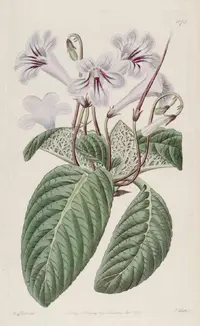
Rexia, Streptocarpus rexii, is a compact, herbaceous houseplant known for its soft, textured leaves and showy tubular flowers held above the foliage. It belongs to the African violet family and tends to form low rosettes rather than tall stems.
In nature, it grows on rocky, shaded slopes in South Africa, often in humid, sheltered spots. These origins explain its preference for bright, indirect light, moderate moisture, and airy, well-drained soil.
Its relatively modest size, long flowering season, and tolerance of indoor conditions make it suitable for windowsills and shelves. Once its basic needs are understood, it is reasonably straightforward to care for Rexia.

Care Difficulty
Moderate Care

Light Preference
Bright Indirect Light

Water Requirements
Moderate Water

Temperature Preference
Tropical / Frost Sensitive

Hardiness Zone
10–11

Soil Texture
Loamy, Peaty, Organic-rich

Soil pH
Acidic (5.5–6.5), Slightly acidic (6.5–7.0)

Soil Drainage
Moist but well-drained

Fertilization
Moderate (every 2–4 weeks)
Scan your plant to receive care tips personalized for your specific plant
Available on iOS and Android
This species prefers bright, indirect light and is sensitive to harsh sun.
Streptocarpus rexii prefers evenly moist but not saturated soil.
This plant prefers cool to moderately warm temperatures with little fluctuation.
This species prefers moderate, stable humidity to keep foliage and flowers in good condition.
Streptocarpus rexii prefers a light, airy, well-drained medium that holds some moisture but never stays wet.
This species is well suited to container growing due to its compact, fibrous root system.
This plant responds well to light, consistent feeding during its active growing season.
Pruning helps Streptocarpus rexii stay compact and encourages continued flowering.
This species prefers slightly snug pots and only needs repotting when clearly rootbound.
Streptocarpus rexii is commonly propagated from leaf cuttings for uniform new plants.
This plant is frost-sensitive and needs mild, stable conditions through winter.

Plant Health Check
Not sure what's wrong with your plant? Check your plant's health inside the app.
In its natural habitat this species often produces just one long, strap-shaped leaf lying flat against rock faces, an adaptation that maximizes light capture in shaded cliff environments.
It is native to moist, shaded sandstone cliffs and rock outcrops in South Africa, where its roots anchor in thin crevices with very little soil but constant seepage of water.
This species has been heavily used in breeding programs and is a major parent of many modern florist streptocarpus hybrids, valued for its flower form and long blooming period.

Unlike most flowering plants, this species shows a form of anisocotyly, where one cotyledon (seed leaf) continues to grow and becomes the main leaf while the other stops growing early, giving rise to its characteristic one-sided rosette form.
Poor flowering usually comes from low light, depleted nutrients, or the plant being pot-bound. Check that it receives bright but gentle light, regular balanced feeding, and timely division or repotting to maintain vigorous, repeat blooming.
Keep your plants happy and healthy with plant identification, disease detection, and easy care guidance.

New York ironweed
Vernonia noveboracensis
Alpine Butterwort
Pinguicula alpina
Pilea rotundinucula
Pilea rotundinucula
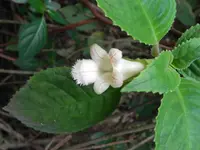
Drymonia serrulata
Drymonia serrulata
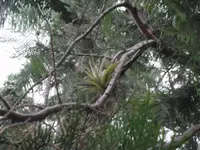
Tillandsia brachycaulos
Tillandsia brachycaulos
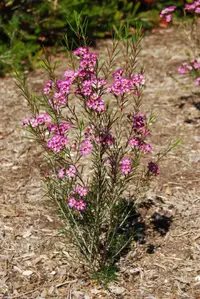
Geraldton wax
Chamelaucium uncinatum
 POPULAR
False Shamrock
Oxalis triangularis
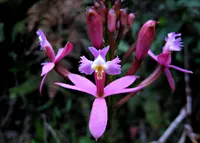
Lopsided star orchid
Epidendrum secundum