Dormancy handling
Lift and store the tubers only after leaves have fully yellowed and withered, then keep them in a dry, airy medium such as coarse sand at 40–50°F to secure a proper dry summer dormancy.

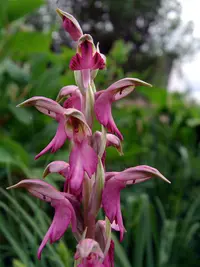
Holy orchid, Anacamptis sancta, is a terrestrial orchid species that grows from an underground tuber and produces a single upright flowering stem. It typically carries narrow leaves at the base and a tight cluster of purple to pink flowers near the top of the stem.
This species is native to dry, rocky habitats in parts of the eastern Mediterranean, where it experiences cool, moist winters and hot, dry summers. It is considered challenging for beginners because it needs a marked rest period and dislikes constant moisture. Gardeners who want to learn how to care for Holy Orchid should focus on providing very free-draining soil, bright light, and careful watering during active growth only.

Care Difficulty
Hard Care

Light Preference
Full Sun

Water Requirements
Low Water

Temperature Preference
Warm Climate

Hardiness Zone
9–11

Soil Texture
Sandy, Rocky, Loamy

Soil pH
Slightly acidic (6.5–7.0), Neutral (7.0)

Soil Drainage
Well-drained

Fertilization
Minimal (feed rarely)
Scan your plant to receive care tips personalized for your specific plant
Available on iOS and Android
This Mediterranean terrestrial orchid prefers bright, open conditions similar to its native grasslands.
This species is adapted to wet winters and dry summers, so watering must follow a clear seasonal rhythm.
This orchid is adapted to mild, Mediterranean climates with cool, moist winters and hot, dry summers.
This Mediterranean terrestrial orchid tolerates relatively dry air but benefits from moderate humidity during active growth.
Anacamptis sancta prefers mineral, free-draining soil that mimics its rocky native habitats.
This species can grow in containers if given a deep, sharply drained, mineral-rich mix.
This terrestrial orchid is adapted to low-nutrient soils, so fertilizing Anacamptis sancta should be light and infrequent.
Anacamptis sancta needs only minimal pruning focused on hygiene rather than shaping.
This species is usually grown in the ground or in specialist pots and dislikes frequent disturbance of its tubers.
Propagation of Anacamptis sancta is specialized and often left to expert growers and conservation programs.
This Mediterranean orchid prefers mild, relatively dry winters and is only moderately frost tolerant.

Plant Health Check
Not sure what's wrong with your plant? Check your plant's health inside the app.
This terrestrial orchid is naturally restricted to dry, rocky habitats of the eastern Mediterranean, including parts of Greece, Cyprus, Turkey, and nearby regions, where it is tied to calcareous, lime-rich soils.
Flowering typically occurs in early spring, often from March to April, allowing it to complete its reproductive phase before summer drought stresses its shallow, seasonal habitats.
Its pink to magenta flowers have a three-lobed lip with a characteristic yellow tip and purple spotting, a floral pattern that helps differentiate it from similar Mediterranean Anacamptis species.

This species is considered regionally rare or threatened across much of its range due to habitat loss and agricultural intensification, and in some countries it is legally protected, making the conservation of its remaining dry grassland and phrygana habitats a priority for orchid conservation programs.
Lack of flowering usually comes from insufficient light, overly rich or constantly wet soil, or disturbance of the tubers. This species also needs a natural cool winter rest; without it, flower spikes may not form.
Keep your plants happy and healthy with plant identification, disease detection, and easy care guidance.