Rocky root zone
Plant in a shallow, gritty pocket among rocks or gravel so the crown stays high and dry while roots access cool soil, which mimics its alpine habitat and greatly reduces rot risk.

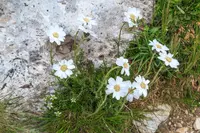
Alpine sneezewort (Achillea oxyloba) is a compact, clumping perennial from high mountain regions of central and southern Europe. It naturally grows in alpine meadows and rocky slopes, where conditions are cool, sunny, and well drained.
The plant forms low mounds of finely divided, gray-green foliage topped with flat clusters of small white flower heads. It stays relatively short and tidy compared to many other yarrows.
Its tolerance of wind, cold, and poor, stony soils makes it suitable for rock gardens and exposed sites. Once established, it is generally low maintenance, as long as the soil does not stay wet. Gardeners who learn how to care for Alpine Sneezewort usually find it long lived and reliable.

Care Difficulty
Easy Care

Light Preference
Full Sun

Water Requirements
Low Water

Temperature Preference
Cold Hardy

Hardiness Zone
4–7

Soil Texture
Sandy, Loamy, Rocky

Soil pH
Slightly acidic (6.5–7.0), Slightly alkaline (7.0–7.5)

Soil Drainage
Well-drained

Fertilization
Minimal (feed rarely)
Scan your plant to receive care tips personalized for your specific plant
Available on iOS and Android
This alpine perennial thrives in bright, open sites with strong sun exposure.
This species prefers dry, free-draining conditions and is sensitive to prolonged wet soil.
This hardy alpine yarrow tolerates a wide temperature range when planted in suitable, well-drained soil.
Humidity is rarely critical for Achillea oxyloba, which thrives in dry, open air.
Achillea oxyloba prefers lean, well-drained mineral soil that never stays waterlogged.
This species can be grown in containers if the pot and medium stay sharply drained and not overly rich.
This alpine perennial needs only modest feeding, as excess nutrients reduce flowering and cause floppy growth in Alpine Sneezewort.
Pruning Achillea oxyloba helps maintain a compact mound and prolongs flowering.
This species is usually grown in rock gardens or borders, so transplanting clumps is more common than repotting.
Achillea oxyloba is commonly propagated by division, with seed and cuttings as additional options for gardeners needing more plants.
This hardy alpine yarrow tolerates typical temperate winters and usually needs minimal winter care in the ground.

Plant Health Check
Not sure what's wrong with your plant? Check your plant's health inside the app.
This species is naturally restricted to a small area of the eastern Alps, mainly in Austria and northern Italy, where it grows on rocky limestone slopes and subalpine grasslands above the tree line.
The plant has finely dissected, almost fern-like leaves that reduce wind resistance and water loss, an adaptation that helps it cope with intense sun, cold winds, and limited soil moisture in exposed alpine habitats.
It typically flowers in mid to late summer at high elevations, taking advantage of the brief alpine growing season with dense white flower clusters that attract a range of high-altitude pollinating insects.
This species forms small clumps and slowly widens by short rhizomes and self-seeding, but it is not usually aggressive. Light deadheading and removing unwanted seedlings keep it in bounds even in rock gardens and small beds.
Keep your plants happy and healthy with plant identification, disease detection, and easy care guidance.