Edge containment
Use a continuous strip of shallow edging or a buried root barrier around beds to prevent this rhizomatous aster from slowly spreading into lawns or paths while still allowing it to form a natural-looking colony.

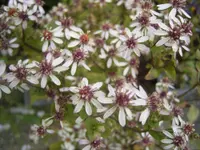
White wood aster, Eurybia divaricata, is a hardy woodland perennial native to eastern North America. It naturally grows in deciduous forests and along shaded slopes. The plant forms loose, airy clumps with branching stems, heart-shaped leaves, and many small white star-like flowers that appear late in the season. This gives it strong value for extending garden bloom time. It is generally easy to grow if its woodland needs are met. It prefers partial shade, consistent but not waterlogged moisture, and well-drained, humus-rich soil. Understanding how to care for white wood aster helps gardeners use it effectively as a low-maintenance ground layer in shade gardens.

Care Difficulty
Easy Care

Light Preference
Partial Shade

Water Requirements
Moderate Water

Temperature Preference
Cold Hardy

Hardiness Zone
3–8

Soil Texture
Loamy, Silty, Organic-rich

Soil pH
Acidic (5.5–6.5), Slightly acidic (6.5–7.0)

Soil Drainage
Moist but well-drained

Fertilization
Minimal (feed rarely)
Scan your plant to receive care tips personalized for your specific plant
Available on iOS and Android
This woodland perennial prefers dappled light that mimics an open forest edge.
This species prefers consistently moist but not saturated soil once established in the garden.
This hardy perennial is well adapted to temperate outdoor conditions across much of North America.
This species handles typical outdoor humidity well, so moisture in the air is rarely a concern.
Eurybia divaricata prefers a loose, humus-rich soil that mimics a woodland floor.
This species can be grown in containers for shady patios or balconies.
This woodland perennial needs only light feeding in most garden soils, especially when used as white wood aster in native plantings.
Pruning Eurybia divaricata is straightforward and mainly done to tidy plants and support dense, floriferous clumps.
This species is usually grown in the ground, so focus on transplanting clumps rather than frequent container repotting.
Eurybia divaricata plant care includes simple propagation methods suited to home gardens.
This is a cold-hardy perennial that usually needs minimal winter care in its outdoor hardiness range.

Plant Health Check
Not sure what's wrong with your plant? Check your plant's health inside the app.
This species is naturally adapted to dry, open deciduous woods in eastern North America, where it thrives in dappled shade and thin, rocky soils that many other asters cannot tolerate.
It flowers late in the season, often from late summer into mid‑fall, providing nectar and pollen for native bees, hoverflies, and butterflies when many other woodland plants have already finished blooming.
Its foliage often turns deep purplish or nearly black in partial shade due to high levels of anthocyanins, pigments that can help protect the leaves from light stress and temperature fluctuations.

This species plays an important understory role in forest restoration plantings in eastern North America, where its dense, fibrous root system helps stabilize leaf litter and shallow soils on slopes while supporting diverse late‑season pollinator communities.
This species spreads steadily by short rhizomes and self-seeding but is usually not aggressive in typical garden conditions. It forms loose colonies over time, especially in moist, humus-rich shade, and is easy to thin or transplant if needed.
Keep your plants happy and healthy with plant identification, disease detection, and easy care guidance.