Support tall stems
In windy or exposed sites, place low, unobtrusive ring supports or short bamboo canes around the clump in late spring to keep the tall flowering stems upright and reduce lodging during summer storms.

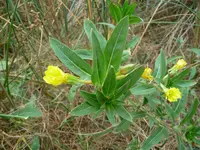
Oakes' evening primrose (Oenothera oakesiana) is a short-lived perennial or biennial wildflower native to coastal areas of eastern North America. It often grows in sandy dunes, disturbed ground, and open sunny spots.
Plants form upright clumps with narrow leaves and soft yellow, four-petaled flowers that open mainly in the evening, attracting moths and other night pollinators. Seedlings often appear around the original plant, so it can self-sow where conditions suit it.
This species prefers full sun, well-drained, rather poor soil, and moderate moisture, and it tolerates coastal wind and salt spray. These traits make it relatively undemanding to care for Oakes' evening primrose in suitable outdoor sites.

Care Difficulty
Easy Care

Light Preference
Full Sun

Water Requirements
Moderate Water

Temperature Preference
Cold Hardy

Hardiness Zone
4–8

Soil Texture
Sandy, Loamy, Silty

Soil pH
Slightly acidic (6.5–7.0), Neutral (7.0)

Soil Drainage
Well-drained

Fertilization
Minimal (feed rarely)
Scan your plant to receive care tips personalized for your specific plant
Available on iOS and Android
This sun-loving perennial performs best with strong, direct light for much of the day.
This species prefers dry to moderately moist conditions and is adapted to occasional drought.
This hardy wildflower tolerates a wide temperature range, from cool springs to hot summers.
Humidity is not a major factor for Oenothera oakesiana, which thrives in relatively dry air.
This species prefers light, well-drained mineral soils that do not stay wet for long periods.
This species can be grown in containers if the pot is set up to drain quickly and stay relatively dry.
This species is adapted to low-fertility soils, so use light feeding to support flowering rather than rapid leaf growth.
Pruning Oenothera oakesiana is mainly used to tidy plants and encourage repeat flowering.
This species is usually grown in the ground, so focus on thoughtful transplanting rather than frequent repotting.
Multiplying Oenothera oakesiana is most practical by seed and occasional division of established clumps.
This hardy perennial usually overwinters well in most temperate gardens with minimal intervention.

Plant Health Check
Not sure what's wrong with your plant? Check your plant's health inside the app.
This evening primrose is naturally restricted to sandy shorelines and dune systems along the northeastern Atlantic coast of North America, where it is adapted to shifting, nutrient-poor marine sands.
Botanical research has shown that Oenothera oakesiana likely arose through hybridization within the Oenothera biennis complex, which helps explain its intermediate floral and vegetative characters compared with closely related evening primrose species.
Plants of this species withstand regular salt spray and occasional overwash by storm tides, an adaptation that allows them to occupy exposed foredune and upper beach habitats that many inland evening primrose relatives cannot tolerate.
This species is highly attractive to night-flying moths and also visited by bees at dusk and early morning. Its pale, fragrant flowers provide nectar and pollen, making it useful in wildlife-friendly and pollinator-supporting gardens.
Keep your plants happy and healthy with plant identification, disease detection, and easy care guidance.