Encourage Succession Bloom
Stagger sowing or planting in 2–3 waves, spaced 2–3 weeks apart in spring, to prolong the overall flowering window and keep the bed looking full as earlier plants finish.

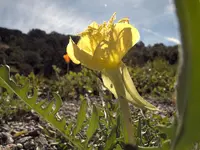
Yellow evening primrose, Oenothera flava, is a hardy perennial wildflower known for its bright yellow, cup-shaped blooms that often open in the evening. It typically forms loose clumps with upright stems and narrow leaves, giving a soft, meadow-like look.
This species is native to parts of North America, where it grows in open, often rocky or sandy habitats with good drainage. It usually adapts well to garden conditions if provided with full sun and moderately moist, well-drained soil.
Gardeners often find it relatively easy to grow, as it tolerates poor soils and some drought once established. Understanding how to care for yellow evening primrose starts with choosing a sunny, open spot and avoiding waterlogged ground.

Care Difficulty
Easy Care

Light Preference
Full Sun

Water Requirements
Moderate Water

Temperature Preference
Cold Hardy

Hardiness Zone
4–8

Soil Texture
Sandy, Loamy, Rocky

Soil pH
Acidic (5.5–6.5), Slightly acidic (6.5–7.0)

Soil Drainage
Well-drained

Fertilization
Minimal (feed rarely)
Scan your plant to receive care tips personalized for your specific plant
Available on iOS and Android
This sun-loving perennial flowers best with strong light and open exposure.
This species prefers slightly dry conditions and suffers more from excess moisture than from short dry spells.
This hardy perennial copes with a broad temperature range but performs best in moderate conditions.
This species is adapted to dry, open habitats, so humidity is rarely a concern outdoors.
Oenothera flava prefers light, fast-draining mineral soils that do not stay wet after rain or irrigation.
This species can be grown in containers if the pot is managed to stay sharply drained and not overly moist.
This species usually thrives in lean soils, so yellow evening primrose needs only light feeding in cultivation.
Pruning supports flowering performance and keeps Oenothera flava compact and tidy.
This plant is most often grown in the ground, so care focuses on transplanting young stock rather than frequent repotting.
Propagation of Oenothera flava is commonly done from seed and by careful division of established clumps.
This species is generally cold hardy in temperate regions and needs only modest winter care in the ground.

Plant Health Check
Not sure what's wrong with your plant? Check your plant's health inside the app.
This species naturally occurs along cold mountain streams and moist meadows in the central and southern Rocky Mountains, where its roots tolerate periodically saturated yet fast-draining soils.
Unlike many evening primroses that open primarily at night, its bright yellow flowers open in daylight and are visited by a range of diurnal pollinators, including solitary bees and hoverflies.
The flowers shift from a fresh bright yellow to a deeper or slightly orange-tinged yellow as they age, which likely helps pollinators distinguish newly opened, more rewarding blooms from older ones.
This species spreads by both seed and short rhizomes, forming loose clumps rather than dense mats. It can self-seed around favorable sites, but regular deadheading and lifting unwanted seedlings usually prevent it from becoming troublesome in most gardens.
Keep your plants happy and healthy with plant identification, disease detection, and easy care guidance.