


Minimal mulching
Use only a very thin, gritty mulch layer (such as 0.5–1 in of coarse sand or fine gravel) around the root zone to suppress weeds while keeping the crown exposed and dry to reduce rot risk.

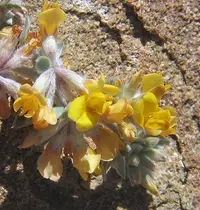
Silver bird's-foot trefoil (Acmispon argophyllus) is a small, drought-tolerant perennial in the pea family, often used in dry gardens and restoration plantings. It typically forms low, spreading mounds with fine, silvery foliage and small yellow pea-like flowers that attract pollinators.
This species is native to arid and coastal regions of western North America, especially California, where it grows on rocky or sandy slopes. Its preference for well-drained, lean soils and dry conditions makes it suitable for low-water landscapes but less suited to consistently wet or rich garden beds.
Those looking to care for silver bird's-foot trefoil should provide plenty of sun, fast-draining soil, and avoid frequent watering once the plant is established.

Care Difficulty
Moderate Care

Light Preference
Full Sun

Water Requirements
Low Water

Temperature Preference
Warm Climate

Hardiness Zone
8–11

Soil Texture
Sandy, Rocky, Loamy

Soil pH
Slightly acidic (6.5–7.0), Slightly alkaline (7.0–7.5)

Soil Drainage
Well-drained

Fertilization
Minimal (feed rarely)
Scan your plant to receive care tips personalized for your specific plant
Available on iOS and Android
This drought-adapted legume prefers bright, open exposure typical of coastal scrub and chaparral sites.
This species is adapted to dry, fast-draining conditions and is sensitive to excess moisture around the roots.
This low shrub is naturally adapted to mild, dry-summer climates with cool, wet winters.
This species prefers dry air and does not need elevated humidity.
This dryland legume needs very fast-draining, mineral-rich soil with plenty of air around the roots.
This species can be grown in containers if the setup mimics dry, sharply drained ground.
This drought-adapted native needs minimal feeding, so focus on modest support rather than heavy fertilization for silver bird's-foot trefoil.
Pruning Acmispon argophyllus is mainly corrective, keeping the plant compact and healthy without heavy shaping.
This species is most often grown in the ground, so management focuses on careful transplanting rather than frequent repotting.
Propagation of Acmispon argophyllus is usually done from seed, which reflects its natural regeneration in the wild.
Acmispon argophyllus is generally hardy in mild, dry-winter climates and needs little active winter care once established.

Plant Health Check
Not sure what's wrong with your plant? Check your plant's health inside the app.
The leaves are densely covered with fine white hairs that give a silvery, woolly appearance and help reflect intense sunlight while reducing water loss in its dry coastal habitats.
This species is naturally restricted to California’s Channel Islands and a few nearby coastal areas, where it has evolved as a distinctive endemic adapted to maritime winds, salty air, and poor rocky soils.
As a member of the legume family, it forms symbioses with nitrogen-fixing bacteria in its roots, allowing it to thrive in nutrient-poor sites and contribute to local soil fertility.

Some insular forms of this species, historically treated as separate subspecies on individual Channel Islands, illustrate classic island biogeography patterns where small genetic and morphological differences arise as plant populations adapt in isolation.
This species spreads modestly through short, branching stems and seed, forming loose, low mats rather than dense, smothering cover. In garden settings it is usually manageable, especially in lean, well-drained soils and low-fertility conditions.
Keep your plants happy and healthy with plant identification, disease detection, and easy care guidance.

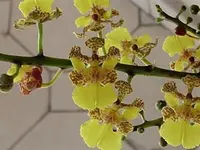
Trichocentrum cebolleta
Trichocentrum cebolleta
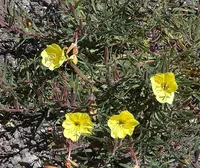
longflower evening primrose
Oenothera affinis
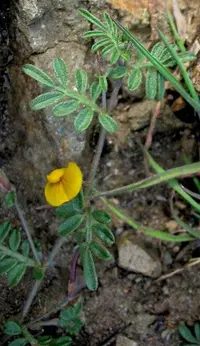
strigose lotus
Acmispon strigosus
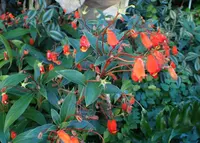
woolly kohleria
Kohleria hirsuta
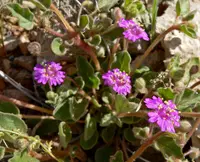
trailing windmills
Allionia incarnata
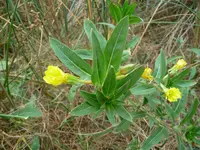
Oakes' evening primrose
Oenothera oakesiana
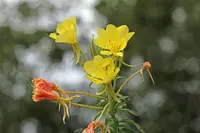
trumpet evening primrose
Oenothera jamesii
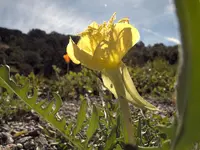
yellow evening primrose
Oenothera flava