Brazilian ruellia Care (Ruellia elegans)

Also known as: Brazilian Petunia
Brazilian ruellia

About Brazilian ruellia

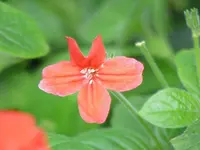
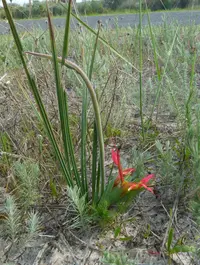
Brazilian ruellia (Ruellia elegans) is a compact, shrubby perennial grown mainly for its vivid red, tubular flowers and lush green foliage. It is often used as a bedding plant or accent in warm gardens. Native to Brazil, it thrives in mild, frost-free climates and tends to flower over a long season when conditions are stable. Plants usually form a neat clump and can attract hummingbirds and butterflies outdoors.

Ruellia elegans is considered fairly easy to grow where temperatures stay warm, as long as it receives good light, regular moisture, and well-drained soil. Understanding how to care for Brazilian ruellia helps it maintain dense growth and reliable flowering, both in containers and in the ground.

Main Plant Requirements

Care Difficulty

Moderate Care

Light Preference

Full Sun

Water Requirements

Regular Water

Temperature Preference

Tropical / Frost Sensitive

Hardiness Zone

9–11

Soil Texture

Sandy, Loamy, Organic-rich

Soil pH

Acidic (5.5–6.5), Slightly acidic (6.5–7.0)

Soil Drainage

Moist but well-drained

Fertilization

Light (every 4–6 weeks)

Get Personalized Care Plan

Scan your plant to receive care tips personalized for your specific plant

Available on iOS and Android

How to Care for the Brazilian ruellia

Ruellia elegans performs best in bright outdoor light with some protection from harsh afternoon sun.

  • Provide 4–6 hours of morning sun or filtered light, with light afternoon shade to reduce leaf scorch, especially in hotter regions.
  • Plant in a position that gets full sun in cool climates, but shift to part shade (especially after 2–3 p.m.) where summer highs are intense.
  • Watch for pale, leggy stems as a sign of too little light, and brown, crisp leaf edges as a sign of excessive direct sun exposure.

Ruellia elegans prefers consistently moist but not waterlogged soil, with slight drying between waterings.

  • Water when the top 3–5 cm of soil feels dry, soaking the root zone thoroughly, then allow excess to drain away fully.
  • Use soil with good drainage to limit root rot; yellowing, soft leaves often signal overwatering, while wilting and crisp edges indicate underwatering.
  • In spring and summer, expect to water more often during active growth, then reduce frequency in cooler months as evaporation and growth slow.

This species grows best in warm, frost-free conditions with only moderate temperature swings.

  • Aim for 65–80°F (18–27°C) for strong growth, as sustained warmth supports continuous flowering and healthy foliage density.
  • Protect the plant when temperatures approach 32°F (0°C); frost can kill top growth and repeated freezes may kill the roots.
  • In hot summers above 90°F (32°C), provide afternoon shade and mulch to keep roots cooler, and avoid planting in spots with intense reflected heat.

Ruellia elegans grows best in moderate humidity but usually handles typical indoor air if not extremely dry.

  • Aim for 40–60% humidity; short dry spells are tolerated but prolonged very dry air can crisp leaf edges.
  • Watch for curling, browning tips, and slowed growth as signs of low humidity stress in Brazilian ruellia.
  • Increase humidity with a pebble tray, grouping plants, or a small nearby humidifier rather than frequent misting.

Ruellia elegans prefers loose, well-drained, organic-rich soil that does not stay waterlogged.

  • Use a mix of 2 parts all-purpose potting soil, 1 part compost, and 1 part perlite or coarse sand for structure and drainage.
  • Aim for slightly acidic to neutral pH around 6.0–7.0, which supports nutrient availability and healthy root growth.
  • Ensure the soil feels springy and crumbly, not compacted, so roots receive enough air and excess water can drain quickly.
  • Avoid heavy clay, peat-only mixes, or containers without drainage, as these keep roots wet and promote rot.

This species adapts well to container growing when the pot supports its spreading habit and moisture needs.

  • Choose a wide, stable container to support lateral spread and prevent the plant from tipping as stems elongate.
  • Use a pot material like terracotta if extra evaporation is needed, or plastic if soil dries too fast in your conditions.
  • Leave a few centimeters between the root ball and pot wall to balance root space with steady moisture, avoiding deep, narrow pots.

Ruellia elegans responds well to moderate feeding during the warm growing season.

  • Use a balanced liquid fertilizer (around 10-10-10) diluted to 1/2 strength every 4–6 weeks in spring and summer.
  • Alternatively, apply a thin layer of compost or a slow-release granular fertilizer at the start of the growing season.
  • Stop feeding in fall and winter when growth slows, especially for Brazilian ruellia kept indoors.
  • Always water before liquid feeding to avoid root burn and monitor foliage for signs of excess salts.

Pruning supports compact growth and sustained flowering in Ruellia elegans.

  • Carry out main pruning in late winter or early spring before vigorous new growth starts.
  • Use clean, sharp shears to remove dead, damaged, or crossing stems back to healthy tissue.
  • Lightly shorten leggy shoots to maintain a bushy shape and increase branching and flower production.
  • Deadhead spent blooms and trim weak growth through the season to keep plants tidy and flowering well.

Container-grown Ruellia elegans or young garden plants benefit from occasional transplanting for healthy root development.

  • Check for roots circling the pot, emerging from drainage holes, or slowed growth as signs it needs a larger container.
  • Plan repotting or transplanting in spring after frost risk passes, typically every 2–3 years for potted plants.
  • Move to a pot 2–5 cm wider with fresh, well-drained mix, keeping the root ball at the same soil level.
  • Water thoroughly after moving, then keep soil slightly moist and out of strong sun for a week to reduce transplant shock.

Ruellia elegans is commonly propagated by stem cuttings, division, and seeds.

  • Take 8–10 cm softwood stem cuttings in late spring or early summer and remove lower leaves.
  • Root cuttings in a moist, well-drained mix under bright, indirect light and high humidity until new growth appears.
  • Divide clumps in spring, replanting sections with healthy roots at the same depth and watering well.
  • Sow fresh seeds on the surface of a light seed mix, keep slightly moist at 68–75°F, and provide bright light for germination.

Ruellia elegans is frost-sensitive and needs protection in climates with freezing winters.

  • In USDA zones colder than 9, grow in containers and move plants indoors before temperatures drop near 32°F.
  • Outdoors in mild climates, apply 5–8 cm of mulch around the root zone to buffer temperature swings.
  • Trim back frost-damaged stems in late winter and resume normal watering as new growth appears.

Care Tips

Pinch For Bushiness

Pinch out soft shoot tips every 3–4 weeks in spring and early summer to keep plants compact and encourage a higher density of flower buds along the stems.

Staggered Rejuvenation

Cut back one-third of the oldest, woodiest stems to 5–8 cm above the soil each year to maintain vigorous new growth without sacrificing all current-season flowers.

Low-Stress Staking

Use short, discrete ring stakes or small shrub supports early in the season so developing stems grow through the support and are less likely to flop under the weight of continuous bloom.

Targeted Deadheading

Remove spent flower clusters by snipping just below the faded blooms rather than at the stem base to reduce self-seeding while preserving healthy foliage and future flowering points.

Pest Monitoring Routine

Inspect the undersides of leaves and tender shoot tips weekly for whitefly and spider mite, and at the first sign of pests use a horticultural soap spray, repeating every 5–7 days until populations are controlled when growing Brazilian ruellia in warm, sheltered spots.

Common Pests and Diseases

Aphids

This pest clusters on tender shoot tips and flower buds, sucking sap and causing curling, distortion, and sticky honeydew that can lead to sooty mold.

Solution

Rinse off colonies with a firm stream of water, then treat remaining insects with insecticidal soap or a light horticultural oil, repeating every 5–7 days until populations drop. Reduce excess nitrogen fertilization, which encourages soft, aphid-prone growth, and inspect new plants or cuttings before placing them near Ruellia elegans.

Spider mites

These insects are tiny sap feeders that thrive in hot, dry conditions, causing fine stippling on leaves, dulling of foliage color, and fine webbing between stems and leaves.

Solution

Increase humidity around the plant, then wash foliage thoroughly with water to remove webbing and mites, including leaf undersides. Follow with repeated applications of insecticidal soap or neem oil, and avoid prolonged drought stress to reduce mite outbreaks during Brazilian ruellia indoor care.

Whiteflies

This pest appears as small white insects that fly up when the plant is disturbed, feeding on leaf undersides and producing honeydew that can attract sooty mold.

Solution

Use yellow sticky traps to monitor and reduce adult numbers, and regularly vacuum or shake adults off the plant outdoors. Treat leaf undersides with insecticidal soap or horticultural oil, repeating weekly until populations are controlled, and avoid overcrowding plants to improve airflow.

Cercospora leaf spot

This disease causes small, dark, sometimes purplish spots on leaves that can coalesce, leading to yellowing and premature leaf drop, especially in warm, humid conditions.

Solution

Remove and dispose of affected leaves promptly and avoid overhead watering to keep foliage as dry as possible. Improve spacing and airflow around plants and, if spotting continues to spread, apply a labeled copper or chlorothalonil fungicide according to package directions.

Powdery mildew

This disease appears as a white, powdery coating on leaves and stems, which can cause leaf distortion, reduced flowering, and general decline in vigor under crowded, shaded, or poorly ventilated conditions.

Solution

Increase light and airflow, thin dense growth, and avoid frequent light misting of foliage. Remove heavily infected leaves and use a sulfur or potassium bicarbonate fungicide labeled for ornamentals if the infection does not subside with cultural changes.

Interesting Facts

Narrow hummingbird tube

The bright red flowers are long and narrow, forming a tubular corolla that is specifically shaped for hummingbird pollination, with nectar held deep inside the tube.

Extended blooming season

In warm climates with adequate moisture, this species can flower from late spring through fall, producing repeated flushes of red blooms rather than a single short flowering period.

Subshrub growth habit

Ruellia elegans develops a woody base with herbaceous upper stems, forming a compact subshrub typically under 60 cm tall, which makes it structurally different from many taller, more sprawling Ruellia relatives.

Botan icon

Did you know?

In its native range in Brazil, Ruellia elegans often acts as a reliable nectar source for migrating and resident hummingbirds during periods when fewer other tubular red flowers are in bloom, supporting their energy needs across seasons.

FAQs about Brazilian ruellia

This species is highly attractive to hummingbirds, butterflies, and many bee species due to its tubular, nectar-rich red flowers. Planting several together creates a reliable nectar patch and supports local pollinators over a long blooming season.

Grow Healthy Plants with Botan Care

Keep your plants happy and healthy with plant identification, disease detection, and easy care guidance.

Botan plant care app — identify plants on mobile

Explore More Plants