Staggered Potting Depth
When planting new corms, set a few slightly deeper (7–8 cm) and a few slightly shallower (5–6 cm) to spread flowering time and reduce the risk of the whole clump failing after an unusually wet or dry spell.

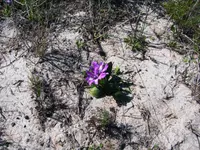
Late bobbejaantjie (Babiana nana) is a small, bulb-forming perennial from the iris family, grown mainly for its bright, starry spring flowers. The blooms often come in shades of blue, purple, or cream, with contrasting markings that stand out against narrow, upright leaves.
This plant comes from the winter-rainfall regions of South Africa, where it grows in open, sunny habitats with well-drained, often sandy soils. It can be rewarding but slightly demanding, as it dislikes waterlogged conditions and needs a marked dry rest after flowering. Gardeners who learn how to care for Late Bobbejaantjie often grow it in pots or rock gardens to control soil and moisture more easily.

Care Difficulty
Moderate Care

Light Preference
Full Sun

Water Requirements
Moderate Water

Temperature Preference
Warm Climate

Hardiness Zone
8–10

Soil Texture
Sandy, Loamy, Organic-rich

Soil pH
Acidic (5.5–6.5), Slightly acidic (6.5–7.0)

Soil Drainage
Well-drained

Fertilization
Light (every 4–6 weeks)
Scan your plant to receive care tips personalized for your specific plant
Available on iOS and Android
Babiana nana grows best in bright, open conditions with cool, sunny days.
Babiana nana prefers moderate moisture during active growth and much drier soil when dormant.
This species prefers cool to mild growing conditions with protection from hard frost and extreme heat.
This species prefers relatively dry air and usually does not need special humidity adjustments indoors.
Babiana nana grows best in light, sharply drained, low-organic soil that dries between waterings.
This species is well suited to container growing, especially in regions with cold or wet winters.
Babiana nana benefits from light feeding during its active growth but is sensitive to excess salts.
Babiana nana needs minimal pruning, mainly to maintain flowering performance and plant hygiene.
Babiana nana is usually grown from corms and seldom needs frequent repotting, but container or bed overcrowding may require attention.
Babiana nana is commonly propagated by corm division and sometimes from seed for larger numbers of plants.
Babiana nana prefers mild, dry winters and needs extra care in regions with hard frost.

Plant Health Check
Not sure what's wrong with your plant? Check your plant's health inside the app.
This species naturally flowers in late winter to early spring in its native South African range, timing its bloom with cooler temperatures and seasonal rainfall in Mediterranean-type climates.
Babiana nana survives hot, dry summers by retreating into an underground corm, a swollen stem base that stores water and carbohydrates until the next growing season.
In the wild, this plant typically grows in low, sandy flats and coastal areas of the Western Cape, where its small stature and narrow leaves help reduce water loss and tolerate wind exposure.
This species typically flowers in late winter to spring, depending on climate. Blooming often lasts 3–5 weeks, with individual flowers shorter lived but produced in succession along the spikes during the main season.
Keep your plants happy and healthy with plant identification, disease detection, and easy care guidance.