Indian nightshade Care (Solanum lasiocarpum)

Indian nightshade

About Indian nightshade

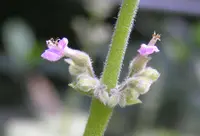
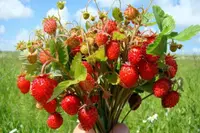
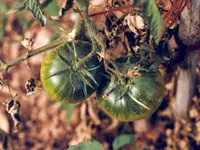
Indian nightshade (Solanum lasiocarpum) is a small shrub or subshrub in the nightshade family, grown mainly for its edible, yellow-orange berries. It typically has soft, slightly hairy leaves and can carry small spines on stems and leaf veins, which gives it a somewhat wild, untamed look.

This species occurs naturally in parts of South and Southeast Asia, often in warm, humid, lowland areas and disturbed sites. It grows fairly fast and can be productive, but needs consistent warmth and protection from cold to stay healthy.

Those who want to learn how to care for Indian nightshade should know it prefers bright light, regular moisture, and well-drained, fertile soil to fruit reliably.

Main Plant Requirements

Care Difficulty

Moderate Care

Light Preference

Full Sun

Water Requirements

Regular Water

Temperature Preference

Warm Climate

Hardiness Zone

9–11

Soil Texture

Loamy, Sandy, Organic-rich

Soil pH

Acidic (5.5–6.5), Slightly acidic (6.5–7.0)

Soil Drainage

Moist but well-drained

Fertilization

Light (every 4–6 weeks)

Get Personalized Care Plan

Scan your plant to receive care tips personalized for your specific plant

Available on iOS and Android

How to Care for the Indian nightshade

This sun-loving shrub fruits best in warm, bright conditions with some protection from harsh extremes.

  • Provide 6–8 hours of direct sun daily, ideally with gentle morning sun and light afternoon shade in hot summers.
  • Tolerates light partial shade (3–4 hours direct sun), but Indian nightshade may produce fewer flowers and fruits and grow more leggy.
  • In very strong summer sun, use filtered light or plant near taller companions to limit leaf scorch, while in cooler seasons allow as much direct light as possible.

This species prefers consistently moist, well-drained soil without staying soggy.

  • Water when the top 3–5 cm of soil feel dry, aiming for evenly moist but not waterlogged conditions during active growth and fruiting.
  • Use soil rich in organic matter with good drainage; pooling water, sour smell, or yellowing, limp leaves suggest overwatering and poor aeration.
  • In cooler months or during slow growth, let the surface dry a bit deeper, as Solanum lasiocarpum uses less water and is more prone to root issues in cold, wet soil.

This warm-season plant performs best in stable, frost-free conditions.

  • Aim for 70–85°F (21–29°C) for fastest growth and flowering; plants grow more slowly but survive at 60–70°F (16–21°C).
  • Protect from cold; growth stalls below 55°F (13°C) and plants can be damaged or killed near 40°F (4°C), so avoid frost-prone low spots.
  • Tolerates short heat spells up to about 95°F (35°C) if soil moisture is maintained; use mulch and light shade in extreme heat to reduce stress and flower drop.

This species accepts a fairly wide humidity range but prefers moderately moist air.

  • Aim for 40–60% humidity; it usually handles typical indoor levels without issue.
  • Tolerates short periods of drier air, but prolonged <30% humidity can slow growth and cause tender leaves to feel papery.
  • Watch for leaf-edge browning or curling as humidity stress, and increase local moisture with a pebble tray or grouped plants when caring for Indian nightshade.

Solanum lasiocarpum prefers loose, well‑structured soil that drains quickly but retains some moisture.

  • Use a loamy mix made from roughly 50% standard potting mix, 30% compost, and 20% perlite or coarse sand for aeration.
  • Ensure fast drainage; water should pass through freely and not leave the soil waterlogged for more than a few minutes.
  • Target a slightly acidic to neutral pH around 6.0–7.0, as strongly alkaline soil can limit nutrient uptake and weaken growth.
  • Avoid heavy clay, compacted ground, or mixes with a high peat content that stay soggy and restrict root oxygen.

This species is suitable for container growing when the pot supports its vigorous root system and top growth.

  • Choose a deep, wide container so roots can spread and anchor the plant against wind or top-heavy stems.
  • Select a heavier material such as ceramic or thick plastic to reduce tipping risk as the plant fruits and branches.
  • Raise the pot slightly off the ground with feet or bricks so drainage holes stay clear and excess water exits quickly.

This species benefits from light, consistent nutrition during its active warm-season growth, especially in containers.

  • Apply a balanced liquid fertilizer (such as 10-10-10) at 1/2 strength every 2–4 weeks during spring–summer for Solanum lasiocarpum.
  • Use a slow-release granular product mixed into the topsoil at the start of the growing season for steadier feeding.
  • Supplement with well-rotted compost around the root zone once a year to support soil biology and structure.
  • Reduce feeding to once every 6–8 weeks in cooler months, or stop entirely if growth is dormant.

Thoughtful pruning keeps Solanum lasiocarpum compact, productive, and easier to manage.

  • Carry out main pruning in late winter or early spring before strong new growth starts.
  • Remove dead, diseased, or storm-damaged branches first, cutting back to healthy tissue with clean, sharp pruners.
  • Thin crowded interior stems to improve airflow and light penetration, which supports healthier foliage and flowering.
  • Lightly tip back overly long shoots to maintain shape and encourage branching rather than tall, weak growth.

This plant copes well with transplanting when moved during suitable weather and handled to minimize root disturbance.

  • Look for roots circling the pot, dense roots at drainage holes, or slowed growth as signs a potted plant needs more space.
  • Schedule repotting or garden transplanting for early spring or early fall, avoiding extreme heat or cold.
  • Plan on moving container-grown plants to a pot 2–5 cm wider every 1–2 years, using a free-draining, fertile mix.
  • Water thoroughly before and after transplanting, keep the root ball as intact as possible, and shade the plant for several days to limit transplant shock.

New plants are most often raised from seed, though stem cuttings are also workable for this species.

  • Sow ripe seeds in late winter–spring, using a sterile seed-starting mix kept at 70–80°F with consistent, light moisture.
  • Lightly cover seeds and maintain bright, indirect light; germination may take several weeks.
  • For cuttings, take 8–12 cm non-flowering stems in late spring–summer and remove lower leaves.
  • Insert cuttings into moist, well-drained medium, use rooting hormone if available, and maintain high humidity until roots form.

In mild climates this plant can overwinter outdoors with modest preparation, but it is sensitive to hard frost.

  • Use a 5–8 cm layer of organic mulch around the root zone in late fall to buffer soil temperature fluctuations.
  • In regions with freezes below about 28°F, treat Solanum lasiocarpum as a tender perennial or annual, or replant from seed.
  • Move container plants into a bright, frost-free space before the first hard frost and reduce watering during low-light months.

Care Tips

Sturdy plant support

Install a short cage or stakes around young plants before they start flowering so heavy fruits are carried off the ground and stems do not snap in wind or rain.

Mulch for root cooling

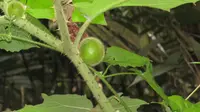
Apply a 5–8 cm layer of clean straw or shredded bark around, but not touching, the stems to keep roots cooler, reduce soil splash on leaves, and limit weed competition.

Glove-safe handling

Wear sturdy gloves and long sleeves when thinning shoots or harvesting because the spiny stems can irritate skin and small punctures are easy to overlook during routine work.

Targeted pest scouting

Check the undersides of leaves and young shoot tips at least weekly for spider mites, whiteflies, and flea beetles so infestations are found early and treated with insecticidal soap or horticultural oil before flowering peaks.

Fruit load management

Thin out excess small fruits on crowded clusters so the remaining fruits size up better, ripen more evenly, and place less mechanical stress on branches when growing Indian nightshade outdoors.

Common Pests and Diseases

Spider mites

This pest often appears on Solanum lasiocarpum grown in warm, dry conditions, causing fine stippling on leaves and eventual yellowing or leaf drop. Symptoms include delicate webbing on the undersides of leaves and along stems.

Solution

Rinse foliage thoroughly with a strong but gentle stream of water, focusing on leaf undersides, then repeat every few days to break their life cycle. For persistent infestations, use insecticidal soap or a horticultural oil labeled for mites, and increase ambient humidity and airflow to reduce reinfestation risk.

Whiteflies

These insects are attracted to the soft, hairy foliage and tender shoots, where they feed on sap and weaken growth. Symptoms include small white adults flying up when the plant is disturbed, sticky honeydew on leaves, and possible sooty mold growth on the honeydew.

Solution

Remove heavily infested leaves and gently hose down plants to dislodge nymphs from the undersides of leaves. Combine yellow sticky traps with regular applications of insecticidal soap or neem oil, making sure to coat leaf undersides and reapplying at 5–7 day intervals until populations drop.

Leaf spot (Cercospora)

This disease causes small, dark, often circular spots on leaves that may expand, merge, and lead to premature leaf drop, especially in humid, crowded conditions. Symptoms include spotting that starts on older leaves and progresses upward over time.

Solution

Remove and dispose of affected leaves promptly and avoid overhead watering to keep foliage as dry as possible. Improve spacing and airflow, water at the base in the morning, and in severe or recurring cases consider a copper-based or chlorothalonil fungicide labeled for Cercospora on Solanum relatives, following label directions carefully.

Bacterial wilt

This disease, caused by Ralstonia species, can rapidly collapse Solanum lasiocarpum plants, even when roots appear healthy. Symptoms include sudden wilting of entire stems or the whole plant, darkened vascular tissue, and plant death despite adequate soil moisture.

Solution

Remove and destroy affected plants including roots, and avoid planting other Solanum species in the same soil for several years. Use clean tools, avoid working in beds when soil is wet, and source disease-free planting material to reduce future risk when growing Indian nightshade.

Fruit borer caterpillars

These insects tunnel into developing fruits, leaving small entry holes, frass, and internal damage that makes the fruit unusable. Symptoms include distorted or prematurely dropping fruits and visible caterpillars when damaged fruits are cut open.

Solution

Inspect plants regularly during flowering and early fruiting, then remove and discard any damaged fruits to break the life cycle. Use fine mesh or row covers to exclude egg-laying moths, and consider targeted applications of Bacillus thuringiensis (Bt) on flowers and young fruits according to label directions if damage is recurring.

Interesting Facts

Unusual berry texture

The ripe berries are covered in fine hairs that give them a fuzzy surface, a feature that distinguishes this species from many other edible Solanum relatives with smooth fruits.

Traditional food use

In parts of South and Southeast Asia, especially in India, the small yellow fruits are used as a cooked vegetable in local cuisines, usually only when fully ripe and after proper preparation to reduce bitterness.

Spiny yet productive shrub

This species develops sharp spines along its stems and leaf veins yet can form a dense, shrubby plant that produces multiple clusters of fruits over an extended warm season in suitable tropical to subtropical climates.

FAQs about Indian nightshade

Ripe fruits are sometimes eaten locally after cooking, but unripe fruits, leaves, and other parts may contain problematic alkaloids. Identification mistakes with similar toxic species are common, so home consumption is not recommended without expert guidance.

Grow Healthy Plants with Botan Care

Keep your plants happy and healthy with plant identification, disease detection, and easy care guidance.


Botan plant care app — identify plants on mobile

Explore More Plants