Rootstock selection
Choose thornless, podless named cultivars grafted onto compatible rootstock to reduce unwanted seedlings and aggressive suckering around lawns and paved areas.

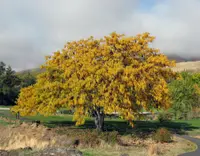
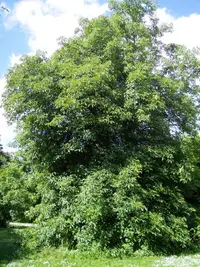
Honey locust, Gleditsia triacanthos, is a medium to large deciduous tree valued for its filtered shade and adaptability to urban conditions. It belongs to the pea family but has fine, airy foliage rather than large leaflets.
The tree usually develops an open, spreading crown with small, pinnate leaves that turn yellow in fall. Wild forms may have large, sharp thorns on trunk and branches, while many landscape cultivars are thornless.
Honey locust is native to central and eastern North America, often found in river valleys and open woodlands. It tolerates a wide range of soils, road salt, and air pollution, which makes it relatively easy to establish if you understand how to care for honey locust tree.
It prefers full sun and well-drained soil, with moderate moisture but good drought tolerance once established.

Care Difficulty
Easy Care

Light Preference
Full Sun

Water Requirements
Low Water

Temperature Preference
Cold Hardy

Hardiness Zone
3–9

Soil Texture
Sandy, Loamy, Clay

Soil pH
Slightly acidic (6.5–7.0), Slightly alkaline (7.0–7.5)

Soil Drainage
Well-drained

Fertilization
Minimal (feed rarely)
Scan your plant to receive care tips personalized for your specific plant
Available on iOS and Android
This species thrives in open, bright sites with strong direct sun exposure.
Gleditsia triacanthos prefers deep, infrequent watering once established, with soil allowed to dry between soakings.
This hardy tree tolerates a broad temperature range once established in the landscape.
This species is highly tolerant of low humidity and usually does not need special air-moisture management outdoors.
This species accepts a wide range of soils but grows best in well-structured, freely draining ground.
This tree is generally not suitable for long-term container growing except as a temporary nursery or training plant.
This adaptable honey locust tree usually needs only light feeding on poor or compacted soils.
Pruning supports safe structure and light, open canopy in Gleditsia triacanthos.
Transplanting young Gleditsia triacanthos trees correctly helps them establish deep, stable roots outdoors.
Propagation of Gleditsia triacanthos is most often done from seed for landscape use.
Established Gleditsia triacanthos trees are generally cold hardy and require little winter care in most temperate climates.

Plant Health Check
Not sure what's wrong with your plant? Check your plant's health inside the app.
The long, twisted seed pods contain a sweet pulp that has been documented as a food source for wildlife and was historically eaten in small amounts by Indigenous peoples and early settlers.
Wild forms produce stout, branched thorns that can reach several inches long and even grow from the trunk, an adaptation that likely evolved as defense against large herbivores such as extinct North American megafauna.
Although often described as a nitrogen fixer, current research indicates that this species itself does not host nitrogen-fixing root nodules but frequently associates with soil microbes and other legumes that improve soil fertility around it.

Honey locust has been widely used as a rootstock and parent in breeding spineless, ornamental and shade cultivars, which has allowed the species to become one of the most common urban street trees across many cities in the United States.
This species is considered fast-growing, often adding 30–60 cm or more of height per year once established. Growth is quicker in deep, well-drained soil with adequate moisture and slower in compacted, dry, or nutrient-poor sites.
Keep your plants happy and healthy with plant identification, disease detection, and easy care guidance.