Contain Water Spread
Use a shallow, edged tray or a lined trench bed to confine wet, muddy zones so the plants stay in consistently saturated soil without waterlogging neighboring crops or paths.

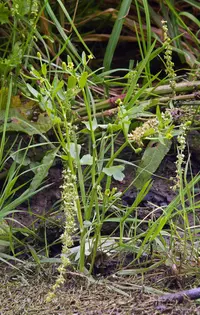
Celery-leaved buttercup (Ranunculus sceleratus) is a small, fast-growing annual in the buttercup family. It has bright yellow flowers, shiny green leaves, and often forms loose clumps. This species typically grows in very wet places such as pond edges, marshes, and ditches across Europe, Asia, and North America.
The plant thrives in full sun to light shade and constantly moist or shallowly flooded soil. It is not well suited to dry garden beds, which makes it more of a niche plant for bog gardens and naturalistic ponds. Those who want to care for Celery-leaved Buttercup should understand that it prefers stable moisture and cool to mild conditions rather than heat and drought.

Care Difficulty
Moderate Care

Light Preference
Full Sun

Water Requirements
Aquatic

Temperature Preference
Cool Climate

Hardiness Zone
5–9

Soil Texture
Loamy, Silty, Organic-rich

Soil pH
Acidic (5.5–6.5), Slightly acidic (6.5–7.0)

Soil Drainage
Waterlogged tolerant

Fertilization
Minimal (feed rarely)
Scan your plant to receive care tips personalized for your specific plant
Available on iOS and Android
This wetland species prefers bright, cool conditions with protection from harsh midday sun.
This plant is adapted to very wet habitats and needs consistently saturated conditions.
This species thrives in cool to mild climates and tolerates a fairly wide temperature range outdoors.
This wetland buttercup needs constant high humidity to stay healthy.
This species prefers waterlogged, organic-rich soil rather than typical garden conditions.
This plant can be grown in containers only if the pot is managed as a mini-bog.
This wetland annual usually needs little feeding, especially in natural or nutrient-rich soils.
Pruning needs for Ranunculus sceleratus are minimal and focus on basic tidying.
This species is usually grown in the ground or in naturalized wet areas, so care centers on transplanting rather than repotting.
Propagation of this annual is most practical from seed and suits restoration or wild-type plantings.
This hardy annual usually needs no special winter care when grown in suitable outdoor climates.

Plant Health Check
Not sure what's wrong with your plant? Check your plant's health inside the app.
The sap of this species contains protoanemonin, a toxic compound that can cause blistering on skin and mucous membranes of humans and livestock when fresh plant material is crushed.
This buttercup is strongly tied to wet, nutrient-rich sites such as cattle-trampled pond margins, ditches, and marshy field edges, often colonizing places with standing, shallow water.
Its small, dry fruits (achenes) are produced in dense clusters and can be spread by water, mud on animal hooves, or footwear, allowing the plant to track disturbed wet ground efficiently.

In Europe this species has long been associated with livestock poisoning around farm ponds and watering places, which led to its use as a warning indicator of potentially hazardous, heavily trampled wet pasture areas.
This species self-seeds freely and can spread quickly in wet, disturbed ground such as ditches, pond margins, and muddy fields. In suitable habitat it may form dense patches and behave weedy if not managed.
Keep your plants happy and healthy with plant identification, disease detection, and easy care guidance.