


Substrate Containment
Plant stems in perforated aquatic baskets lined with fine mesh so the substrate stays in place while roots anchor firmly in slow-moving or still water.

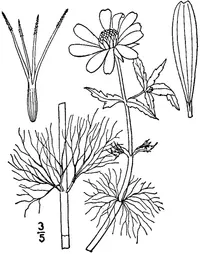
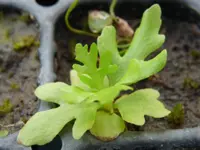
Beck's water-marigold, Bidens beckii, is an aquatic perennial native to lakes, ponds, and slow streams in parts of North America. It grows rooted in shallow water with finely divided submerged leaves and bright yellow daisy-like flowers held above the surface. The plant forms loose underwater foliage and airy flowering stems, providing habitat for aquatic life and visual interest around naturalistic water features. It is generally not difficult to keep where water is clean, still or gently moving, and nutrient levels are moderate. To care for Beck's water-marigold, provide full sun, cool to mild temperatures, and a stable, unpolluted aquatic environment.

Care Difficulty
Moderate Care

Light Preference
Full Sun

Water Requirements
Aquatic

Temperature Preference
Cool Climate

Hardiness Zone
3–8

Soil Texture
Silty, Peaty, Organic-rich

Soil pH
Slightly acidic (6.5–7.0), Neutral (7.0)

Soil Drainage
Waterlogged tolerant

Fertilization
Minimal (feed rarely)
Scan your plant to receive care tips personalized for your specific plant
Available on iOS and Android
This aquatic plant prefers bright, direct sun in shallow water for strong flowering and compact growth.
This species is adapted to growing in standing or slow-moving water rather than typical potting soil.
This aquatic perennial favors temperate conditions and is sensitive to hard freezing of its root zone.
This submerged aquatic prefers consistently high moisture above the water surface but does not need special air humidity control.
This species grows best rooted in saturated, fine-textured substrates rather than typical potting soils.
This aquatic species can be grown in containers such as patio tubs or half-barrels when water depth and stability are managed carefully.
Nutrient needs for Beck's water-marigold are modest, especially in natural or established ponds.
Pruning helps keep Bidens beckii growth controlled and flowering stems productive in managed ponds.
This aquatic species is more often transplanted or divided than traditionally repotted.
Bidens beckii is commonly propagated in managed ponds to expand plantings or renew older stands.
In many temperate regions this aquatic perennial survives winter with minimal intervention once established.

Plant Health Check
Not sure what's wrong with your plant? Check your plant's health inside the app.
This aquatic plant forms finely dissected, feather-like submerged leaves for underwater photosynthesis and broader, entire floating leaves at the surface, a clear example of heterophylly, which is the production of different leaf shapes on the same plant.
It typically grows rooted in the sediments of clear, soft-bottomed lakes and slow rivers across northern North America, where it prefers cool, well-oxygenated water rather than stagnant or highly turbid conditions.
Its emergent stems and floating leaves provide structure and shelter for aquatic invertebrates and small fish, while the small, daisy-like flowers attract pollinating insects above the water surface, linking underwater and terrestrial food webs.

In several parts of its range, this species is considered regionally rare or of conservation concern because shoreline development, water level changes, and nutrient enrichment can quickly degrade the specific clear-water habitats it requires to persist.
This species spreads by creeping underwater stems and self-seeding. In small ponds or contained water gardens, it can become dense and crowd other plants. Regular thinning and removal of excess stems and seed heads keeps growth manageable.
Keep your plants happy and healthy with plant identification, disease detection, and easy care guidance.

Common Coralline
Corallina officinalis
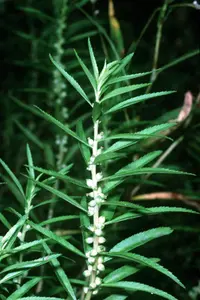
marsh mermaid weed
Proserpinaca palustris
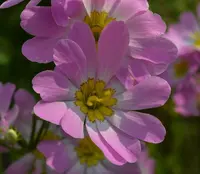
Plymouth rose gentian
Sabatia kennedyana
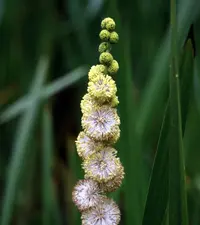
broadfruit bur-reed
Sparganium eurycarpum
Dwarf Grass-wrack
Zostera muelleri
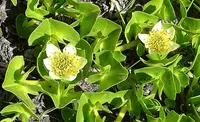
Arrow-leaved Marigold
Caltha sagittata
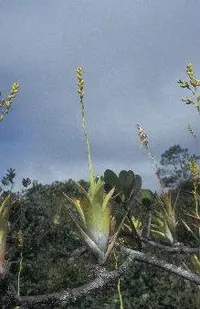
powdery strap airplant
Catopsis berteroniana
Water sprite
Ceratopteris thalictroides