


Stabilize Substrate Edge
Create a shallow border ridge of heavier sand or fine gravel around the planted area to reduce erosion from water movement and help young shoots anchor more securely.

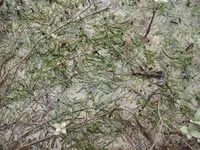
Dwarf grass-wrack (Zostera muelleri) is a small seagrass that forms low, dense underwater meadows in shallow coastal waters and estuaries. It anchors in sandy or muddy substrates with fine roots and produces narrow, ribbon-like leaves.
This species is native to Australia, New Zealand, and parts of the western Pacific, where it plays a key role in stabilizing sediments and supporting marine life. It can be sensitive to water quality, salinity changes, and physical disturbance, which affects how easy it is to maintain in managed systems.
Understanding how to care for Dwarf Grass-wrack starts with stable, clean, well-lit water conditions and minimal disturbance to its root zone.

Care Difficulty
Hard Care

Light Preference
Full Sun

Water Requirements
Aquatic

Temperature Preference
Cool Climate

Hardiness Zone
8–11

Soil Texture
Sandy, Silty, Organic-rich

Soil pH
Neutral (7.0), Slightly alkaline (7.0–7.5)

Soil Drainage
Waterlogged tolerant

Fertilization
Minimal (feed rarely)
Scan your plant to receive care tips personalized for your specific plant
Available on iOS and Android
This seagrass needs strong natural light to maintain healthy, dense underwater growth.
Water conditions for this seagrass focus on stable submersion and oxygenated, moving seawater rather than periodic watering.
This coastal seagrass prefers mild to warm water with limited exposure to temperature extremes.
This submerged seagrass requires fully aquatic conditions rather than air humidity management.
This seagrass anchors in unconsolidated marine sediments rather than garden soil.
This species can be maintained in containers only in specialized marine or brackish aquaria or mesocosms.
Zostera muelleri typically grows in nutrient-rich coastal waters and usually needs no additional fertilizer in natural or well-balanced aquarium systems.
Zostera muelleri benefits from light maintenance pruning to keep seagrass beds healthy and free of decaying tissue.
Transplanting Dwarf Grass-wrack focuses on moving small seagrass sods or plugs rather than traditional container repotting.
Zostera muelleri is usually propagated for restoration projects using vegetative division rather than seed-based methods.
In most mild coastal climates, Zostera muelleri requires little specific winter care beyond maintaining stable aquatic conditions.

Plant Health Check
Not sure what's wrong with your plant? Check your plant's health inside the app.
This species forms extensive meadows in temperate estuaries and sheltered coastal waters of southern Australia and New Zealand, often dominating shallow intertidal and subtidal flats where few other seagrasses can persist.
It tolerates a wide salinity range, from nearly fresh estuarine conditions to full-strength seawater, which allows it to occupy upper estuary zones that are too variable for many other marine flowering plants.
Dense leaf canopies and rhizome mats provide critical nursery habitat for juvenile fish, prawns, and invertebrates, making Z. muelleri meadows important for local fisheries productivity.

This seagrass can reproduce both by underwater flowering and seed production and by rapid clonal spread through rhizomes, allowing individual genetic clones to extend over large areas and persist for many years even when above-ground shoots are seasonally reduced.
Growth is moderately fast under ideal shallow coastal conditions, with rhizomes extending several cm per year and forming dense meadows over a few seasons. Cooler water, low light, and poor water quality slow expansion significantly.
Keep your plants happy and healthy with plant identification, disease detection, and easy care guidance.

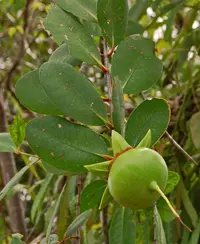
apple mangrove
Sonneratia caseolaris
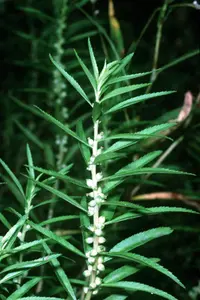
marsh mermaid weed
Proserpinaca palustris
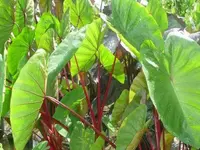
Elephant's Ear
Colocasia esculenta Royal Hawaiian Blue Hawaii
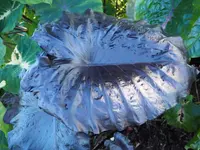
Elephant's Ear
Colocasia 'Electric Blue Gecko'
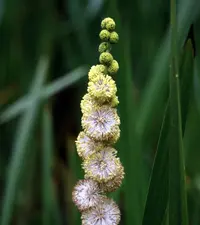
broadfruit bur-reed
Sparganium eurycarpum
 POPULAR
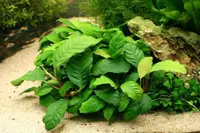
Anubias barteri
Anubias barteri
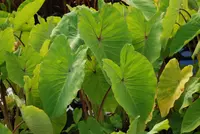
Elephant Ear
Colocasia esculenta 'Elena'
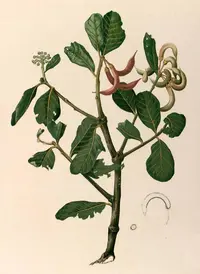
river mangrove
Aegiceras corniculatum