water locust Care (Gleditsia aquatica)

About water locust

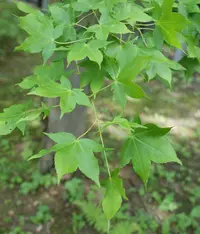
Water locust, Gleditsia aquatica, is a deciduous tree native to wet habitats in the southeastern United States, especially swamps and floodplains. It usually grows with a single main trunk, stiff branches, and a somewhat open crown. The bark is gray-brown and often armed with stout, sharp thorns, which are a key identification feature. Leaves are pinnate or sometimes bipinnate, giving the tree a fine, airy texture in leaf. In nature it tolerates periodic flooding and heavy, poorly drained soils, which influences how to care for water locust in cultivation. It generally prefers full sun, consistent moisture, and slightly acidic to neutral soils.

Main Plant Requirements

Care Difficulty

Moderate Care

Light Preference

Full Sun

Water Requirements

Aquatic

Temperature Preference

Cold Hardy

Hardiness Zone

6–9

Soil Texture

Loamy, Clay, Silty

Soil pH

Slightly acidic (6.5–7.0), Neutral (7.0)

Soil Drainage

Waterlogged tolerant

Fertilization

Minimal (feed rarely)

Get Personalized Care Plan

Scan your plant to receive care tips personalized for your specific plant

Available on iOS and Android

How to Care for the water locust

This species prefers full sun in its natural wetland habitats but tolerates some light shade.

  • Aim for 6–8 hours of direct sun daily, with exposure to afternoon sun helping develop a sturdy canopy and dense branching.
  • Allow light dappled or partial shade (around 3–4 hours direct sun) in hotter regions to reduce leaf scorch on young water locust trees.
  • Ensure newly planted trees are not shaded by buildings or taller trees, especially in spring and early summer when strong light supports root establishment.

This wetland tree is adapted to moist to saturated soils but still reacts to extremes in soil water.

  • In natural or landscape settings, maintain consistently moist soil, allowing the top 2–5 cm to dry slightly only in well-drained sites away from standing water.
  • Gleditsia aquatica tolerates periodic flooding yet struggles in compacted soil without oxygen; poor drainage can cause leaf yellowing and dieback.
  • Watch for underwatering signs such as dull, curling leaves and slow growth, versus overwatering signs like persistent soggy soil, foul odor, and root collar decay.

This tree is hardy and copes with a wide range of outdoor temperatures in much of the US.

  • Optimal growing temperatures are around 65–85°F (18–29°C) during the active season, supporting steady shoot and root growth.
  • Established trees tolerate winter lows near -10°F (-23°C), but young plants benefit from protection from severe wind chill their first 1–2 winters.
  • Mature trees handle summer heat up to about 95°F (35°C) if soil stays moist; extended heat with dry soil increases stress and branch dieback risk.

This species tolerates a broad humidity range and usually does not need special humidity management outdoors.

  • Target 40–70% humidity, which matches most outdoor conditions in its native range.
  • Water locust tolerates brief dry air periods if soil moisture remains consistent.
  • Low humidity stress appears mainly as faster leaf drop on young container plants rather than leaf curling or crisping.
  • To buffer short dry spells around container plants, group them close together or place trays of water and gravel nearby.

Gleditsia aquatica naturally grows in wet, heavy soils but adapts if moisture remains consistent.

  • Use a loamy, high-organic substrate with some clay content to retain water while still allowing air movement around roots.
  • For containers, combine roughly 50% loam-based topsoil, 30–40% compost, and 10–20% coarse sand to balance moisture and aeration.
  • Aim for slightly acidic to neutral pH, around 6.0–7.2, which supports nutrient availability for steady growth.
  • Avoid sharply drained, very sandy, or compacted, oxygen-poor substrates, as these either dry too fast or create stagnant, anaerobic (oxygen-lacking) conditions.

This species can be grown in large containers for a limited period, mainly when young.

  • Choose a wide, heavy container to counteract wind leverage from the developing crown and prevent tipping.
  • Select thick-walled plastic or glazed ceramic to slow evaporation in hot, exposed sites while still providing structural stability.
  • Set the container on blocks or feet so drainage holes remain unobstructed and excess water clears quickly after rain or irrigation.

This wetland tree usually needs minimal feeding in the ground, but light fertilization can support young or container-grown water locust.

  • Use a balanced, slow-release fertilizer (around 10-10-10) or well-aged compost in early spring for establishing trees.
  • Apply once per year for in-ground plants; container specimens can receive light feeding every 6–8 weeks during active growth.
  • Dilute liquid fertilizers to 1/2 strength to avoid salt buildup, especially in pots or poorly drained sites.
  • Stop feeding in late summer so new growth can harden before cold weather and dormancy.

Pruning Gleditsia aquatica is mainly done to maintain structure and remove unsafe or unhealthy wood rather than to control size.

  • Carry out structural pruning in late winter to early spring before bud break for best visibility of branches.
  • Remove dead, diseased, crossing, and storm-damaged branches with sharp bypass pruners or a clean pruning saw.
  • Thin crowded interior branches to improve light penetration and air flow, encouraging a stable, open crown.
  • Make clean cuts just outside the branch collar and avoid heavy topping, which weakens the tree and invites decay.

This species is usually grown in the ground, so transplanting young trees correctly is more important than container repotting.

  • Plan to transplant in late fall or very early spring when the tree is dormant and soil is workable.
  • Choose seedlings or saplings with healthy, non-circling roots; avoid rootbound containers where roots spiral tightly.
  • Dig a wide planting hole, loosen outer roots gently, and set the tree at the same depth it grew in the nursery.
  • Water deeply after planting, mulch 5–8 cm around but not against the trunk, and keep soil evenly moist to reduce transplant shock.

Propagation of Gleditsia aquatica is usually done from seed and is straightforward for growers with basic nursery conditions.

  • Collect mature pods in late fall, remove seeds, and store dry and cool until late winter or early spring sowing.
  • Scarify hard seed coats by nicking with a file or soaking briefly in hot (not boiling) water to speed germination.
  • Sow in a well-drained, sterile mix at 65–75°F, keeping the medium evenly moist but never waterlogged.
  • Grow seedlings in full sun to bright light with steady moisture, then harden off outdoors before planting out.

Mature Gleditsia aquatica trees are cold hardy in their suitable climate zone and usually require little specific winter care in the ground.

  • Apply 5–8 cm of organic mulch over the root zone in late fall, keeping it a few cm away from the trunk.
  • Water well before the ground freezes in regions with dry autumns to reduce winter desiccation stress.
  • Move young container-grown plants into an unheated garage or sheltered area where temperatures stay above about 20°F.

Care Tips

Flood-tolerant siting

Place young trees in low, periodically wet areas but avoid spots with constant, year‑round standing water deeper than 15–20 cm to reduce root suffocation and trunk disease.

Trunk flare protection

Keep mulch and soil pulled back 5–8 cm from the trunk flare and avoid string trimmer damage, since injured bark on this species is slow to seal and becomes an easy entry point for canker fungi.

Windfirm crown training

In the first 5–7 years, select one strong central leader and remove competing uprights, creating a balanced crown that is less likely to split or lose large limbs in storms.

Managed suckering control

Inspect the base and root zone twice a year and cut root suckers flush with the soil surface using clean, sharp pruners to prevent dense thickets and maintain a single‑stem tree form when growing water locust.

Seasonal flood management

After extended flooding recedes, gently hose mud off lower foliage and inspect roots for erosion or exposure, then backfill with native soil rather than imported topsoil to maintain stable anchorage and similar drainage.

Common Pests and Diseases

webworm caterpillars

This pest often feeds on the foliage of water locust, sometimes tying leaves together with silk and skeletonizing leaf tissue. Symptoms include chewed leaflets, webbing, and localized defoliation on twigs or branches.

Solution

Prune out and destroy webbed clusters where practical, especially on young trees, and crush or remove visible caterpillars by hand. For heavier infestations, use a targeted biological insecticide containing Bacillus thuringiensis (Bt) on actively feeding larvae, and encourage natural predators by avoiding broad-spectrum insecticides nearby.

scale insects

These insects attach to twigs and branches, sucking sap and weakening the tree over time. Symptoms include small, dome-shaped or flattened bumps on bark, sticky honeydew, and sometimes sooty mold growth on the coated surfaces.

Solution

On small trees, scrub affected twigs gently with a soft brush and soapy water to remove scales, then rinse. For larger trees, use a horticultural oil spray during dormant or early growing season to smother overwintering scales, and repeat according to label directions while monitoring for returning populations.

powdery mildew

This disease occasionally affects water locust foliage in humid, shaded conditions. Symptoms include white to gray powdery patches on leaf surfaces, sometimes leading to distorted or prematurely dropping leaves.

Solution

Improve air movement around the tree by avoiding overcrowding and selectively thinning small interior branches, and avoid overhead irrigation that keeps foliage damp into the evening. Where cosmetic control is important on young or specimen trees, apply a labeled fungicide at the first sign of symptoms and repeat as needed according to product directions.

leaf spot

This disease complex, often caused by various fungi, produces small brown or purple spots on leaflets that may merge into larger blotches. Symptoms include scattered spotting, yellowing, and early leaf drop, particularly after extended warm, wet weather.

Solution

Rake and remove fallen leaves to reduce the amount of fungal spores overwintering under the tree, and avoid wetting foliage when irrigating. In nursery or high-value landscape settings with repeated annual issues, consider a preventative fungicide program started just before periods of prolonged rain, chosen and timed according to local extension or arborist guidance on Gleditsia aquatica care instructions.

Interesting Facts

Specialist floodplain tree

This species is native to the wet floodplains and swamps of the southeastern United States, where it often grows in standing water along slow-moving rivers and backwaters.

Distinctive pod structure

In contrast to the larger, often twisted pods of honey locust, its fruits are usually shorter, more slender, and contain fewer seeds adapted to floating and dispersal in wet habitats.

Spines on trunk and branches

The tree often develops sharp, branched spines on the trunk and main branches, a trait thought to have evolved as a defense against large herbivores that once browsed North American floodplain forests.

Botan icon

Did you know?

Unlike many temperate trees that suffer in prolonged inundation, this species tolerates long periods of root and lower trunk submersion, allowing it to persist and even regenerate naturally in swamp forests where water may cover the soil for much of the growing season.

FAQs about water locust

This species is moderately fast-growing, often adding 30–60 cm in height per year in favorable, moist conditions. Growth slows on drier or compacted sites. Young trees establish quickly, then shift energy into trunk thickening and crown development.

Grow Healthy Plants with Botan Care

Keep your plants happy and healthy with plant identification, disease detection, and easy care guidance.

Botan plant care app — identify plants on mobile

Explore More Plants