Water sprite Care (Ceratopteris thalictroides)

Also known as: Water Fern, Indian fern, oriental waterfern, water hornfern, antler fern, horn fern
Water sprite

About Water sprite

Water sprite, Ceratopteris thalictroides, is a fast-growing aquatic fern commonly used in freshwater aquariums. It can be grown rooted in the substrate or left floating. The plant forms finely divided, lace-like fronds that create a soft, feathery look and provide shelter for fish and fry. In nature, it occurs in warm, still or slow-moving waters across tropical regions. This species is popular because it adapts quickly and helps improve water quality by taking up excess nutrients. For those learning how to care for Water sprite, its rapid growth and forgiving nature make it suitable for most beginner to intermediate aquarists.

Main Plant Requirements

Care Difficulty

Moderate Care

Light Preference

Partial Shade

Water Requirements

Aquatic

Temperature Preference

Tropical / Frost Sensitive

Hardiness Zone

10–13

Soil Texture

Loamy, Silty, Organic-rich

Soil pH

Acidic (5.5–6.5), Slightly acidic (6.5–7.0)

Soil Drainage

Waterlogged tolerant

Fertilization

Light (every 4–6 weeks)

Get Personalized Care Plan

Scan your plant to receive care tips personalized for your specific plant

Available on iOS and Android

How to Care for the Water sprite

This aquatic fern prefers bright, gentle light that mimics dappled sun over shallow water.

  • Provide 4–6 hours of bright, indirect light or light shade; outdoor ponds with filtered sun through taller plants suit Water sprite well.
  • Allow only soft morning sun; avoid harsh midday and afternoon sun that can scorch fronds or cause rapid algae growth on submerged leaves.
  • In low-light seasons, move the plant to a brighter position or use aquarium lighting 8–10 hours per day to prevent leggy, pale growth.

This species is adapted to constantly wet conditions and must never be allowed to dry out.

  • Grow in shallow, still or gently filtered water; for potted setups, keep the substrate fully saturated so no top layer ever dries.
  • Watch fronds for pale, crisp tips as a sign of too little water movement or evaporation, and dark, mushy bases as an indicator of stagnant, oxygen-poor water.
  • In warm months, top up evaporated water frequently and perform partial water changes weekly to prevent buildup of waste that harms Ceratopteris thalictroides roots.

This fern thrives in stable, warm water and air temperatures without sudden swings.

  • Aim for 72–82°F (22–28°C) for strongest growth; mild short-term shifts are tolerated if changes are gradual.
  • Avoid drops below 64°F (18°C); prolonged exposure near 60°F (16°C) slows growth and repeated chills can cause frond dieback.
  • Protect from frost and extreme heat; above 86–90°F (30–32°C), increase aeration and shade to prevent stress and tissue breakdown.

This aquatic fern grows best in consistently humid air around water surfaces.

  • Aim for high humidity of 70–90% around fronds, typical of aquariums, paludariums, or open-top tanks.
  • Dry household air causes browning tips, crisping leaf edges, and stalled new frond growth.
  • Increase humidity with an open aquarium, water trays beneath emergent plants, and dense planting that traps moisture near foliage.

For emergent or marginal culture, use a saturated, organic-rich medium rather than standard potting soil.

  • Choose a fine-textured, humus-rich mix such as 2 parts peat or coco coir with 1 part washed sand to anchor roots under shallow water.
  • Keep the medium constantly waterlogged or submerged with no dry cycles; drainage holes are not needed for fully aquatic setups.
  • Maintain slightly acidic to neutral conditions, roughly pH 6.0–7.2, which support nutrient uptake and stable growth.
  • Avoid coarse, fast-draining mixes, heavy clay, or fertiliser-loaded garden soil that compacts, rots roots, or encourages algae.

This species is suitable for containers, especially aquariums and shallow water tubs.

  • Use wide, shallow baskets or pots so the spreading root system and base rosettes can expand without crowding.
  • Choose heavier containers or add substrate weight to prevent buoyancy from lifting the pot in deeper water.
  • Position the pot where water movement is gentle, as strong currents can uproot young plants in loose aquatic substrate.

Ceratopteris thalictroides benefits from modest, consistent nutrition rather than heavy feeding in most aquaria and paludariums.

  • Use a balanced NPK aquatic fertilizer or very dilute all-purpose liquid feed at 1⁄4–1⁄2 strength to avoid burning fine roots and fronds.
  • Apply fertilizer every 2–4 weeks during active growth, adjusting to plant density and overall tank nutrient levels.
  • In low-tech setups, rely more on fish waste and organic detritus, adding root tabs or compost-based substrates only if growth stalls.
  • Reduce or pause dosing in winter or when growth slows, resuming normal feeding as new fronds lengthen and brighten; this supports healthy Water sprite indoor care.

Pruning Ceratopteris thalictroides is mainly done to maintain shape, light penetration, and plant health in dense plantings.

  • Trim yellowing, transparent, or decaying fronds at their base whenever seen to limit rot and algae buildup.
  • Remove crowded or overly large fronds during peak growth to improve water circulation and light for lower leaves or nearby plants.
  • Use clean, sharp aquascaping scissors to make smooth cuts, which reduces tissue damage and recovery time.
  • Selective thinning encourages bushier, compact growth instead of tall, leggy fronds that shade the whole aquarium.

This fern is usually grown free-floating or lightly anchored, so transplanting focuses on relocating clumps rather than classic repotting.

  • Move or divide plants when growth slows, roots tangle thickly around hardscape, or fronds shade too much of the tank surface.
  • Best timing is during stable warm conditions and active growth, when the plant replaces disturbed roots and fronds more quickly.
  • Transplant every few months as needed, gently teasing apart root masses and keeping several healthy fronds attached to each section.
  • Handle roots and rhizomes carefully, minimize exposure to air, and replant or re-float pieces promptly to limit transplant shock.

Ceratopteris thalictroides is commonly propagated in aquaria through adventitious plantlets and simple division rather than spores.

  • Allow mature fronds to develop small plantlets along their edges, then detach these when they have several tiny roots and 2–3 leaflets.
  • Plantlets can be left floating or lightly anchored in warm, clean water with moderate light to encourage rapid establishment.
  • Divide larger root masses by hand, separating into clumps that each carry strong roots and multiple healthy fronds.
  • Propagation is most successful during warm, high-growth periods when nutrient levels and light are adequate for fast recovery.

This tropical aquatic fern is not frost tolerant and needs consistently warm, unfrozen water through winter.

  • Maintain water at 72–82°F in indoor aquariums during cold months, using a reliable heater and thermometer.
  • In outdoor tubs or ponds, move plants indoors well before night temperatures drop near 50°F or risk of frost.
  • Avoid sudden temperature swings; adjust heater settings gradually so fronds and roots adapt without stress.

Care Tips

Control Growth Form

Decide early if the plant will be grown floating or rooted, and remove or relocate any fronds that try to switch forms so the colony stays stable and does not shade or crowd other aquatic plants.

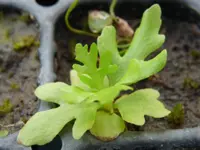
Thin Fronds Regularly

Harvest older, shaded, or tangled fronds every 1–2 weeks to maintain strong light penetration and water circulation, which helps prevent algae buildup and stem rot.

Nutrient Load Management

Use fast growth to your advantage by removing a portion of biomass during each water change, which exports excess nutrients and keeps nitrate and phosphate levels more stable.

Prevent Filter Clogging

Place floating plants away from filter intakes or use a sponge pre-filter and plant corral (airline tubing ring or floating ring) so shed leaf fragments do not block equipment or reduce flow.

Acclimate To New Tanks

When moving or introducing the plant, start with a moderate plant mass and increase lighting and fertilization gradually over 1–2 weeks to avoid melt and to stabilize water chemistry for growing Water sprite.

Common Pests and Diseases

Nutrient deficiency chlorosis

Symptoms include pale or yellowing fronds, often with slow or weak growth, in tanks with low dissolved nutrients or imbalanced fertilization. This issue is common in fast-growing water ferns that quickly deplete available nitrogen and micronutrients.

Solution

Increase aquarium fertilization with a complete liquid fertilizer that provides nitrogen, potassium, and trace elements, and consider adding root tabs if plants are anchored. Maintain stable CO₂ and good water circulation, and remove heavily damaged fronds to encourage new healthy growth while monitoring water parameters to avoid excess nutrients and algae blooms.

Black beard algae

This disease involves dark, tufted algal growth on frond edges and stems, often triggered by unstable CO₂, high organic waste, or strong light without balanced nutrients. These algae can smother fine foliage and reduce photosynthesis.

Solution

Manually trim or remove affected fronds, reduce organic waste with regular filter maintenance and water changes, and stabilize CO₂ and lighting duration. Adding algae-grazing fish or shrimp suitable for the tank and spot-treating small patches with diluted liquid carbon products outside the tank, then rinsing, can also help control spread while preserving the fern.

Snail herbivory

These insects are actually aquatic snails that may rasp soft new fronds, leaving irregular holes and shredded edges, especially when overpopulated or underfed. Damage tends to appear overnight and can be more severe on delicate, floating growth.

Solution

Manually remove excess snails, reduce overfeeding of fish, and use snail traps or bait to lower populations gradually. For severe cases, move the plant to a separate container for quarantine and hand removal of snails, avoiding copper-based treatments if fish or invertebrates are present, as these can harm the whole aquarium ecosystem while caring for Water sprite.

Leaf spot necrosis

This disease presents as small translucent patches that turn brown and necrotic, often starting on older submerged fronds in tanks with unstable temperature, poor water quality, or sudden parameter changes. Spots may enlarge and cause fronds to disintegrate.

Solution

Improve water quality with regular partial water changes, stable temperature, and gentle water movement around the plant, and remove affected fronds to limit decay. Avoid sudden shifts in pH or hardness, keep ammonia and nitrite at 0, and ensure moderate rather than intense light so new fronds grow strongly and replace damaged tissue.

Interesting Facts

Dual life strategy

This fern can grow both fully submerged and with floating fronds at the water surface, allowing it to dominate shallow, still or slow-moving tropical waters.

Short-lived aquatic fern

Unlike many long-lived ferns, this species often completes its life cycle within a single warm season, quickly producing large amounts of spores that spread through waterways and rice paddies.

Natural water clarifier

Its finely divided, fast-growing fronds absorb dissolved nutrients such as nitrogen and phosphorus, which can help reduce algal growth in aquaria and managed water bodies.

Botan icon

Did you know?

This species has been a classic model organism in plant developmental biology, because its spores germinate readily in sterile culture and produce visible gametophytes and sporophytes within weeks, allowing researchers to study the fern life cycle in detail.

FAQs about Water sprite

Yellowing usually results from nutrient deficiency, especially lack of nitrogen, or from unstable water parameters. Check for low nitrates, very hard water, or sudden temperature changes, and remove old fronds so new growth can develop.

Grow Healthy Plants with Botan Care

Keep your plants happy and healthy with plant identification, disease detection, and easy care guidance.

Botan plant care app — identify plants on mobile

Explore More Plants