Moisture-retentive mulch
Apply a 3–5 cm layer of shredded leaf mold or fine pine bark around the rhizomes to keep the shallow root zone cool, stable, and evenly moist without covering the emerging fiddleheads.

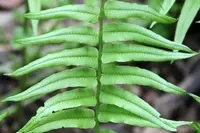
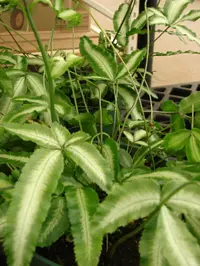
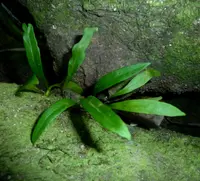
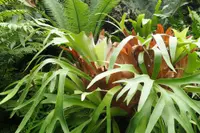
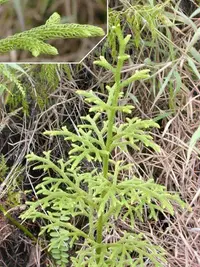
Narrow-leaved glade fern, Homalosorus pycnocarpos, is a deciduous woodland fern native to eastern North America. It naturally grows in moist, shaded forests and stream banks. The plant forms loose clumps of long, slender fronds with narrow leaf segments, giving it a fine, airy texture in the garden. Fronds typically arch gracefully from a short, creeping rhizome, creating a soft, layered look among other shade plants. It is considered relatively undemanding if its basic woodland needs are met, which makes it moderate in difficulty for home growers. Light shade, consistently moist but well-drained soil, and organic-rich substrates are key when learning how to care for narrow-leaved glade fern.

Care Difficulty
Moderate Care

Light Preference
Partial Shade

Water Requirements
Keep Soil Moist

Temperature Preference
Cool Climate

Hardiness Zone
3–8

Soil Texture
Loamy, Silty, Organic-rich

Soil pH
Acidic (5.5–6.5), Slightly acidic (6.5–7.0)

Soil Drainage
Moist but well-drained

Fertilization
Minimal (feed rarely)
Scan your plant to receive care tips personalized for your specific plant
Available on iOS and Android
This woodland fern prefers gentle, filtered light that mimics a shaded forest floor.
This fern prefers steadily moist, never soggy soil that does not fully dry out.
This species thrives in cool to mild conditions typical of shaded woodland habitats.
This fern prefers consistently moist air, especially indoors or in heated homes.
This species prefers loose, humus-rich soil that stays evenly moist but not waterlogged.
This fern can be grown in containers if the pot supports its spreading, shallow root system.
This woodland fern benefits from light feeding in cultivation but grows best when soil is rich in organic matter.
Pruning needs for Homalosorus pycnocarpos are minimal and focus mainly on cleanliness and appearance.
This fern is most often grown in the ground, so care focuses on thoughtful transplanting rather than frequent repotting.
Homalosorus pycnocarpos is usually propagated by division rather than from spores in home gardens.
This fern is cold hardy across much of its native range and generally needs only simple winter care outdoors.

Plant Health Check
Not sure what's wrong with your plant? Check your plant's health inside the app.
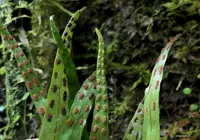
The fertile fronds carry linear sori (spore clusters) packed in narrow, parallel rows along the veins, which explains the species name pycnocarpos, meaning dense-fruited or densely spored.
This fern is naturally restricted to moist, shaded woodlands and stream valleys of eastern North America, often growing in rich, calcareous or neutral soils rather than in strongly acidic substrates.
Molecular studies have placed this species in its own small genus Homalosorus, separating it from traditional polypody ferns and highlighting its status as a distinct evolutionary lineage within temperate North American ferns.

The narrow-leaved glade fern is considered a conservative woodland species, meaning it tends to occur in older, relatively undisturbed forests and can serve as an indicator of long-term habitat stability and high-quality woodland ecosystems.
This species spreads slowly by short rhizomes and does not behave aggressively in typical garden conditions. It forms loose clumps and may gradually expand, but is usually easy to control with normal edging and division.
Keep your plants happy and healthy with plant identification, disease detection, and easy care guidance.