Horizontal planting
Plant stems so they lie horizontally on the substrate surface rather than straight up, as this encourages more creeping tips and denser mat formation.

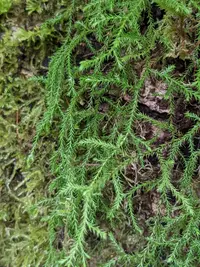
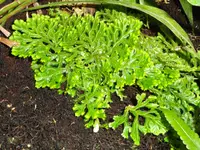
Oregon spikemoss (Selaginella oregana) is a primitive, moss-like vascular plant that forms soft, trailing mats of fine, overlapping foliage. It is not a true moss but a relative of ferns, with tiny scale-like leaves arranged along creeping stems. In nature it grows in cool, moist forests of the Pacific Northwest, often draping over rocks, logs, or shaded slopes. The plant prefers consistently damp conditions, high humidity, and protection from strong sun, which can limit how easy it is to grow indoors. For those able to maintain steady moisture and shade, it can be a delicate groundcover or terrarium subject, and learning how to care for Oregon spikemoss focuses mainly on moisture and shelter from drying air.

Care Difficulty
Hard Care

Light Preference
Shade

Water Requirements
Keep Soil Moist

Temperature Preference
Cool Climate

Hardiness Zone
7–9

Soil Texture
Loamy, Silty, Organic-rich

Soil pH
Strongly acidic (4.5–5.5), Acidic (5.5–6.5)

Soil Drainage
Moist but well-drained

Fertilization
Minimal (feed rarely)
Scan your plant to receive care tips personalized for your specific plant
Available on iOS and Android
This shade-loving spikemoss needs soft, filtered light that mimics a moist forest floor.
This species prefers consistently moist conditions and reacts quickly to drying out.
This spikemoss thrives in cool, stable conditions similar to a mild, moist woodland.
This species needs consistently high humidity to prevent frond tips from drying out.
Selaginella oregana prefers a loose, humus-rich, evenly moist substrate that never fully dries out.
This species adapts well to container culture, especially in shallow, moisture-retentive setups.
This woodland species is light-feeding, so fertilizing Oregon spikemoss should be modest and carefully diluted.
Pruning needs for Selaginella oregana are minimal and focus on tidying rather than reshaping.
This species prefers stable conditions, so repot or transplant only when clear stress or crowding appears.
New plants of Selaginella oregana are most reliable from division and short stem sections rather than spores.
Outdoor plants in mild, frost-free or only lightly frosty climates need limited winter attention.

Plant Health Check
Not sure what's wrong with your plant? Check your plant's health inside the app.
This species is native to the moist forests of the Pacific Northwest, where it grows mainly on shaded rock faces, rotting logs, and tree bases in a narrow coastal and Cascade range distribution from northern California to British Columbia.
Unlike many other Selaginella species that form cushion-like clumps, this plant often forms loose, hanging mats that can drape over rocks or trail from ledges, creating a layered, moss-like curtain in humid forest microhabitats.
It is strongly associated with cool, continuously damp sites such as spray zones near waterfalls, seepage slopes, and deep ravines, where air humidity and substrate moisture remain high throughout the year.
Brown leaf tips usually result from low humidity, drying out between waterings, or excess fertilizer salts. Check soil moisture, reduce direct heat sources, flush the pot occasionally, and increase ambient humidity to stabilize new growth.
Keep your plants happy and healthy with plant identification, disease detection, and easy care guidance.