

Mounting technique
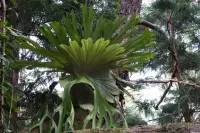
Attach rhizomes to cork bark, hardwood, or tree fern fiber using soft ties or strips of nylon stocking, then cover lightly with long-fiber sphagnum so roots can anchor without staying waterlogged.

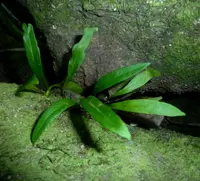
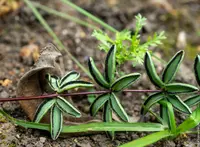
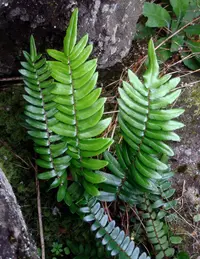
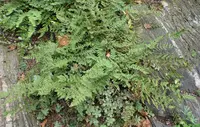
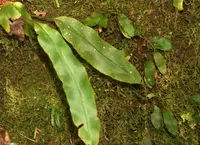
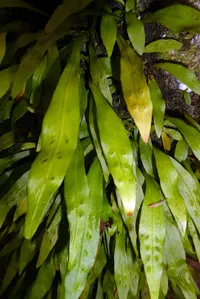
Bigfruit scaly polypody, Pleopeltis macrocarpa, is an epiphytic fern that often grows on tree trunks, rocks, or fallen logs. It forms spreading mats of narrow, leathery fronds with a slightly scaly surface.
In its native range across tropical and subtropical regions of the Americas, it thrives in warm, humid forests with filtered light. This growth habit makes it adaptable to mounted culture or loose, airy substrates.
The plant is relatively undemanding once established but dislikes drying out completely or sitting in waterlogged conditions. Understanding how to care for Bigfruit Scaly Polypody mainly involves providing stable humidity, gentle airflow, and soft, indirect light similar to a shaded forest canopy.

Care Difficulty
Moderate Care

Light Preference
Partial Shade

Water Requirements
Moderate Water

Temperature Preference
Tropical / Frost Sensitive

Hardiness Zone
10–12

Soil Texture
Loamy, Rocky, Organic-rich

Soil pH
Acidic (5.5–6.5), Slightly acidic (6.5–7.0)

Soil Drainage
Moist but well-drained

Fertilization
Minimal (feed rarely)
Scan your plant to receive care tips personalized for your specific plant
Available on iOS and Android
This fern prefers dappled woodland-style light rather than strong direct sun.
This species prefers consistently lightly moist conditions without waterlogging.
This fern performs best in mild, frost-free conditions with moderate warmth.
This fern prefers moderately high humidity and reacts quickly to very dry air.
This species prefers a loose, airy, organic-rich medium that mimics leaf litter on rocks or tree trunks.
This fern adapts well to container culture when given a shallow, stable, and well-drained setup.
Pleopeltis macrocarpa grows well with modest feeding, especially in containers, but heavy fertilization is unnecessary.
Pruning Pleopeltis macrocarpa is mainly light grooming to maintain a tidy, healthy fern mat.
This fern prefers to stay slightly root-bound and does not need frequent repotting or disturbance.
Pleopeltis macrocarpa is most reliably propagated by rhizome division rather than from spores in typical home conditions.
In mild climates this fern needs little winter care, but extra protection is helpful in regions with frost or freezing temperatures.

Plant Health Check
Not sure what's wrong with your plant? Check your plant's health inside the app.
This fern often grows as an epiphyte on tree trunks and branches in tropical forests from Mexico to South America, anchoring itself on bark rather than rooting in soil. It absorbs much of its moisture and nutrients from rain, organic debris, and humid air around the host tree.
The fronds are covered with small, brownish to golden scales on both sides, which help reduce water loss and protect the leaf tissue from intense light. These scales give the plant a slightly rough, textured appearance when viewed up close.
Its reproductive sori (spore clusters) form distinct rows or bands on the underside of the fronds. This ordered arrangement is a useful character for botanists when identifying and studying Pleopeltis macrocarpa plant care in the wild.

In some parts of its native range, this species helps stabilize microhabitats high in the forest canopy by trapping leaf litter and moisture, creating small pockets of organic material that support insects, fungi, and even seedlings of other plants.
This fern does not climb. It forms creeping rhizomes that spread horizontally over bark, rock, or loose substrate, creating a low mat. Fronds arch outward rather than upward, so it stays relatively low and spreading rather than tall.
Keep your plants happy and healthy with plant identification, disease detection, and easy care guidance.