


Epiphytic Mounting Setup
Mount the fern on a slab of cork bark or tree fern fiber with sphagnum moss around the roots to mimic its natural epiphytic habit and improve aeration around the rhizome.


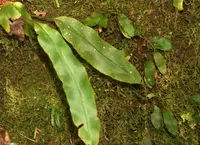
Elaphoglossum hybridum is a small epiphytic fern, often grown for its simple, strap-shaped fronds and compact, layered clump. It usually grows on tree trunks or mossy rocks in humid tropical forests of Central and South America.
The fronds are leathery and upright to gently arching, giving a tidy, architectural look that suits terrariums or shaded indoor displays. Growth is usually slow but steady when humidity stays high and air movement is gentle.
This fern can be moderately demanding, as it dislikes drying out, strong sun, and heavy, compacted soil. Understanding how to care for Elaphoglossum hybridum focuses on providing constant moisture, soft light, and a loose, airy, organic substrate.

Care Difficulty
Hard Care

Light Preference
Partial Shade

Water Requirements
Keep Soil Moist

Temperature Preference
Tropical / Frost Sensitive

Hardiness Zone
11–12

Soil Texture
Loamy, Peaty, Organic-rich

Soil pH
Strongly acidic (4.5–5.5), Acidic (5.5–6.5)

Soil Drainage
Moist but well-drained

Fertilization
Light (every 4–6 weeks)
Scan your plant to receive care tips personalized for your specific plant
Available on iOS and Android
This fern prefers soft, forest-like light that mimics its natural understory habitat.
This species prefers consistently moist but never waterlogged conditions around its root zone.
This fern favors mild, stable temperatures similar to a cool, sheltered woodland environment.
This fern prefers consistently moist air and reacts quickly to dry indoor conditions.
This species grows best in a loose, moisture-retentive but fast-draining, organic-rich mix.
This fern is suitable for container growing, especially in controlled humidity environments.
This fern benefits from light, careful feeding rather than heavy fertilization.
Pruning focuses on hygiene and appearance rather than reshaping this fern.
Repotting is infrequent and should be done gently to protect the shallow root system.
Propagation is possible but slower than many common houseplants, and success depends on stable humidity.
This fern is not frost hardy and needs mild, stable conditions over winter.

Plant Health Check
Not sure what's wrong with your plant? Check your plant's health inside the app.
This species naturally grows as an epiphyte on mossy tree trunks and branches in humid tropical cloud forests, relying on the host tree only for physical support rather than nutrients.
Unlike many ferns with finely divided foliage, this plant has entire, tongue-shaped fronds, a trait that helps it capture light efficiently in dim understory conditions.
Its spores develop in narrow, elongated sori that run along the underside of the fronds, often partly concealed by the leaf tissue rather than in the more obvious round clusters seen in many other ferns.
Growth is generally slow to moderate. New fronds emerge in small flushes rather than continuously, and a plant may take several years to form a dense clump. Stable humidity and consistent moisture noticeably improve its growth rate.
Keep your plants happy and healthy with plant identification, disease detection, and easy care guidance.

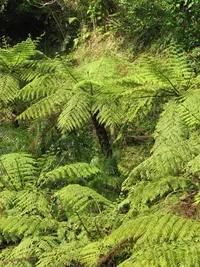
flying spider-monkey tree fern
Alsophila spinulosa
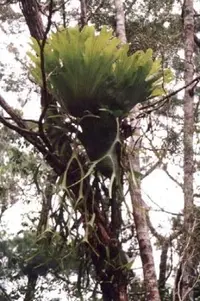
Platycerium coronarium
Platycerium coronarium
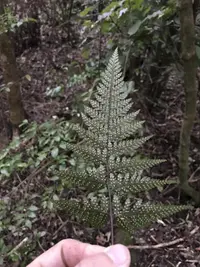
smooth shield fern
Parapolystichum glabellum
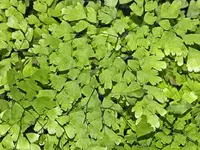
fan maidenhair
Adiantum tenerum
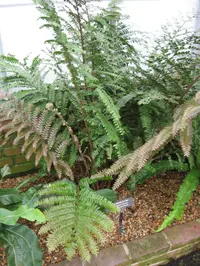
Cloak Fern
Didymochlaena truncatula
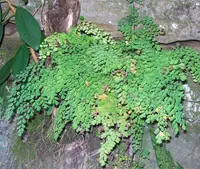
common maidenhair fern
Adiantum aethiopicum
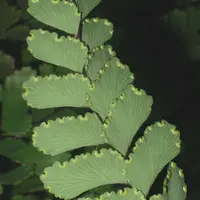
Cunningham’s maidenhair
Adiantum cunninghamii
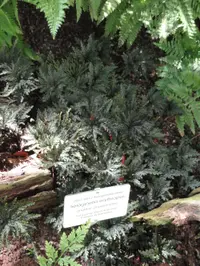
Selaginella erythropus
Selaginella erythropus