Deep root establishment
During the first growing season, water less frequently but deeply to encourage a long taproot, then slowly extend the interval between waterings so the plant develops strong drought tolerance.

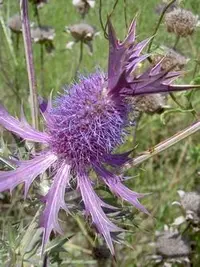
Leavenworth's eryngo (Eryngium leavenworthii) is an annual prairie wildflower in the carrot family, grown mainly for its vivid purple flower bracts and spiny texture. Plants form upright, branched stems with thistle-like cones surrounded by sharp, showy bracts. It is native to central and southern United States grasslands, often found in dry, open, rocky or sandy sites. This natural habitat makes it well suited to hot, sunny conditions and poor, well-drained soils. The plant tolerates drought once established and usually needs little care, which makes it popular in low-maintenance wildlife and pollinator gardens. Gardeners who want to care for Leavenworth's eryngo mainly need to provide strong light and avoid consistently wet soil.

Care Difficulty
Easy Care

Light Preference
Full Sun

Water Requirements
Low Water

Temperature Preference
Cold Hardy

Hardiness Zone
4–9

Soil Texture
Sandy, Loamy, Rocky

Soil pH
Slightly acidic (6.5–7.0), Neutral (7.0)

Soil Drainage
Well-drained

Fertilization
Minimal (feed rarely)
Scan your plant to receive care tips personalized for your specific plant
Available on iOS and Android
This sun-loving prairie perennial needs strong light to develop sturdy stems and intense color.
This species prefers dry, fast-draining conditions and is sensitive to excess moisture around the roots.
This hardy North American native tolerates a wide temperature range but performs best in warm, dry climates.
This species is well adapted to dry climates and rarely needs humidity management.
This taprooted perennial prefers lean, fast-draining, sandy or gravelly soil.
This species can be grown in containers if the pot is set up to stay dry and stable.
This drought-tolerant prairie annual needs only modest feeding in most soils.
Pruning Eryngium leavenworthii is mainly about tidying and managing self-seeding.
This species is usually grown in the ground, and transplanting should be done with care due to its taproot.
Propagation of Eryngium leavenworthii is most reliable from seeds rather than division or cuttings.
This annual tolerates typical winter conditions by completing its life cycle and surviving as seed, so special care is limited.

Plant Health Check
Not sure what's wrong with your plant? Check your plant's health inside the app.
This species develops rigid, spiny bracts and a vivid purple color that make it resemble a thistle, but it actually belongs to the carrot family Apiaceae, not the aster family where true thistles sit.
It typically flowers in late summer to early fall on the central and southern Great Plains, providing abundant nectar and pollen when many other native wildflowers are already declining, especially for bees and butterflies.
Wild populations often occur in dry, rocky, or disturbed calcareous soils, where deep roots and tough, waxy foliage help the plant tolerate drought and high light exposure.

This species is native to the south-central United States, with its core range in states such as Kansas, Oklahoma, Missouri, Arkansas, and Texas, where it is a characteristic element of limestone glades, roadsides, and open prairie habitats.
Yes. This species is highly attractive to many pollinators, especially native bees, wasps, and butterflies. Its nectar-rich, long-lasting flower heads provide reliable forage in midsummer to early fall, supporting pollinator activity in dry, sunny gardens.
Keep your plants happy and healthy with plant identification, disease detection, and easy care guidance.