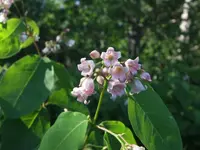
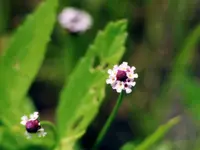
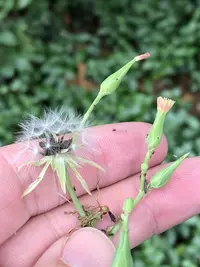
Spanish needles Care (Bidens bipinnata)

Also known as: Spanish Blackjack, Bipinnate Beggar's Ticks, Bipinnate Beggarticks
Spanish needles

About Spanish needles

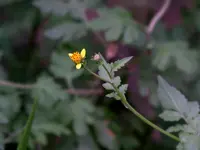
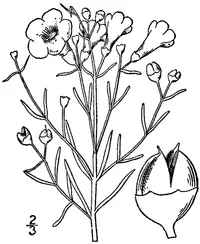
Spanish needles (Bidens bipinnata) is an annual herb in the daisy family, often seen as a wildflower or roadside plant. It has slender, branching stems, finely divided leaves, and small yellow flower heads that mature into narrow, barbed seeds that cling to fur and clothing.

This species is native to parts of the Americas and Asia but now grows widely in warm and temperate regions, especially in disturbed soils and sunny, open sites. It is generally easy to grow and can self-seed aggressively, which is useful for naturalized plantings but less desirable in small, tidy gardens.

Those who care for Spanish needles should note that it prefers full sun, moderately moist but well-drained soil, and minimal competition from taller, shading plants.

Main Plant Requirements

Care Difficulty

Easy Care

Light Preference

Full Sun

Water Requirements

Moderate Water

Temperature Preference

Warm Climate

Hardiness Zone

5–10

Soil Texture

Sandy, Loamy, Organic-rich

Soil pH

Acidic (5.5–6.5), Slightly acidic (6.5–7.0)

Soil Drainage

Well-drained

Fertilization

Minimal (feed rarely)

Get Personalized Care Plan

Scan your plant to receive care tips personalized for your specific plant

Available on iOS and Android

How to Care for the Spanish needles

This fast-growing annual thrives in open, bright conditions for strong flowering and seed set.

  • Provide 6–8 hours of direct sun daily; morning to early afternoon sun promotes compact, floriferous Spanish needles plants.
  • Tolerates light partial shade (3–4 hours sun), but expect taller, looser growth and fewer flowers in summer.
  • Avoid dense afternoon shade, which causes weak, floppy stems, but also protect from intense reflected heat from pavement that can scorch foliage in very hot climates.

This species prefers consistently moist but never saturated soil, especially during early growth and flowering.

  • Water when the top 3–5 cm of soil feels dry and the foliage starts to look slightly less turgid, rather than on a fixed schedule.
  • Use well-drained soil or sites that do not puddle; persistent wetness, yellowing leaves, and soft stems indicate overwatering or poor drainage.
  • In hot, dry weather increase checks for dryness, while in cooler seasons or after establishment reduce watering as roots reach deeper moisture.

This annual grows best in warm conditions typical of late spring through early fall in temperate regions.

  • Optimal growth occurs around 70–85°F (21–29°C), supporting rapid foliage expansion and abundant flowering.
  • Plants tolerate short spikes up to about 95°F (35°C) if soil moisture is maintained, but stress and wilting increase in prolonged extreme heat.
  • Growth slows sharply below 55°F (13°C); light frost damages foliage, and hard frost around 30–32°F (-1–0°C) usually kills Bidens bipinnata.

This species tolerates a wide humidity range and rarely needs special humidity management in homes or gardens.

Bidens bipinnata prefers light, well-drained soil that does not stay wet after rainfall or irrigation.

  • Use a sandy or sandy-loam mix with moderate organic matter, such as garden soil blended with compost and coarse sand.
  • Ensure rapid drainage so water clears the surface within a few minutes; avoid sites where puddles remain or soil feels sticky.
  • Aim for slightly acidic to neutral pH, around 6.0–7.0, which supports strong root and foliage growth.
  • Improve aeration on heavier soils by incorporating coarse sand or small grit through the top 15–20 cm before planting.

This species is suitable for container growing outdoors when given adequate root space and fast drainage.

  • Select a pot at least 25–30 cm wide to support its spreading habit and reduce tipping in wind.
  • Choose a relatively heavy container material, such as ceramic or thick plastic, to stabilize tall, branching growth.
  • Raise the pot on feet or bricks so drainage holes stay clear and excess water escapes quickly after rain or watering.

Bidens bipinnata grows vigorously in average soil and usually needs only light feeding in gardens or containers.

  • Use a balanced, diluted liquid fertilizer (for example 10-10-10 at 1/2 strength) every 4–6 weeks during the growing season if soil is poor.
  • Apply a thin layer of compost around plants in spring to support flowering without forcing lush, weak growth.
  • Reduce or stop feeding in late fall and winter, as growth slows and nutrients are not used efficiently.
  • When caring for Spanish needles in pots, flush the soil occasionally with plain water to limit salt buildup from fertilizers.

Bidens bipinnata responds well to light, timely pruning that controls size and encourages more blooms.

  • In late spring to mid-summer, pinch or shear back stem tips by 2–5 cm to promote bushier growth and extra branching.
  • Remove dead, diseased, or storm-damaged stems at the base using clean, sharp scissors or hand pruners.
  • Thin crowded or sprawling stems to improve air circulation and reduce the risk of fungal problems.
  • Deadhead spent flower heads before seeds mature if self-seeding and spread need to be reduced.

This annual is more often transplanted outdoors than repotted, since it completes its life cycle in 1 season.

  • Transplant Bidens bipinnata seedlings outdoors after frost danger passes, once they have 3–4 true leaves.
  • Move seedlings carefully, keeping the root ball intact and planting at the same depth to limit root stress.
  • Choose a sunny site with well-drained soil; avoid heavy disturbance after transplanting so roots can establish.
  • Container plants are short-lived; repot only if roots circle the pot tightly, shifting to a slightly larger container.

Bidens bipinnata is most commonly propagated from seed, which germinates quickly in warm conditions.

  • Sow seeds in late spring after frost, either directly in the garden or in trays kept at 65–75°F.
  • Press seeds lightly into the surface and keep soil evenly moist but not waterlogged until germination in 7–21 days.
  • Provide full sun to bright light so seedlings stay compact rather than weak and stretched.
  • Thin or transplant crowded seedlings, spacing them 20–30 cm apart to support strong, branching plants.

Bidens bipinnata is a warm-season annual that dies back with hard frost and usually does not need winter care.

  • Allow frost-killed plants to remain briefly, then remove and compost to reduce self-seeding if spread is a concern.
  • In mild climates, some self-sown seeds overwinter in soil and sprout in spring without protection.
  • Container plants can be discarded after frost, as the species does not reliably overwinter indoors as a perennial.

Care Tips

Seed succession timing

Sow small batches of seed every 2–3 weeks from late spring to midsummer so flowering is staggered and you maintain continuous color and pollinator support rather than one short bloom flush.

Self‑seeding control

Before seed heads fully dry and form barbed needles, shear or pull spent plants in areas where you do not want volunteers, and leave only selected clumps to mature if you rely on natural reseeding.

Targeted staking

In windy or exposed sites, insert low bamboo canes or twigs around the outside of tall clumps and loop soft twine loosely around them at mid‑height to prevent stems from lodging without creating a solid windbreak.

Pollinator corridor use

Plant in loose drifts along vegetable beds, orchard edges, or near herbs to act as a nectar corridor that draws bees and beneficial insects through the area, improving pollination of nearby crops.

Aphid and mite monitoring

Check undersides of leaves and tender shoot tips weekly during warm, dry spells and, at the first sign of aphids or spider mites, use a strong water spray or a labeled insecticidal soap rather than waiting for heavy infestations that are harder to manage when growing Spanish needles.

Common Pests and Diseases

Powdery mildew

This disease causes a white, talc-like coating on leaves, stems, and buds, often in warm, dry conditions with poor air circulation. Symptoms include distorted growth and yellowing foliage that can reduce flowering.

Solution

Remove heavily affected leaves to reduce spore load, then improve spacing and airflow around plants. If needed, apply a sulfur or potassium bicarbonate fungicide labeled for ornamentals, spraying in the early morning and avoiding high temperatures to reduce leaf burn.

Botrytis blight

This disease produces tan to brown leaf spots and a soft, gray fuzzy mold on flowers and damaged tissue, especially in cool, damp weather. Symptoms include collapsing flower heads and stems that rot at the base.

Solution

Promptly remove and discard all infected flowers and stems, and avoid overhead watering to keep foliage dry. Improve airflow and reduce dense, shaded growth; in persistent cases use a labeled fungicide for gray mold, rotating modes of action if repeated treatments are required.

Leaf miners

These insects feed inside the leaves, creating winding, pale trails or blotches that can make plantings look unsightly. This pest rarely kills plants but can reduce vigor in dense stands or young seedlings.

Solution

Pinch off and discard leaves with fresh mines before larvae complete their development. For larger plantings, encourage beneficial insects by avoiding broad-spectrum insecticides, or use a targeted systemic product with the active ingredient spinosad, following label directions carefully when caring for Spanish needles.

Aphids

These insects cluster on tender stems and flower stalks, sucking sap and excreting sticky honeydew that can attract sooty mold. Symptoms include curled new growth, reduced flowering, and the presence of ants tending the colonies.

Solution

Dislodge aphids with a strong stream of water, focusing on shoot tips and the undersides of leaves. For persistent infestations, apply insecticidal soap or horticultural oil in the early morning or evening, repeating as needed to cover new growth and breaking the life cycle.

Rust

This disease causes small yellow spots on upper leaf surfaces and orange-brown pustules on the undersides, which release powdery spores. Severe infections lead to premature leaf drop and weakened plants later in the season.

Solution

Remove and destroy affected leaves at the first signs of pustules, and avoid overhead irrigation that keeps foliage wet for long periods. Space plants to improve air movement and, if needed, rotate fungicides labeled for rust on ornamentals, applying before or at the very first appearance of new spots each season.

Interesting Facts

Hooked two-pronged seeds

The seeds of this species have two slender, barbed awns that readily catch on fur, clothing, and feathers, making it a highly effective hitchhiker for long-distance dispersal.

Late-season pollinator resource

In many temperate regions, this annual flowers from late summer into fall, providing nectar and pollen for bees, butterflies, and other insects when many other wildflowers are already declining.

Ruderal habitat specialist

This plant commonly colonizes disturbed soils such as roadsides, field margins, and construction sites, showing a strong adaptation to ruderal habitats where it completes its life cycle quickly before more competitive vegetation establishes.

Botan icon

Did you know?

Genetic and morphological studies indicate that this species has been widely transported and sometimes confused with closely related Bidens taxa, leading to ongoing taxonomic reevaluation of its native versus introduced range in different continents.

FAQs about Spanish needles

This species self-seeds very readily. Seeds have barbed awns that cling to clothing and fur, spreading widely. In open soil it can form dense patches, so remove spent flower heads if naturalizing is not desired.

Grow Healthy Plants with Botan Care

Keep your plants happy and healthy with plant identification, disease detection, and easy care guidance.

Botan plant care app — identify plants on mobile

Explore More Plants