Sturdy staking setup
Install 2–3 strong stakes around young plants when they reach 30–40 cm tall and tie stems loosely with soft ties so the heavy foliage and flower stalks stay upright and are not snapped by wind.

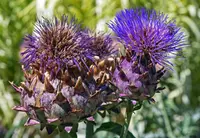
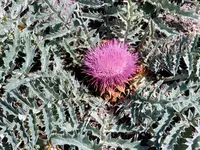
Cardoon, Cynara cardunculus, is a striking perennial from the Mediterranean, related to the globe artichoke. It forms large, deeply cut, silvery-green leaves and tall flower stalks with purple thistle-like blooms.
In suitable climates it grows as a bold architectural plant for ornamental or edible use, as the leaf stalks are traditionally blanched and eaten. It prefers full sun, well-drained soil, and moderate moisture, and dislikes very wet or very cold conditions.
Once established, it can be vigorous but may be short-lived where winters are harsh or summers are very humid. Basic knowledge of how to care for cardoon makes it manageable for most dedicated beginners.

Care Difficulty
Moderate Care

Light Preference
Full Sun

Water Requirements
Moderate Water

Temperature Preference
Cool Climate

Hardiness Zone
7–9

Soil Texture
Sandy, Loamy, Organic-rich

Soil pH
Slightly acidic (6.5–7.0), Neutral (7.0)

Soil Drainage
Well-drained

Fertilization
Light (every 4–6 weeks)
Scan your plant to receive care tips personalized for your specific plant
Available on iOS and Android
This Mediterranean perennial thrives in strong, direct light for sturdy growth and flower production.
This species prefers consistent moisture in well-drained soil, without staying saturated.
This plant favors mild, Mediterranean-type conditions with cool winters and warm, dry summers.
Humidity is not a critical factor for Cynara cardunculus, which adapts well to typical outdoor air levels.
Cynara cardunculus prefers deep, loose, well-drained soil that still retains moderate moisture.
This species can be grown in containers, but only in large, very stable pots due to its vigorous, top-heavy growth.
This plant responds well to moderate feeding during its active season for strong leafy growth and edible stalks.
Thoughtful pruning keeps Cynara cardunculus productive, tidy, and easier to manage.
Most Cynara cardunculus plants grow best in the ground, so focus on careful transplanting of young plants.
Cynara cardunculus is commonly propagated from seed, with division used for established clumps.
In mild climates this species is fairly hardy, but colder regions require added winter care.

Plant Health Check
Not sure what's wrong with your plant? Check your plant's health inside the app.
Cynara cardunculus is the wild species from which the cultivated globe artichoke and the edible cardoon were domesticated, so it links wild Mediterranean thistles with modern vegetable crops.
This perennial thistle is native to the western and central Mediterranean and shows strong adaptation to dry, sunny, nutrient-poor sites, with deep roots and tough, spiny leaves that reduce water loss.
Flower buds of Cynara cardunculus contain proteolytic enzymes used traditionally in parts of Portugal and Spain to coagulate milk for cheese production, providing a non-animal rennet alternative.

In some regions outside its native Mediterranean range, especially parts of California and Australia, Cynara cardunculus has become a serious invasive species, forming dense stands that outcompete local vegetation and alter grassland and pasture ecosystems.
Lack of flowering usually comes from insufficient light, poor nutrition, or plants that are still immature. Heat stress, drought, or excessive nitrogen can also reduce bud formation. Stable sun, balanced fertilizer, and consistent moisture usually restore flowering.
Keep your plants happy and healthy with plant identification, disease detection, and easy care guidance.