smooth brome Care (Bromus inermis)

Also known as: Hungarian Brome, Awnless Brome
smooth brome

About smooth brome

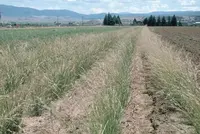
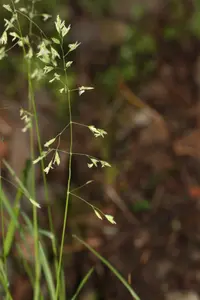
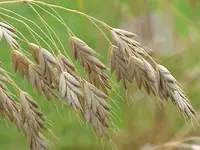
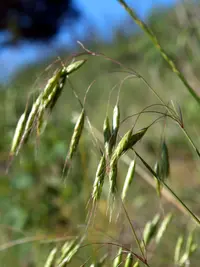
Smooth brome (Bromus inermis) is a cool-season perennial grass commonly used in pastures, erosion control plantings, and roadside stabilization. It forms dense sod with arching, flat leaves and open, airy flower clusters.

This grass is native to Eurasia but is now widespread across North America, especially in temperate regions and disturbed sites. It spreads strongly by rhizomes, which makes it persistent and competitive once established.

Smooth brome is valued for its tolerance of cold, drought, and poor soils, which generally makes it straightforward to grow. Those who want to care for smooth brome should know it prefers full sun, moderate moisture, and well-drained, fertile soil but adapts to many conditions.

Main Plant Requirements

Care Difficulty

Easy Care

Light Preference

Full Sun

Water Requirements

Low Water

Temperature Preference

Cold Hardy

Hardiness Zone

3–9

Soil Texture

Sandy, Loamy, Clay

Soil pH

Slightly acidic (6.5–7.0), Slightly alkaline (7.0–7.5)

Soil Drainage

Well-drained

Fertilization

Minimal (feed rarely)

Get Personalized Care Plan

Scan your plant to receive care tips personalized for your specific plant

Available on iOS and Android

How to Care for the smooth brome

This cool-season grass prefers full sun but tolerates some shade without losing vigor.

  • Provide 6–8 hours of direct sun daily; fields with open exposure support denser, more productive smooth brome stands.
  • Allow light afternoon shade in hotter regions to reduce leaf scorching and summer stress, especially on south- or west-facing slopes.
  • Avoid deep shade under dense trees, which leads to weak, floppy growth and thinner turf; monitor seasonal shading as nearby trees leaf out or expand canopies.

This species prefers moderate, infrequent watering that supports deep root growth.

  • Irrigate when the top 5–8 cm of soil feel dry and grass loses slight spring when stepped on, rather than on a fixed schedule.
  • Ensure well-drained soil; prolonged puddling, yellowing, and soft, rotting crowns indicate overwatering or poor drainage in Bromus inermis stands.
  • Reduce supplemental water in cool, rainy seasons and during dormancy, but increase slightly in hot, dry periods if leaves curl, gray, or crunch underfoot.

This cool-season grass is highly cold tolerant and manages moderate summer heat when not drought-stressed.

  • Support active growth at 60–75°F (16–24°C); these temperatures favor strong tillering and leaf production in spring and fall.
  • Expect survival down to about -30°F (-34°C) in established stands, though foliage may winter-burn while crowns and roots remain viable.
  • Monitor heat above 85°F (29°C); growth slows, and prolonged 90–95°F (32–35°C) with drought can thin stands unless soil moisture is maintained.

Humidity is not a significant factor for Bromus inermis, which is adapted to open, dry grassland conditions.

Bromus inermis performs best in moderately fertile, well-drained mineral soil that does not stay waterlogged.

  • Use a loamy or sandy loam soil with 2–4 in of incorporated compost to support root development.
  • Ensure rapid drainage; avoid compacted or heavy clay sites that hold standing water after rain.
  • Aim for a soil pH around 6.0–7.5, amending strongly acidic soil with agricultural lime if needed.
  • Improve aeration and drainage by working in coarse sand or fine gravel where soils are dense or prone to puddling.

This species can be grown in containers, mainly for trial plantings, erosion-control starts, or controlled spread.

  • Choose a deep, heavy container to give creeping roots room while preventing the tall foliage from tipping the pot in wind.
  • Use a fast-draining, mineral-rich mix (for example 2 parts loam, 1 part coarse sand, 1 part compost) to avoid soggy conditions around the crown.
  • Elevate the pot slightly off the ground so drainage holes stay clear and excess water escapes quickly after irrigation or rain.

This cool-season grass usually needs minimal fertilization on reasonably fertile soils.

  • For hay or pasture, apply a balanced NPK or slow-release lawn-type fertilizer at light rates in early spring as growth starts.
  • If soil is very poor, add compost or manure in late fall or early spring, incorporating it lightly into the topsoil.
  • Avoid high nitrogen doses that cause lodging; use half-strength of label recommendations and monitor growth response.
  • Stop feeding smooth brome by late summer so plants can harden off before winter.

Pruning Bromus inermis focuses on seasonal cleanup rather than shaping.

  • Cut back stands to 7–10 cm in late winter or very early spring to remove old foliage and stimulate uniform new growth.
  • During the growing season, mow or trim spent seed heads if self-seeding or height must be controlled.
  • Remove dead, diseased, or flattened clumps with sharp shears or a scythe, disposing of infected material off-site.
  • Avoid cutting too short in hot, dry periods to prevent stress and maintain root reserves.

This species is usually field-grown, so care centers on dividing and transplanting established clumps.

  • Transplant when growth is active but temperatures are mild, typically in early spring or early fall for Bromus inermis.
  • Lift and divide crowded, thinning clumps every 3–5 years, keeping divisions with healthy white roots and several shoots.
  • Water thoroughly before and after moving plants, then keep soil evenly moist for 1–2 weeks to reduce transplant shock.
  • Plant at the same depth as before, firm soil around roots, and avoid heavy traffic on newly transplanted areas.

Bromus inermis is commonly propagated by both seed and division for pasture or erosion control.

  • Sow fresh seed in early spring or late summer into a firm, fine seedbed; cover very lightly for good light exposure.
  • Maintain consistent moisture but not waterlogging until seedlings are well rooted, usually after 3–4 weeks.
  • For clonal consistency, divide established clumps in early spring, replanting vigorous sections with several tillers.
  • Control weeds and avoid heavy grazing or mowing on new plantings until plants are strongly established.

This cool-season, cold-hardy grass usually needs no special winter care in temperate climates.

  • Dormant crowns tolerate freezing and snow cover; established field plantings typically overwinter without damage.
  • In exposed, windy sites, a light mulch layer of straw can limit soil heaving on newly established stands.
  • Container-grown plants are uncommon, but if present, overwinter pots in an unheated garage or cold frame to prevent root freezing.

Care Tips

Manage Rhizome Spread

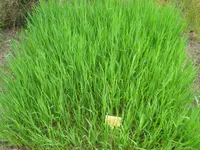
Install a 20–30 cm deep root barrier or regularly spade-cut the edges of the stand every spring to keep the rhizomes from invading adjacent beds or crops.

Time Grazing Carefully

If used for pasture, begin grazing when plants reach 20–30 cm tall and remove livestock when regrowth drops below 8–10 cm to prevent stand weakening and allow strong regrowth.

Optimize Hay Harvest

For hay, schedule the primary cut at late boot to early heading stage to balance yield and forage quality, then plan a second, lighter cut after 35–45 days of regrowth if moisture allows.

Overseed To Densify

Every 3–4 years, lightly harrow or rake the stand surface in early spring and broadcast fresh seed into thin patches to maintain a dense, productive sward when growing smooth brome.

Rotate With Legumes

Interseed or rotate with legumes such as alfalfa or clover to improve nitrogen availability naturally, reduce synthetic fertilizer needs, and enhance overall stand resilience.

Common Pests and Diseases

Leaf rust

This disease causes small yellow to orange pustules on leaves that can merge into larger rust-colored patches and reduce forage quality. Symptoms include premature leaf yellowing and early dieback under warm, humid conditions.

Solution

Mow or graze to remove heavily infected foliage and promote new growth, and avoid overhead irrigation that keeps leaves wet for long periods. In larger plantings, choose rust-tolerant seed lots when available and rotate with non-host crops or cover species to reduce inoculum in the field.

Powdery mildew

This disease forms white to gray, powdery fungal growth on leaf surfaces, which can lead to reduced vigor and less dense stands in shaded or crowded areas. Symptoms include distorted or chlorotic leaves when infection is severe.

Solution

Reduce canopy density by timely mowing or grazing and improve air circulation by avoiding overly dense seeding. Remove and compost or discard heavily affected clippings and, in production settings, favor more sun-exposed sites and balanced fertilization to reduce susceptibility.

Leaf spot complex

This disease group, often caused by Drechslera and related fungi, produces small brown to purple spots on leaves that may enlarge and coalesce, giving the foliage a scorched appearance. Symptoms include thinning patches in the stand, especially under stress from drought or nutrient imbalance.

Solution

Promote steady growth through moderate, not excessive, nitrogen and adequate irrigation without waterlogging. Remove or finely chop crop residues after mowing to improve breakdown, and consider rotating out of grass in problem areas for 1–2 seasons to lower pathogen carryover.

Grass aphids

These insects feed on leaf sap, causing yellowing, leaf curl, and reduced growth, and they can produce sticky honeydew that encourages sooty mold. This pest tends to build up in hot, dry conditions or in lush, heavily fertilized stands.

Solution

Encourage natural predators such as lady beetles by minimizing broad-spectrum insecticides in the surrounding area, and use a firm water spray on small patches to dislodge aphids from foliage. In larger infestations, targeted low-toxicity insecticidal soaps or oils can be applied according to label directions during cooler parts of the day to avoid leaf burn.

Grasshoppers

These insects chew irregular holes and edges from leaves and can strip foliage in dry summers when alternative vegetation is scarce. Symptoms include ragged leaves and noticeably reduced biomass in field margins and drier spots.

Solution

Mow borders and adjacent weedy areas early in the season to remove preferred egg-laying and feeding sites, and encourage habitat for natural predators such as birds where feasible. In severe field situations, use bait formulations or targeted barrier treatments around stand edges rather than blanket spraying, to limit non-target impacts while protecting the main smooth brome planting.

Interesting Facts

Deep drought‑resistant roots

This species develops an extensive root system that can reach over 1 m deep, allowing the plant to stay active and green during moderate drought when many cool-season grasses go dormant.

Rhizomes shape grasslands

It spreads through strong underground stems called rhizomes, forming dense sod that stabilizes soil but can also outcompete native grasses and forbs in prairies and rangelands.

Cold-hardy forage grass

Originating from Eurasia, it was widely introduced to North America in the late 19th and early 20th centuries as a hardy forage and hay grass that survives harsh winters and regrows early in spring.

Botan icon

Did you know?

In some North American prairies and riparian areas, long-term dominance of this species can alter fire regimes by changing the amount and continuity of fine fuels, which in turn influences how often and how intensely those ecosystems burn.

FAQs about smooth brome

This grass spreads strongly by rhizomes and seed, especially in moist, disturbed, or overgrazed sites. It can quickly form dense stands that outcompete other species, so it is considered aggressive and often invasive in North America.

Grow Healthy Plants with Botan Care

Keep your plants happy and healthy with plant identification, disease detection, and easy care guidance.

Botan plant care app — identify plants on mobile

Explore More Plants