mountain brome Care (Bromus marginatus)

Also known as: Western Brome
mountain brome

About mountain brome

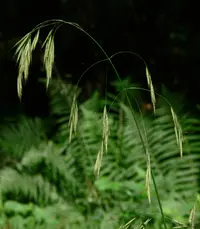
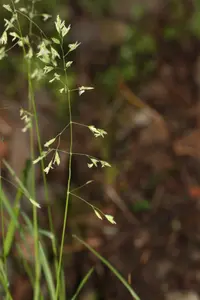
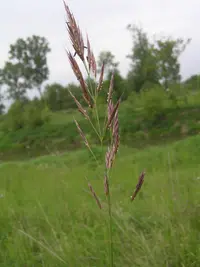
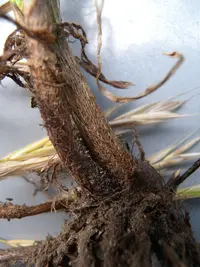
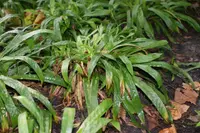
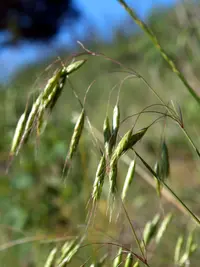
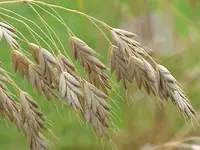
Mountain brome, Bromus marginatus, is a cool-season perennial grass valued for soil stabilization and forage. It forms dense clumps with upright, leafy stems and nodding seed heads.

This species is native to western North America, commonly found in mountain meadows, open woodlands, and disturbed slopes. It is often used in reclamation, erosion control, and pasture mixes because it establishes relatively fast and competes well with weeds.

Mountain brome prefers full sun, moderate moisture, and well-drained soils, but it tolerates a range of conditions, which simplifies basic care for mountain brome for most growers.

Main Plant Requirements

Care Difficulty

Easy Care

Light Preference

Full Sun

Water Requirements

Moderate Water

Temperature Preference

Cold Hardy

Hardiness Zone

3–9

Soil Texture

Sandy, Loamy, Clay

Soil pH

Slightly acidic (6.5–7.0), Slightly alkaline (7.0–7.5)

Soil Drainage

Well-drained

Fertilization

Minimal (feed rarely)

Get Personalized Care Plan

Scan your plant to receive care tips personalized for your specific plant

Available on iOS and Android

How to Care for the mountain brome

This cool-season bunchgrass prefers open, bright conditions similar to natural mountain meadows.

  • Provide 6–8 hours of direct sun daily; light afternoon shade is helpful in hot, low-elevation sites to reduce leaf scorch.
  • Tolerates partial shade (3–4 hours of sun) but stems may grow taller and flop, and seed production can decline.
  • In summer, monitor for bleaching or crisped leaf tips from intense afternoon sun, while sparse, weak growth usually indicates too much shade for mountain brome.

This species prefers evenly moist but not saturated soil, especially during establishment and active growth.

  • In the field, water when the top 5–7 cm of soil feel dry and grass blades begin to lose some spring; avoid letting soil become dust-dry for long periods.
  • During cool spring and fall, moisture use slows, so extend the interval between waterings while still preventing complete drying on sandy or rocky soils.
  • Poor drainage, a sour smell, yellowing lower leaves, or soft, rotting crowns indicate overwatering, while folding, browning tips, and slow recovery after trampling suggest underwatering for Bromus marginatus.

This cool-season grass grows best in mild conditions and withstands significant cold once established.

  • Optimal active growth occurs around 50–75°F (10–24°C); it performs strongly in cool spring and fall and slows in mid-summer heat.
  • Established plants tolerate winter cold down to about -20°F (-29°C) with snow cover, though young seedlings are more vulnerable to repeated freeze-thaw cycles.
  • In hot regions, growth declines above about 85°F (29°C); combine moderate afternoon shade and adequate moisture during heat waves to limit stress and leaf scorching.

Humidity is not a significant factor for Bromus marginatus, which is adapted to open, dry habitats.

Bromus marginatus prefers moderately fertile, well-structured mineral soil that drains freely yet retains some moisture.

  • Use a loamy or sandy loam soil with 10–25% compost to support steady growth without excessive lushness.
  • Ensure rapid drainage; avoid compacted clay or sites where water remains pooled longer than 24 hours.
  • Target a slightly acidic to neutral pH of about 6.0–7.5, adjusting with lime or sulfur if local soil is outside this range.
  • Improve aeration and root penetration by incorporating coarse sand or fine gravel into heavier soils before planting.

This species can be grown in containers but performs best in large, stable outdoor pots.

  • Choose a deep, heavy container (at least 30–40 cm tall) to support the extensive root system and prevent wind tip-over.
  • Use a gritty, fast-draining outdoor mix and elevate the pot on feet or bricks so water clears the drainage holes quickly.
  • Position the container where wind is partially broken, since tall flowering stems can act as sails and stress roots in loose media.

This cool-season bunchgrass benefits from light feeding but often performs well on modest soils.

  • For most mountain brome plantings, apply a thin topdressing of mature compost in early spring to support steady growth.
  • Where additional nutrients are needed, use a balanced slow-release fertilizer (around 10-10-10) at low label rates once in spring.
  • On poorer soils, a second light feeding in midsummer can support regrowth after cutting or grazing.
  • Avoid fertilizing in late fall or winter; excess nitrogen then encourages weak, frost-prone shoots.

Bromus marginatus needs only simple pruning to maintain tidy, vigorous clumps.

  • Cut back dead or weather-damaged foliage in late winter or very early spring before new shoots emerge.
  • After flowering, shear spent seed heads if self-seeding or a rough appearance is not desired.
  • Remove crowded, crossing, or lodged (flattened) stems at the base to improve air flow and reduce disease risk.
  • Use clean, sharp shears or a scythe, cutting above the crown to avoid injuring new buds.

This grass is usually field-grown, so care focuses on transplanting rather than long-term container culture.

  • Transplant in early spring or early fall when soil is moist and temperatures are mild, avoiding hot, dry periods.
  • Move plants when growth slows, clumps outgrow their space, or roots circle and mat against container sides.
  • Dig wide around the clump, keep a generous soil root ball, and handle roots gently to limit transplant shock.
  • Replant at the same depth, firm soil, and water deeply, then keep evenly moist for 1–2 weeks while roots re-establish.

Bromus marginatus is commonly propagated by seed and by division of established clumps.

  • Sow fresh or stored seed in early spring or late summer in well-drained soil, barely covering the seed.
  • Maintain consistent moisture and cool conditions (about 50–65°F) until germination, usually within 1–3 weeks.
  • Divide mature, healthy clumps in early spring or fall, cutting sections with several buds and roots each.
  • Replant divisions promptly, water thoroughly, and keep evenly moist until new growth shows stable establishment.

This species is cold hardy and generally needs little winter care once established.

  • In colder regions, allow foliage to remain over winter to catch snow and insulate the crown naturally.
  • Apply a light mulch layer (2–5 cm) around the base in late fall on exposed sites, avoiding direct cover of the crown.
  • For container plants in very cold climates, move pots to a sheltered, unheated area to prevent root freeze-thaw damage.

Care Tips

Staggered reseeding

Broadcast a light reseeding into existing clumps every 2–3 years to maintain a dense stand and reduce weed invasion as older plants thin out.

Early-season weed check

Walk the planting in early spring and hand-remove or spot-spray young broadleaf weeds before the grass fully elongates, when competition control is most effective and selective.

Timely cutting schedule

If using for forage or erosion control, schedule the main cut or mow before seed heads fully mature to prevent lodging and to encourage strong regrowth from basal buds.

Erosion-control bundling

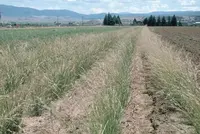
On slopes, plant in offset rows along the contour and lightly mulch between rows so the fibrous root system can knit the soil together and reduce surface runoff while growing mountain brome.

Seed head monitoring

Inspect seed heads periodically for rust or fungal spotting and, if present, adjust irrigation to reduce leaf wetness duration and remove heavily affected patches to limit disease spread.

Common Pests and Diseases

Stripe rust

This disease causes yellow to orange linear pustules on leaves and sheaths that can merge into larger rusty patches and reduce plant vigor. Symptoms include premature leaf drying and poor seed production under cool, moist conditions.

Solution

Remove and destroy heavily infected foliage or plants to reduce spore load, and avoid overhead irrigation that keeps leaves wet for long periods. Use wider spacing and good air circulation, rotate away from other rust-susceptible grasses, and in production settings choose resistant seed sources when available as part of broader Bromus marginatus care instructions.

Leaf spot complex

This disease causes tan to dark brown spots or streaks on leaves that may coalesce, leading to blighted leaf tips and reduced photosynthetic area. Symptoms include thinning stands and lower forage quality, especially in dense, humid plantings.

Solution

Mow or trim and remove infected leaf material to limit inoculum, and maintain moderate plant density to improve airflow and faster leaf drying. Avoid excess nitrogen fertilization, irrigate early in the day so foliage dries quickly, and rotate with non-host species if leaf spots are severe and recurring in the same area.

Grass aphids

These insects cluster on stems and leaf bases, sucking sap and causing leaf yellowing, curling, and general weakening of the plants. This pest can also excrete sticky honeydew that supports sooty mold growth and may transmit viral diseases between grasses.

Solution

Encourage natural predators such as lady beetles by minimizing broad-spectrum insecticides and maintaining plant diversity nearby. If populations build up, hose plants with a firm stream of water to dislodge aphids on small plantings, or use a targeted insecticidal soap or horticultural oil, applied in the early morning and repeated as needed according to the label.

Grasshoppers

These insects chew irregular holes and ragged edges in leaves and can strip foliage under outbreak conditions, reducing stand density and seed production. This pest is more problematic in dry, open sites and along field margins.

Solution

Mow or manage nearby weedy areas that harbor nymphs, and use barrier screens or row covers on small plantings during peak feeding periods. In larger fields, monitor nymph stages and, if thresholds are exceeded, use bait formulations or targeted grasshopper controls approved for forage grasses, applied to border zones where insects concentrate.

Seedling damping-off

This disease affects emerging seedlings, causing dark, water-soaked lesions at the soil line, collapse of young plants, and patchy establishment in new seedings. Symptoms include poor germination stands, with seedlings shriveling shortly after emergence in cool, wet soils.

Solution

Use clean, well-drained seedbeds and avoid overwatering during germination, keeping the soil just evenly moist. Sow high-quality seed, avoid overly dense seeding rates, and if damping-off has been a recurring problem in the site, consider a fungicide-treated seed or rotating to a non-grass crop for one season before re-establishing the stand.

Interesting Facts

Native montane distribution

This species is native to western North America, where it naturally occurs in montane and foothill habitats from British Columbia and Alberta south into the Intermountain West, often on open slopes and meadows rather than dense forest.

Deep fibrous root system

Mountain brome forms a dense, fibrous root system that penetrates relatively deeply into the soil, which stabilizes slopes and makes it valuable in erosion control and land reclamation projects.

High wildlife forage value

The species is widely used in range restoration because its foliage provides palatable, nutritious forage for grazing wildlife and livestock, especially in cooler seasons when many warm-season grasses are less productive.

Botan icon

Did you know?

Bromus marginatus has been used extensively in post-disturbance restoration, including after mining and road construction, because it establishes quickly on disturbed soils and helps create conditions that allow slower-establishing native species to return.

FAQs about mountain brome

This grass is a cool-season perennial. Individual plants can live several years, often 3–5, but may thin out sooner in hot, humid climates or poorly drained soil. It commonly self-seeds, helping stands persist over time.

Grow Healthy Plants with Botan Care

Keep your plants happy and healthy with plant identification, disease detection, and easy care guidance.

Botan plant care app — identify plants on mobile

Explore More Plants