Spring division timing
Divide clumps in early spring just as new growth emerges, replanting sections at the same depth to maintain vigorous foliage and a uniform groundcover.

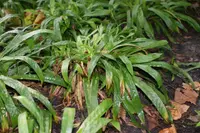
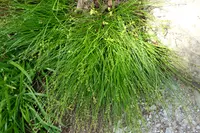
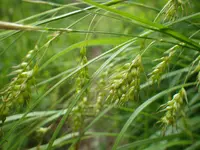
Plantainleaf sedge, Carex plantaginea, is a clump-forming, evergreen sedge grown mainly for its bold, pleated foliage. It forms low, arching mounds of wide, glossy green leaves that resemble plantain leaves more than typical grass blades.
This species is native to rich, deciduous woodlands in eastern North America, where it carpets shaded forest floors. It stays relatively compact and spreads slowly, which makes it manageable for small gardens.
The plant prefers shade to part shade, consistently moist soil, and high organic matter, which generally makes it easy to care for plantainleaf sedge in woodland or shade garden settings.

Care Difficulty
Easy Care

Light Preference
Partial Shade

Water Requirements
Regular Water

Temperature Preference
Cold Hardy

Hardiness Zone
3–8

Soil Texture
Loamy, Silty, Organic-rich

Soil pH
Acidic (5.5–6.5), Slightly acidic (6.5–7.0)

Soil Drainage
Moist but well-drained

Fertilization
Minimal (feed rarely)
Scan your plant to receive care tips personalized for your specific plant
Available on iOS and Android
This woodland sedge prefers cool, shaded conditions with only brief direct sun.
This sedge favors consistently moist, but not waterlogged, soil throughout the growing season.
This cool-climate sedge is hardy outdoors across a wide temperature range when planted in the ground.
This woodland sedge prefers moderately moist air but usually adapts well to typical home humidity.
This species prefers moist, rich, well-structured soil that stays aerated yet never waterlogged.
This sedge can grow well in containers when moisture and stability are carefully managed.
This woodland sedge benefits from modest feeding when grown in lean or heavily managed garden soils.
Carex plantaginea needs only light pruning to keep the clump tidy and healthy.
This sedge is typically grown in the ground and only occasionally needs transplanting or division.
Carex plantaginea is most reliably propagated by division rather than from seed.
This woodland sedge is cold hardy in much of its range and needs minimal winter care in the ground.

Plant Health Check
Not sure what's wrong with your plant? Check your plant's health inside the app.
This sedge has unusually wide, pleated leaves for the genus Carex, which makes it resemble small hostas and helps it capture low, filtered light on the forest floor.
It is native to rich, deciduous forests of eastern North America, where it grows in moist, rocky ravines and slopes, contributing to ground-layer diversity and soil stability.
The foliage often emerges very early in spring, sometimes before many woodland perennials, providing one of the first green layers in its natural habitat and in shady gardens.

Carex plantaginea was first described scientifically in the early 19th century and has remained a stable, well-recognized species within a notoriously complex genus, making it a reliable reference point for botanists studying North American woodland sedges.
This species is semi-evergreen in many temperate regions. Foliage usually persists through mild winters but may flatten or brown after severe cold, then push fresh leaves in spring from the crown and short rhizomes.
Keep your plants happy and healthy with plant identification, disease detection, and easy care guidance.