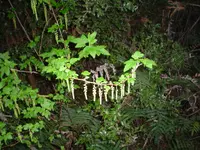
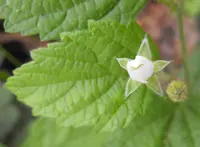
Kochi's Beauty Berry Care (Callicarpa kochiana)

Kochi's Beauty Berry

About Kochi's Beauty Berry

Callicarpa kochiana, often called Kochi's beauty berry, is a deciduous shrub valued for its showy clusters of bright purple berries that follow small summer flowers. It forms a dense, rounded shape with arching branches and simple green leaves that create a strong seasonal display.

This species is native to parts of East Asia, where it grows in woodland edges and thickets, which hints at its preference for light shade and reasonably moist, well-drained soil. Gardeners generally find it straightforward to care for Kochi's Beauty Berry if it is given adequate light and protection from very dry or waterlogged conditions.

The plant is grown mainly as an ornamental shrub for borders, mixed hedges, and wildlife-friendly gardens, since the berries attract birds in autumn and early winter.

Main Plant Requirements

Care Difficulty

Moderate Care

Light Preference

Full Sun

Water Requirements

Moderate Water

Temperature Preference

Warm Climate

Hardiness Zone

7–10

Soil Texture

Sandy, Loamy, Organic-rich

Soil pH

Acidic (5.5–6.5), Slightly acidic (6.5–7.0)

Soil Drainage

Moist but well-drained

Fertilization

Minimal (feed rarely)

Get Personalized Care Plan

Scan your plant to receive care tips personalized for your specific plant

Available on iOS and Android

How to Care for the Kochi's Beauty Berry

This deciduous shrub forms best berries when given consistent, moderate sun exposure outdoors.

  • Provide 4–6 hours of direct sun daily, ideally with gentle morning sun and light afternoon shade, especially in hotter regions.
  • Tolerates partial shade (2–4 hours sun), but denser shade reduces flowering and the vivid fruit display of Kochi's Beauty Berry.
  • In hot summers, protect from harsh afternoon sun with dappled or filtered light to prevent leaf scorch, yet avoid deep shade that produces leggy, weak growth.

This shrub prefers evenly moist, well-drained soil rather than strict watering schedules.

  • In the growing season, water when the top 3–5 cm of soil feels dry, allowing water to soak the root zone without leaving standing water.
  • Choose soil that drains freely; persistent sogginess leads to root rot, yellowing leaves, and dieback, while very dry soil causes wilting and leaf drop.
  • Reduce watering in fall and winter for established Callicarpa kochiana, but do not allow prolonged drought during hot, windy periods, especially in the first 1–2 years.

This hardy shrub tolerates a wide temperature range but performs best in moderate climates.

  • Optimal growth occurs around 60–80°F (16–27°C), supporting strong shoot development and reliable berry production.
  • Mature plants usually tolerate winter lows near 0–5°F (-18 to -15°C); stems may die back in colder snaps, but roots often resprout in spring if mulched.
  • In summer heat above 90°F (32°C), maintain soil moisture and light afternoon shade to limit stress, leaf scorch, and premature berry shriveling.

This shrub handles a wide humidity range but grows best in moderately moist air.

  • Aim for 40–60% humidity; typical outdoor conditions in most regions are suitable for Kochi's Beauty Berry.
  • It tolerates brief dry air, but prolonged hot, dry wind can lead to leaf edge browning and premature leaf drop.
  • Increase humidity outdoors by mulching the root zone 5–8 cm deep and shielding plants from strong drying winds.

This species prefers loose, well-drained, moderately fertile soil that does not stay waterlogged.

  • Use a loamy or sandy loam base with plenty of organic matter, such as compost or well-rotted leaf mold, for Callicarpa kochiana.
  • Ensure free drainage by avoiding compacted clay and, if needed, raising the planting area into a low mound or broad ridge.
  • Target a slightly acidic to neutral pH around 6.0–7.0; avoid strongly alkaline sites that can reduce nutrient availability.
  • Improve aeration and structure by mixing in coarse sand or fine gravel in heavier soils, keeping roots from sitting in stagnant water.

This species can adapt to container growing if the pot is large and very stable.

  • Choose a wide, heavy container so the plant’s branching top growth does not tip the pot in wind.
  • Select a pot deep enough to accommodate a slowly expanding woody root system, leaving space for mulch on top.
  • Use containers with multiple side and base drainage holes so excess water exits quickly after heavy rain or irrigation.

Callicarpa kochiana benefits from modest feeding to support foliage and berry production in average garden soils.

  • Apply a balanced slow-release fertilizer (around 10-10-10) in early spring as new growth begins.
  • Use a light rate or half-strength product; this shrub dislikes heavy feeding in already fertile soil.
  • Top-dress with compost 1–2 times during the growing season to improve soil structure and microbial life.
  • Stop fertilizing Kochi's Beauty Berry by late summer and do not feed in winter dormancy.

Callicarpa kochiana responds well to light, timely pruning that maintains a neat, berry-laden shrub.

  • Prune in late winter or very early spring before new growth emerges, so flower and berry display is not reduced.
  • Remove dead, diseased, or crossing branches with clean, sharp bypass pruners to limit injury and infection.
  • Thin congested stems at the base to improve air flow and light penetration into the canopy.
  • Shorten overly long shoots to shape the plant and encourage strong new growth from lower buds.

This shrub is usually grown in the ground, so focus on transplanting young Callicarpa kochiana rather than frequent repotting.

  • Check container plants for roots circling the pot, poor drainage, or slowed growth as signs they have outgrown their space.
  • Transplant or upsize containers in early spring or early fall, when temperatures are mild and stress is lower.
  • Plan on moving garden plants only once; repeated transplanting can weaken root systems and delay establishment.
  • Water thoroughly before and after transplanting, keep the root ball intact, and shade or mulch the base to reduce shock.

Callicarpa kochiana is commonly propagated by cuttings and sometimes from seed for landscape use.

  • Take softwood cuttings in late spring to early summer, 8–12 cm long, from healthy, non-flowering shoots.
  • Remove lower leaves, dip the cut end in rooting hormone, and insert into a moist, free-draining propagation mix.
  • Maintain high humidity and bright, indirect light at 68–75°F until roots form, usually in several weeks.
  • Sow ripe seeds in autumn in pots or a nursery bed, keeping soil evenly moist and protected from disturbance.

In most temperate regions, Callicarpa kochiana is cold hardy and needs only modest winter care once established.

  • Mulch the root zone with 5–8 cm of shredded bark or leaf mold in late fall, keeping mulch off the stems.
  • Allow stems to remain through winter, as they carry ornamental berries and help insulate lower buds.
  • For young or container plants in colder zones, move pots to a sheltered, unheated but frost-moderated location.

Care Tips

Berry Display Renewal

Cut 1–3 of the oldest, thickest stems at the base every 2–3 years in late winter to stimulate fresh, arching growth that carries heavier clusters of berries at eye level.

Winter Wildlife Protection

If local birds strip the berries too early, drape a loose shrub cover or mesh over part of the plant in early winter so some fruit remains for ornamental display while still leaving other stems accessible as wildlife food.

Layering For Clones

To create identical new plants, bend a flexible low branch to the ground in spring, lightly wound the underside, peg it into contact with soil, cover with 3–5 cm of compost, and sever and transplant the rooted section after 6–12 months.

Wind And Snow Management

In exposed sites, use low, discreet staking or a simple shrub ring to prevent branches from splitting or splaying under strong wind or wet snow loads.

Targeted Bird Attraction

To encourage birds to focus less on the berries, place a dedicated bird feeder or native fruiting shrub 2–3 m away, which can help balance wildlife support with ornamental goals when caring for Kochi's Beauty Berry.

Common Pests and Diseases

Aphids

These insects cluster on young shoots and leaf undersides, sucking sap and causing curling, yellowing, and sticky honeydew that can lead to sooty mold on foliage and berries.

Solution

Spray stems and leaf undersides with a strong stream of water to dislodge colonies, then, if needed, apply insecticidal soap or a lightweight horticultural oil, repeating every 5–7 days until populations drop; encourage natural predators such as lady beetles by avoiding broad-spectrum insecticides near the shrub.

Spider mites

These pests thrive in hot, dry conditions and cause fine stippling, bronzing, and eventual leaf drop, often with delicate webbing on inner branches.

Solution

Increase humidity around the shrub with regular hose sprayers, then wash foliage thoroughly to remove mites and webs; if infestation persists, use horticultural oil or insecticidal soap directed at the undersides of leaves, and reduce plant stress with consistent watering during dry periods.

Leaf spot

This disease produces small brown or purple spotting on leaves that may merge into larger blotches, leading to premature leaf drop in humid or poorly ventilated conditions.

Solution

Remove and dispose of fallen and heavily spotted leaves to reduce inoculum, then improve air circulation by thinning crowded branches and avoiding overhead watering; in severe, recurring cases, apply a labeled ornamental shrub fungicide in early spring and during extended wet periods as part of broader Callicarpa kochiana care instructions.

Scale insects

These pests appear as small, rounded or oval bumps on stems and older wood, drawing sap and weakening shoots while producing honeydew that can support sooty mold.

Solution

Prune out heavily infested twigs and wipe remaining scales with a cloth dipped in diluted alcohol where practical, then apply a horticultural oil spray during the growing season or as a dormant oil in late winter to smother overwintering stages.

Powdery mildew

This disease forms white, powdery patches on leaves and young stems, which can distort new growth and reduce the plant’s vigor during humid, shaded conditions.

Solution

Improve sunlight exposure and air movement around the shrub, avoid overhead watering in the evening, and remove badly affected leaves; in persistent cases, apply a labeled systemic or contact fungicide at the first sign of infection and repeat as directed during high-risk weather.

Interesting Facts

Berry color intensity

Kochi's beautyberry produces unusually vivid violet to purple drupes that are often denser and more saturated in color than many other Asian beautyberry species, making it highly valued as an ornamental in fall and early winter displays.

Regional Japanese origin

This species is believed to be native to limited areas of Japan including the Kochi region on Shikoku, and its horticultural use largely stems from local selection and distribution rather than broad, wild-range collection.

Bird-dispersed fruits

The fruits are particularly attractive to small birds, which consume the berries in late season and disperse the seeds, helping maintain scattered populations around woodland edges and gardens.

FAQs about Kochi's Beauty Berry

Poor flowering usually comes from inadequate light, heavy pruning at the wrong time, or nutrient imbalance. Avoid hard pruning in late spring, do not overfertilize with high nitrogen, and ensure the shrub receives enough outdoor light.

Grow Healthy Plants with Botan Care

Keep your plants happy and healthy with plant identification, disease detection, and easy care guidance.

Botan plant care app — identify plants on mobile

Explore More Plants