Maintain soil acidity
Test soil pH every 1–2 years and keep it near 5.0–6.0 using sulfur or an acid-forming fertilizer instead of lime so foliage color and growth stay strong.

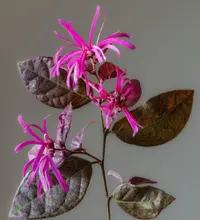
Chinese fringe flower is an evergreen shrub known for its fine, strap-like flowers and often burgundy-tinted foliage. It offers strong color contrast in mixed borders and foundation plantings.
Loropetalum chinense occurs naturally in woodland and hillside habitats in China, Japan, and parts of Southeast Asia. In gardens it usually forms a rounded, layered shape with arching branches.
This shrub is generally considered easy to grow, as it adapts to a range of climates and garden soils when drainage is good. It responds well to light pruning and needs only moderate maintenance, which helps simplify how to care for Chinese fringe flower.

Care Difficulty
Easy Care

Light Preference
Partial Sun

Water Requirements
Moderate Water

Temperature Preference
Warm Climate

Hardiness Zone
7–10

Soil Texture
Sandy, Loamy, Organic-rich

Soil pH
Strongly acidic (4.5–5.5), Acidic (5.5–6.5)

Soil Drainage
Moist but well-drained

Fertilization
Minimal (feed rarely)
Scan your plant to receive care tips personalized for your specific plant
Available on iOS and Android
This shrub prefers bright outdoor conditions with some protection from harsh afternoon sun.
This plant prefers evenly moist, well-drained soil rather than frequent shallow watering.
This shrub grows best in mild to warm climates with limited exposure to temperature extremes.
Humidity is rarely a concern for Loropetalum chinense in typical outdoor conditions.
Loropetalum chinense grows best in loose, consistently moist, sharply drained soil.
This species is well suited to long-term container growing outdoors.
This shrub benefits from modest, targeted feeding to support foliage color and flowering.
Thoughtful pruning keeps Loropetalum chinense compact, healthy, and flowering well.
This shrub is usually grown in the ground, so focus on correct transplanting rather than frequent repotting.
Propagation is commonly done from semi-hardwood cuttings or by simple layering for consistent plants.
This shrub is moderately cold hardy but benefits from some winter protection in colder regions.

Plant Health Check
Not sure what's wrong with your plant? Check your plant's health inside the app.
Its narrow, strap-shaped petals are a modified form of typical five-petaled flowers, giving the distinctive tassel or fringe appearance that increases surface area for visual attraction to insect pollinators.
The deep purple-leaved cultivars common in gardens originate from naturally occurring pigmented forms found in China, where higher levels of anthocyanins give foliage its long-lasting dark color even in full sun.
This shrub belongs to the Theaceae family, making it a relative of the tea plant Camellia sinensis, and it shares similar evergreen leaves and preference for acidic soils with its camellia relatives.

In parts of eastern and central China, this species grows natively in open forests and thickets on acidic slopes, where its early and sometimes off-season flowering provides nectar for pollinating insects when few other shrubs are in bloom.
Lack of flowers usually comes from too little light, heavy pruning at the wrong time, or excess nitrogen fertilizer. Aging wood and root stress can also reduce flowering. Prioritize stable conditions and moderate feeding to support blooming.
Keep your plants happy and healthy with plant identification, disease detection, and easy care guidance.