Aristolochia arborea Care

Aristolochia arborea

About Aristolochia arborea

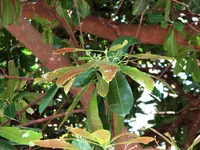
Aristolochia arborea is an unusual woody vine or small tree known for its curious, pipe-shaped flowers and broad, often glossy leaves. It belongs to a group of plants sometimes called Dutchman’s pipes.

This species is native to parts of Central America, where it grows in warm, humid forests and climbs on nearby vegetation. In cultivation it can be slow to establish and needs stable warmth, so it is better suited to experienced growers.

It typically prefers bright, filtered light, consistent moisture, and well-drained, organic-rich soil. Understanding these natural conditions makes it easier to know how to care for Aristolochia arborea.

Main Plant Requirements

Care Difficulty

Moderate Care

Light Preference

Partial Shade

Water Requirements

Regular Water

Temperature Preference

Tropical / Frost Sensitive

Hardiness Zone

10–11

Soil Texture

Loamy, Sandy, Organic-rich

Soil pH

Acidic (5.5–6.5), Slightly acidic (6.5–7.0)

Soil Drainage

Moist but well-drained

Fertilization

Minimal (feed rarely)

Get Personalized Care Plan

Scan your plant to receive care tips personalized for your specific plant

Available on iOS and Android

How to Care for the Aristolochia arborea

This twining shrub prefers bright, indirect light similar to an open woodland edge.

  • Provide 4–6 hours of filtered sun or light shade, with gentle morning sun and protection from harsh midday and late-afternoon rays.
  • Plant Aristolochia arborea where it receives dappled light under taller plants or a lightly shaded pergola, avoiding dense, deep shade that causes sparse growth and few flowers.
  • In hot summers, increase shade to prevent leaf scorch; in cooler climates, allow more direct morning sun to support flowering.

This species prefers consistently moist but not waterlogged soil.

  • Water when the top 2–4 cm of soil feels slightly dry, aiming for even moisture rather than cycles of full drying and soaking.
  • Use deep watering so moisture reaches the full root zone, and ensure soil drains freely to prevent standing water and root rot.
  • Reduce watering in cooler months when growth slows, and watch for yellowing, soft leaves as a sign of excess moisture or crisp, curling leaves as a sign of underwatering.

This vine favors warm, frost-free conditions throughout the year.

  • Aim for 65–80°F (18–27°C) during active growth, as sustained warmth supports steady foliage and flower development.
  • Protect from temperatures below 40°F (4°C); light frost can damage foliage, and hard frost may kill stems or roots.
  • In hot regions with summer highs above 90°F (32°C), provide partial shade and consistent soil moisture to limit heat stress and leaf scorch.

This species benefits from moderately humid air but usually adapts to typical home conditions.

  • Aim for 50–60% humidity to support steady growth and leaf health.
  • Leaves curling at edges, slow growth, and crispy tips indicate humidity stress from air that is too dry.
  • Use a nearby humidifier, grouped plants, or a pebble tray under (not touching) the pot to raise local humidity.

Provide loose, well-drained, organic-rich soil to support healthy roots in Aristolochia arborea.

  • Use a mix of roughly 50% peat- or coco-based potting mix, 30% compost, and 20% perlite or coarse sand for structure and drainage.
  • Aim for slightly acidic to neutral pH around 6.0–7.0, avoiding strongly alkaline substrates that can limit nutrient availability.
  • Ensure the mix feels springy and crumbly rather than sticky; add more perlite or fine bark if water lingers on the surface.
  • Avoid heavy clay, compacted garden soil, or containers that stay wet for more than 2–3 days after watering.

This species can be grown in containers when the pot supports its vining, somewhat top-heavy growth.

  • Choose a wide, weighty container to reduce tipping as stems climb or sprawl upward.
  • Select thicker-walled terracotta or ceramic if extra evaporation is needed to offset a moisture-retentive mix.
  • Position a sturdy trellis or support directly in the pot so the root ball anchors the plant and support together.

Feeding supports steady growth in Aristolochia arborea but should remain moderate to avoid soft, weak shoots.

  • Use a balanced liquid fertilizer (such as 10-10-10) at 1/2 strength every 4–6 weeks during spring and summer on actively growing plants.
  • In the ground, supplement poor soils with a thin layer of well-rotted compost once each spring, kept away from direct stem contact.
  • For container plants, a slow-release, balanced granular fertilizer applied in early spring can provide season-long nutrients.
  • Reduce or stop feeding in fall and winter when growth slows, since excess nutrients are not well used during dormancy.

Thoughtful pruning keeps Aristolochia arborea manageable, healthy, and structurally sound.

  • Carry out main pruning in late winter or very early spring before vigorous new growth begins.
  • Remove dead, diseased, crossing, or storm-damaged branches first, using clean, sharp bypass pruners or loppers.
  • Thin congested interior shoots to improve air flow and light penetration, which supports healthier foliage and flowering.
  • Shorten overly long or awkward stems to shape the canopy, making cuts just above outward-facing buds or side branches.

This species is usually grown in the ground, so focus on careful transplanting rather than frequent repotting.

  • Transplant young Aristolochia arborea plants in early spring or early fall when temperatures are mild and soil is workable.
  • Look for signs such as roots circling a nursery pot, slow growth despite good care, or a plant that dries out very quickly.
  • Prepare a hole 2–3× wider than the root ball, place the plant at the same depth, then backfill with native soil and water slowly and deeply.
  • Reduce root stress by handling the root ball gently, disturbing roots only lightly, shading the plant for a few days, and keeping soil evenly moist.

Propagation of Aristolochia arborea is possible but tends to be a slower, more specialized task for patient growers.

  • Sow fresh seeds in late winter to early spring in a free-draining seed mix, keeping temperatures around 70–75°F and moisture consistently light.
  • Use semi-ripe stem cuttings in late spring or early summer, placed in a humid, bright, indirect light environment with a rooting hormone dusted on cut ends.
  • Maintain good air circulation around cuttings or seedlings and avoid waterlogging, as excess moisture encourages rot and fungal problems.

In mild climates this species often manages winter with limited intervention, but harsher regions require added protection.

  • Aristolochia arborea is only moderately frost tolerant and may suffer damage in prolonged freezes or temperatures below about 25°F.
  • Apply a 5–8 cm layer of organic mulch around the root zone in late fall, keeping mulch slightly away from the stem.
  • Move container-grown plants indoors or into a cool, bright, frost-free space before hard frosts, watering sparingly over winter.

Care Tips

Provide firm support

Install a sturdy trellis or mesh panel early and loosely tie young vines with soft ties so stems can climb securely without kinking or breaking as they thicken.

Guide flowering shoots

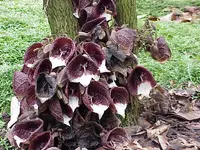
Once vines reach the top of their support, pinch or re-direct tips horizontally to encourage the development of side shoots where most of the unusual flowers will form.

Monitor root confinement

In containers, check yearly whether roots are circling heavily and, if so, step up only 1 pot size and trim back damaged or tightly coiled roots to keep growth controlled and flowering consistent.

Use physical pest barriers

Because pipevines can attract caterpillars, use fine insect mesh or floating row cover over young plants, removing it once stems harden and can tolerate some chewing.

Plan for toxicity

Plant away from children’s play areas and pets, label the species clearly, and avoid placing cut stems or seed pods in contact with animal enclosures when caring for Aristolochia arborea.

Common Pests and Diseases

Leaf miner larvae

This pest tunnels inside leaves, creating pale, winding trails and causing distortion or premature yellowing. Damage is mostly cosmetic but can weaken young vines if infestations are heavy.

Solution

Remove and discard affected leaves early to break the life cycle, and avoid letting fallen foliage accumulate around the base. For repeated problems, use a neem oil or spinosad spray targeted to the leaf undersides and new growth, applying in the evening to protect pollinators while growing Aristolochia arborea outdoors.

Spider mites

These insects feed on the underside of leaves, leading to fine stippling, dull foliage, and sometimes thin webbing on stems and leaf joints. Symptoms include slowed growth and leaf edge bronzing, especially in warm, dry conditions.

Solution

Rinse foliage thoroughly with a firm stream of water, including the undersides of leaves, then increase humidity and avoid hot, stagnant air. If populations persist, apply insecticidal soap or neem oil every 5–7 days for several cycles, ensuring full coverage of the leaf undersides.

Caterpillar feeding

This pest includes butterfly or moth larvae that chew large, irregular holes in leaves and can skeletonize foliage on young plants. Some Aristolochia species are host plants for swallowtail butterflies, so leaf loss can be noticeable at certain times of year.

Solution

Hand-pick caterpillars where practical and protect young or newly planted vines with temporary netting if defoliation is severe. In gardens managed for wildlife, accept moderate seasonal feeding and focus on supporting plant recovery with steady watering, balanced light, and regular removal of only the most severely damaged foliage.

Powdery mildew

This disease appears as a white, powdery film on upper leaf surfaces, causing yellowing, curling, and premature leaf drop in shaded, humid, or crowded conditions. Symptoms include slower growth and a generally tired appearance of the vine canopy.

Solution

Increase air circulation by thinning nearby vegetation, avoid overhead watering, and water at soil level in the morning. Remove heavily affected leaves and, if needed, apply a sulfur or potassium bicarbonate fungicide labeled for ornamental vines, repeating according to label directions until new growth emerges clean.

Leaf spot fungus

This disease causes small water-soaked spots that turn brown or black, often with yellow halos, which can merge into larger dead patches on leaves. Symptoms include premature leaf drop on lower or older foliage, especially in warm, wet weather or where leaves stay damp for long periods.

Solution

Prune off and discard affected leaves, keeping tools clean between cuts, and clear fallen foliage from the soil surface to reduce reinfection. Improve airflow, avoid wetting the foliage, and if the problem recurs, apply a copper-based or other ornamental-safe fungicide according to label instructions during humid periods.

Interesting Facts

Rare Central American tree

This species is a little-known, small tree native to southern Mexico and nearby Central America, where it grows in warm, humid, mid‑elevation forests rather than as a typical twining vine like many other Aristolochia species.

Unusual woody aristolochia

Unlike the mostly herbaceous or vining members of its genus, this plant develops a distinctly woody trunk and branches, which has led some botanists to highlight it as one of the few truly arborescent, or tree‑forming, Aristolochia species.

Specialist insect relationships

In its native range, its foliage is associated with specialized insects that use Aristolochia species as host plants, reflecting the chemical defenses typical of the genus and the coevolution of certain caterpillars that can tolerate those compounds, which is important context for Aristolochia arborea care instructions in mixed-species plantings outdoors.

FAQs about Aristolochia arborea

The flowers emit a faint, often unpleasant scent and have a trap-like structure that attracts and temporarily holds small flies or beetles. These insects transfer pollen between flowers, so they are important natural pollinators for this species.

Grow Healthy Plants with Botan Care

Keep your plants happy and healthy with plant identification, disease detection, and easy care guidance.

Botan plant care app — identify plants on mobile

Explore More Plants