Alfaroa costaricensis Care

Alfaroa costaricensis

About Alfaroa costaricensis

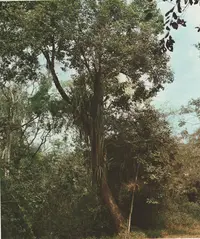
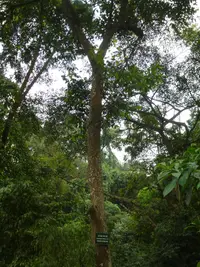
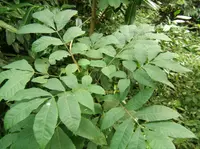
Alfaroa costaricensis is a large evergreen tree from the walnut family, native to humid montane forests of Central America, especially Costa Rica. It forms a tall, straight trunk with a broad, high canopy.

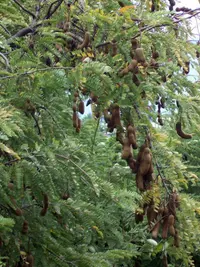
The tree carries long, feather-like compound leaves and produces hard, nut-like fruits. Its deep root system and dense wood make it more suitable for spacious outdoor sites than for small gardens.

This species prefers mild, moist, frost-free conditions and well-drained, fertile soil, which can limit where it thrives. For anyone planning to care for Alfaroa costaricensis, access to a warm, consistently humid climate is usually essential.

Main Plant Requirements

Care Difficulty

Hard Care

Light Preference

Partial Shade

Water Requirements

Regular Water

Temperature Preference

Tropical / Frost Sensitive

Hardiness Zone

11–12

Soil Texture

Loamy, Silty, Organic-rich

Soil pH

Acidic (5.5–6.5), Slightly acidic (6.5–7.0)

Soil Drainage

Moist but well-drained

Fertilization

Minimal (feed rarely)

Get Personalized Care Plan

Scan your plant to receive care tips personalized for your specific plant

Available on iOS and Android

How to Care for the Alfaroa costaricensis

This canopy tree prefers bright, warm conditions similar to lowland tropical forest edges.

  • Provide 4–6 hours of direct morning sun with bright, filtered or dappled light the rest of the day to support steady growth of Alfaroa costaricensis.
  • Allow light partial shade, especially in hot regions, since intense afternoon sun can scorch new leaves and dry young roots too quickly.
  • In cooler seasons, choose the sunniest, wind-sheltered site; in hotter months, use taller vegetation or shade cloth to soften midday and late-afternoon sun.

This species thrives in consistently moist but well-drained soil, not in standing water.

  • Water when the top 3–5 cm of soil feel slightly dry, aiming for evenly moist soil through the root zone rather than frequent shallow wetting.
  • Improve drainage with a deep, loose soil profile and avoid low spots where water pools, since persistent saturation can cause root rot and leaf yellowing.
  • During hot, dry periods increase watering depth and frequency if leaves wilt or curl by midday, and reduce watering in cooler, rainy seasons to prevent waterlogging.

This tropical tree prefers warm, stable temperatures year-round with no exposure to frost.

  • Aim for average growth temperatures of 70–85°F (21–29°C), which support active root and canopy development without heat stress.
  • Protect the tree when temperatures approach 40°F (4°C); light frost can damage young foliage and repeated cold events may kill seedlings or saplings.
  • In hotter climates, brief peaks to 90–95°F (32–35°C) are tolerated if soil moisture is adequate and the site has some afternoon shade and air movement.

This species prefers consistently moist air similar to lowland tropical forests.

  • Aim for 60–80% humidity to support steady growth and leaf health.
  • It tolerates brief dips to 40–50%, but prolonged dry indoor air leads to leaf edge browning and slowed growth.
  • Increase humidity with grouped plants, large pebble trays under containers, or a room humidifier in very dry climates.

Alfaroa costaricensis thrives in deep, fertile, well-structured soils that stay moist yet drain freely.

  • Use a loamy mix with high organic matter, such as garden loam blended with compost and leaf mold.
  • Ensure rapid drainage by incorporating coarse sand or fine gravel so water does not pool around the roots.
  • A slightly acidic to neutral pH around 6.0–7.0 supports nutrient availability and healthy root function.
  • Avoid compacted, heavy clay or waterlogged sites; loosen subsoil and add organic matter to improve aeration and structure.

This tree is generally unsuitable for long-term container growing due to its eventual size and deep root system.

This tropical nut tree benefits from modest, steady nutrition rather than heavy feeding.

  • Apply a balanced slow-release fertilizer (for example, 10-10-10) at half strength at the start of the warm growing season.
  • Supplement with a thin layer of compost over the root zone once a year to improve soil structure and microbial activity.
  • Avoid high-nitrogen products that push soft, weak growth; aim for even NPK and stable, moderate vigor.
  • Stop feeding Alfaroa costaricensis in late fall so new growth hardens before cooler weather.

Pruning is mainly used to maintain structure and remove problem wood on this large tree.

  • Schedule light structural work in late winter or very early spring before active growth begins.
  • Remove dead, diseased, or storm-damaged branches first, then thin crossing or crowded interior shoots.
  • Use clean, sharp bypass pruners or a pruning saw to make smooth cuts just outside the branch collar.
  • Limit canopy reduction to small increments to avoid stress and to preserve the natural form of Alfaroa costaricensis.

This species is usually grown in the ground, with container culture limited to young nursery plants.

  • Transplant in late spring or early summer when soil is warm and new growth is starting.
  • Look for circling roots, a root-bound ball, or stalled top growth as signs a container plant needs a larger space.
  • Move up only 1–2 pot sizes or into a field site with deep, well-drained soil to support long-term root expansion.
  • Handle the root ball gently, keep original soil around roots, water deeply after planting, and shade briefly to reduce stress on Alfaroa costaricensis.

Propagation for this tree is typically done by seed and is considered slow and specialized.

  • Collect mature nuts and sow fresh in late spring in a deep container or nursery bed with well-drained, slightly shaded conditions.
  • Scarify thick shells lightly if appropriate, then sow at 2–3 times seed thickness and keep evenly moist, not waterlogged.
  • Maintain warm temperatures around 70–80°F to support gradual germination, which may take many weeks.
  • Label seed sources carefully, as genetic diversity and origin matter for long-term health and adaptation.

This tropical to subtropical tree has low frost tolerance and needs protection in cooler climates.

  • In regions with occasional light frost, apply 5–10 cm of organic mulch over the root zone, keeping it slightly away from the trunk.
  • Wrap young trunks with breathable frost cloth on the coldest nights to reduce bark injury and dieback.
  • Grow Alfaroa costaricensis in large containers only in mild areas and move under shelter or indoors before temperatures approach 32°F.

Care Tips

Early root training

Plant young trees in deep containers or planting holes and lightly loosen circling roots at planting time to encourage a strong taproot and stable anchorage for future size.

Wind-hardening routine

Expose saplings gradually to stronger wind over several weeks by reducing windbreak protection, which helps build sturdier stems and reduces breakage once planted in open sites.

Trunk protection

Install a breathable trunk guard or shade cloth wrap on the southwest side of young trees in hot, open locations to prevent sunscald and bark cracking during the first 2–3 years.

Mulch management

Maintain a 5–8 cm mulch ring that stops 5–8 cm short of the trunk to conserve soil moisture and keep surface roots cool without increasing the risk of rot or rodent damage.

Long-term spacing

When planning a planting, allow generous spacing from structures and other trees, as this species develops a broad crown and needs room to grow without heavy structural pruning later in life for optimal Alfaroa costaricensis care instructions.

Common Pests and Diseases

Bark-boring beetles

This pest tunnels into stems and larger branches, creating small round exit holes, sawdust-like frass, and progressive dieback of affected limbs.

Solution

Prune and destroy infested branches as soon as damage is noticed, and maintain strong tree vigor through proper watering and mulching to help the plant compartmentalize damage; in plantations, monitoring traps and targeted trunk sprays with registered insecticides may be used under guidance from local forestry or extension specialists.

Defoliating caterpillars

These insects feed heavily on leaf tissue, sometimes stripping young trees of most foliage and slowing growth.

Solution

Hand-pick caterpillars on small trees where reachable, encourage natural predators by limiting broad-spectrum insecticides nearby, and, if needed in plantation settings, use a biological product based on Bacillus thuringiensis (Bt) directed to the foliage during early larval stages.

Leaf spots

This disease causes irregular tan to dark-brown lesions on leaf blades, sometimes with yellow halos and premature leaf drop on young plants or nursery stock.

Solution

Remove and discard heavily spotted fallen leaves to reduce inoculum, water at soil level rather than overhead to keep foliage dry, improve spacing and airflow, and where nursery losses are high, apply a registered broad-spectrum fungicide as a preventative spray according to label directions.

Stem cankers

This disease produces sunken, cracked, or darkened patches on young stems or branches that can girdle the tissue and cause dieback above the lesion.

Solution

Prune out cankered branches back to healthy wood in dry weather, disinfect pruning tools between cuts, avoid wounding the bark during maintenance, and keep the tree unstressed through adequate water and soil fertility to limit new infections.

Scale insects

These insects appear as small, dome-shaped or flat bumps on twigs and undersides of leaves, sucking sap and causing leaf yellowing, sticky honeydew, and sooty mold growth.

Solution

On small or young trees, gently scrub infested twigs with a soft brush and soapy water, encourage natural enemies such as lady beetles by minimizing nonselective insecticide use, and in heavier infestations consider a dormant-season or systemic treatment recommended for hardwood timber trees as part of broader Alfaroa costaricensis care instructions.

Interesting Facts

Neotropical walnut relative

This Costa Rican tree belongs to the Juglandaceae, the walnut family, and produces grooved, hard-shelled nuts structurally similar to true walnuts but with a more elongated form and thicker shell.

Cloud forest specialist

It is naturally found in mid- to high-elevation cloud and montane forests of Costa Rica and neighboring regions, where it grows in cool, humid conditions with frequent mist and high annual rainfall.

Heavy hardwood timber

The species yields a dense, durable hardwood that has been locally used for construction and furniture, which has led to selective logging pressure in some parts of its range.

Botan icon

Did you know?

The nuts are so well protected by their thick, deeply sculptured shells that only a limited set of strong-jawed animals can open them, making these animals especially important seed predators and potential seed dispersers for the species.

FAQs about Alfaroa costaricensis

Growth is moderately fast in warm, humid climates. Young trees may add 30–60 cm per year, slowing as they mature. Adequate moisture, good soil structure, and protection from strong wind support steady development without excessive stress.

Grow Healthy Plants with Botan Care

Keep your plants happy and healthy with plant identification, disease detection, and easy care guidance.

Botan plant care app — identify plants on mobile

Explore More Plants