Early framework training
In the first 3–5 years, select 3–5 strong, well-spaced branches to form a permanent framework and remove competing leaders so the tree develops a stable, wind-resistant structure.

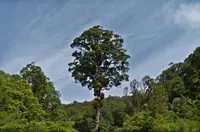
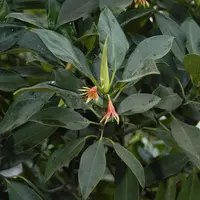
Northern rātā (Metrosideros robusta) is a large evergreen tree from New Zealand’s coastal and lowland forests. It often begins life as an epiphyte, rooting on another tree before sending thick trunks to the ground. Mature trees develop a broad, dense crown with leathery green leaves and masses of bright red brush-like flowers that attract birds and insects. In gardens, it is usually grown as a specimen tree or large shrub in mild, frost-free climates. Growth is moderately fast but can be checked by poor drainage, heavy frost, or strong, drying winds. Those who care for Northern rātā should provide sunny, sheltered conditions and well-drained soil to support healthy growth.

Care Difficulty
Moderate Care

Light Preference
Full Sun

Water Requirements
Moderate Water

Temperature Preference
Warm Climate

Hardiness Zone
9–11

Soil Texture
Sandy, Loamy, Rocky

Soil pH
Acidic (5.5–6.5), Slightly acidic (6.5–7.0)

Soil Drainage
Well-drained

Fertilization
Minimal (feed rarely)
Scan your plant to receive care tips personalized for your specific plant
Available on iOS and Android
This coastal evergreen tree prefers bright, open conditions with consistent sun exposure.
This species prefers evenly moist but well-drained soil rather than constant saturation.
This tree is adapted to mild, coastal climates with limited temperature extremes.
This species tolerates a wide humidity range but grows best with modest moisture in the air.
Metrosideros robusta prefers freely draining, slightly acidic to neutral soil with moderate organic content.
This tree can be grown in large containers for many years if the pot is managed carefully for stability and drainage.
Metrosideros robusta benefits from modest, well-timed feeding in containers or poor soils, while established in-ground trees often need little input.
Pruning Metrosideros robusta is mainly used to manage size, structure, and access rather than to maintain health.
This species is usually grown in the ground, so guidance focuses on transplanting young trees and managing temporary containers.
Metrosideros robusta is slow and somewhat challenging to propagate, so it is usually raised by specialists rather than casual growers.
This coastal tree is moderately frost tolerant once established but young Metrosideros robusta plants benefit from some winter protection in colder areas.

Plant Health Check
Not sure what's wrong with your plant? Check your plant's health inside the app.
Northern rātā often begins life as a seedling high in the canopy of another tree, sending roots down to the ground over many years until it eventually envelops and can kill its host, a life strategy known as hemiepiphytism.
In native New Zealand forests, mature Northern rātā provide dense, long-lived crowns that support diverse communities of epiphytes, invertebrates, and birds, acting as structural and ecological anchors for the surrounding ecosystem.
The bright red brush-like flowers produce abundant nectar in summer and are primarily pollinated by native nectar-feeding birds such as tūī and korimako (bellbird), which have beaks and tongues well suited to accessing the nectar between the stamens.

Some of the largest Northern rātā are estimated to be several centuries old, with massive fused trunks that can exceed the size of the original host tree and form prominent landmarks in lowland and coastal forests across parts of New Zealand’s North and South Islands.
Growth is generally slow to moderate. Young plants may add about 15–30 cm per year, sometimes less in dry or exposed sites. In good coastal or mild climates, growth speeds up once the root system is well established.
Keep your plants happy and healthy with plant identification, disease detection, and easy care guidance.