Windfirm training
In the first 3–5 years, selectively shorten or remove competing leaders and thin out weak, crossing branches so the tree develops one dominant trunk and well-spaced scaffold branches that better resist wind and ice loads.

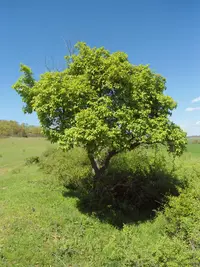
Tatarian maple, Acer tataricum, is a small deciduous tree or large shrub valued for its reliable growth and modest size. It typically has a rounded crown, simple green leaves, and red-winged seeds that add seasonal interest.
This species is native to southeastern Europe and western Asia, where it grows in woodlands and open slopes. In gardens and landscapes, it is appreciated for its toughness, cold hardiness, and ability to tolerate urban conditions.
It is considered relatively easy to grow, adapting to different soils and moderate drought once established. Understanding how to care for tatarian maple mainly involves providing full sun to light shade and reasonably well-drained soil.

Care Difficulty
Easy Care

Light Preference
Full Sun

Water Requirements
Moderate Water

Temperature Preference
Cold Hardy

Hardiness Zone
3–8

Soil Texture
Sandy, Loamy, Clay

Soil pH
Acidic (5.5–6.5), Slightly acidic (6.5–7.0)

Soil Drainage
Moist but well-drained

Fertilization
Minimal (feed rarely)
Scan your plant to receive care tips personalized for your specific plant
Available on iOS and Android
This species prefers full sun to light shade for balanced growth and dependable fall color.
Acer tataricum prefers evenly moist, well-drained soil rather than frequent shallow watering.
This hardy maple tolerates a wide temperature range but performs best in moderate conditions during the growing season.
This species is adapted to outdoor conditions and does not have special humidity needs beyond typical temperate outdoor ranges.
Acer tataricum grows best in moderately moist, well-aerated mineral soil that does not stay waterlogged.
This species can be grown in containers for several years, especially as a patio specimen or juvenile tree.
This species grows in average soil but benefits from light feeding in poor or heavily drained sites.
Pruning Acer tataricum supports strong structure and maintains a balanced canopy.
Acer tataricum is usually grown in the ground, so care focuses on correct transplanting rather than frequent repotting.
Acer tataricum is most often propagated from seed, with some use of softwood cuttings in managed settings.
This maple is cold hardy and usually needs minimal winter care in the ground.

Plant Health Check
Not sure what's wrong with your plant? Check your plant's health inside the app.
This maple is naturally distributed from eastern Europe across western and central Asia, tolerating both continental cold and relatively dry steppe climates better than many other maples.
Its paired winged fruits (samaras) are small, often pink to red when young, and mature horizontally, which helps with short-distance wind dispersal and makes the tree visually striking in late summer.
Acer tataricum has been used in breeding several ornamental hybrids, including cultivars of the popular Amur maple group, contributing its cold hardiness and adaptability to urban conditions.

In some regions outside its native range, especially parts of North America, Acer tataricum has shown invasive behavior in natural areas, forming dense thickets from abundant seedlings and displacing local understory vegetation.
In some regions, this species self-seeds heavily and is listed as invasive, especially in parts of North America. Check local regulations, remove unwanted seedlings promptly, and avoid planting near natural woodlands or sensitive habitats.
Keep your plants happy and healthy with plant identification, disease detection, and easy care guidance.