Early leader training
In the first 3–5 years, select a single strong central leader and remove competing uprights in late winter to build a stable, wind-resistant framework for the mature tree.

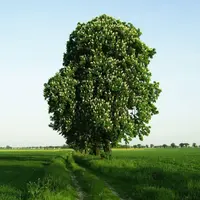
Horse chestnut, Aesculus hippocastanum, is a large deciduous tree valued for its bold foliage and showy spring flower spikes. It forms a broad, rounded crown and can become a dominant feature in parks, streets, and large gardens.
The tree is native to the Balkans in southeastern Europe but is widely planted across temperate regions, especially in Europe and parts of North America. Its fast growth, tolerance of urban pollution, and general hardiness make it relatively easy to establish where there is enough space.
To care for horse chestnut, provide full sun, moderately moist soil, and room for its extensive root system. It prefers deep, well-drained soil and consistent moisture, especially when young.

Care Difficulty
Moderate Care

Light Preference
Full Sun

Water Requirements
Moderate Water

Temperature Preference
Cold Hardy

Hardiness Zone
3–7

Soil Texture
Loamy, Clay, Organic-rich

Soil pH
Slightly acidic (6.5–7.0), Neutral (7.0)

Soil Drainage
Moist but well-drained

Fertilization
Minimal (feed rarely)
Scan your plant to receive care tips personalized for your specific plant
Available on iOS and Android
This large deciduous tree needs abundant outdoor light to develop a full, dense crown.
This species prefers consistently moist but not waterlogged soil, especially while young and establishing.
This hardy temperate tree thrives in climates with cool to warm summers and cold winters.
Humidity is rarely a limiting factor for horse chestnut grown outdoors in temperate climates.
This species prefers deep, fertile, moist but well-drained ground that stays aerated over time.
This large tree is only moderately suitable for short-term container growing when young.
Mature Aesculus hippocastanum in the ground usually needs minimal feeding if soil is moderately fertile.
Pruning Aesculus hippocastanum is mostly limited to safety, structure, and basic health maintenance.
Horse chestnut is usually grown in the ground, so management focuses on careful transplanting of young trees.
Aesculus hippocastanum is most often propagated from seed rather than from cuttings.
Mature Aesculus hippocastanum trees are very cold hardy and generally need no special winter protection in the ground.

Plant Health Check
Not sure what's wrong with your plant? Check your plant's health inside the app.
The common name horse chestnut likely comes from the historical use of its seeds as winter feed for sick horses, even though the raw seeds are toxic to many animals and humans.
Its seeds, known as conkers, are enclosed in a green, spiny capsule that splits into 2–4 sections when mature, an adaptation that protects the developing seeds from many herbivores.
The white flowers have yellow spots that turn reddish after pollination, providing a visual signal to pollinators that the flower has already been visited and reducing wasted visits.

In many parts of Europe, especially in cities like Vienna and Munich, mature horse chestnut trees have traditionally been planted above beer cellars and outdoor beer gardens because their broad, dense canopies provide deep shade that helps keep the storage spaces and seating areas cooler in summer.
This tree is moderately fast-growing when young, often adding 30–60 cm per year under good conditions. Growth slows as it matures. Adequate water, deep soil, and space for roots are key for strong annual extension.
Keep your plants happy and healthy with plant identification, disease detection, and easy care guidance.