aspen fleabane Care (Erigeron speciosus)

Also known as: showy fleabane, aspen daisy, Showy Daisy
aspen fleabane

About aspen fleabane

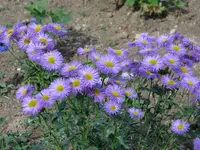
Aspen fleabane (Erigeron speciosus) is a herbaceous perennial in the daisy family, grown mainly for its cheerful, multi-petaled lavender to violet flowers. It forms compact clumps with upright stems and narrow green leaves, creating a soft, meadow-like look in mixed borders and naturalistic plantings.

This species is native to western North America, where it grows in open meadows, forest edges, and mountain slopes. It is generally easy to grow, adapting well to average garden conditions when given sun, well-drained soil, and moderate moisture.

Gardeners who want to care for aspen fleabane usually find it a low-maintenance choice, especially in cooler summer climates and sites that are not excessively humid or waterlogged.

Main Plant Requirements

Care Difficulty

Easy Care

Light Preference

Full Sun

Water Requirements

Moderate Water

Temperature Preference

Cold Hardy

Hardiness Zone

3–8

Soil Texture

Sandy, Loamy, Rocky

Soil pH

Acidic (5.5–6.5), Slightly acidic (6.5–7.0)

Soil Drainage

Well-drained

Fertilization

Minimal (feed rarely)

Get Personalized Care Plan

Scan your plant to receive care tips personalized for your specific plant

Available on iOS and Android

How to Care for the aspen fleabane

Erigeron speciosus prefers bright, open sites that mimic mountain meadow conditions.

  • Provide 6–8 hours of direct sun daily, ideally with morning sun and light afternoon shade in hotter regions to reduce leaf scorch.
  • Tolerates partial shade, but flowering is best in full sun; in shade over 4–5 hours, expect fewer, weaker blooms and taller, floppy growth.
  • In hot summers, protect aspen fleabane from intense late-afternoon sun with nearby plants or structures that cast light, filtered shade.

Erigeron speciosus prefers moderately moist, well-drained soil rather than constant saturation.

  • Water in-ground plants when the top 3–5 cm of soil feels dry, applying a deep soak so moisture reaches the root zone, then allow excess to drain away.
  • Reduce watering once established, especially in cool or wet seasons, as the plant tolerates short dry spells better than standing water.
  • Watch for yellowing, soft stems as a sign of overwatering and crisp, wilting leaves that do not recover overnight as a sign of underwatering.

This hardy perennial tolerates a wide temperature range when established in the ground.

  • Optimal growth occurs around 60–75°F (16–24°C), with strong flowering in mild spring and early summer conditions.
  • Mature plants generally survive winter lows down to about -20°F (-29°C) in well-drained soil, but new plantings benefit from mulch to buffer freeze–thaw cycles.
  • Handles summer heat up to about 85–90°F (29–32°C) if soil does not dry out completely, but prolonged extreme heat can shorten flowering and stress foliage.

Humidity is rarely a limiting factor for this hardy perennial in typical home or garden conditions.

This species prefers free-draining, moderately fertile mineral soil that does not stay wet for long.

  • Use a sandy or loamy structure with 20–30% compost mixed into native soil to support steady growth.
  • Ensure sharp drainage by incorporating coarse sand or grit, especially in heavier clay-based ground.
  • Aim for slightly acidic to neutral pH around 6.0–7.0, which suits most Erigeron speciosus plant care situations.
  • Avoid compacted or waterlogged sites; if soil puddles for more than 30 minutes after watering, lighten it further with grit or fine bark.

This plant grows reliably in containers when given a stable, well-drained setup outdoors.

  • Choose a pot at least 25–30 cm wide and deep so the spreading root system and clumps have room to develop without crowding.
  • Use a heavier material such as ceramic or clay to keep wind-toppled containers to a minimum as stems elongate and flower.
  • Raise the container slightly on feet or bricks so drainage holes clear quickly and the base does not sit in collected runoff water.

Erigeron speciosus grows well in average soil and only needs light, targeted feeding to support flowering.

  • Apply a balanced, slow-release fertilizer (such as 10-10-10) in early spring at label rates for aspen fleabane.
  • Supplement with a thin layer of compost around the clump once in spring to improve soil structure and nutrition.
  • During active growth, a half-strength balanced liquid feed every 4–6 weeks is sufficient in poorer soils.
  • Stop feeding in late summer and avoid fertilizer in fall and winter to prevent soft, frost-tender growth.

Erigeron speciosus benefits from periodic pruning to maintain compact growth and strong flowering.

  • In late spring to midsummer, deadhead spent flower stems with clean hand pruners to extend blooming.
  • Remove dead, damaged, or diseased stems at the base whenever seen to reduce disease risk.
  • In late fall or very early spring, cut back old, woody, or crowded growth to 5–10 cm to refresh the clump.
  • Lightly shape the plant by trimming uneven outer stems, encouraging denser foliage and more flowering shoots.

This species is usually grown in the ground, so care focuses on dividing and transplanting mature clumps.

  • Transplant or divide in early spring or early fall when temperatures are mild and soil is workable.
  • Look for signs such as crowded centers, reduced flowering, or slow growth before moving or splitting plants.
  • Lift the clump with a fork, gently tease roots apart into sections with healthy buds, and replant at the same depth.
  • Water thoroughly after transplanting, then keep soil evenly moist for 1–2 weeks to limit root stress and improve establishment.

Erigeron speciosus is commonly propagated by division, with seeds and cuttings as secondary options.

  • Divide established clumps in early spring or early fall, ensuring each division has several shoots and a solid root portion.
  • Sow seeds in late winter to early spring in a bright, cool spot; keep the seed mix lightly moist until germination.
  • Take softwood cuttings in late spring, use a free-draining mix, and maintain high humidity and bright, indirect light for rooting.
  • Label propagated plants with date and method to track performance and select the most vigorous lines over time.

This hardy perennial usually needs minimal winter care in most temperate climates.

  • Erigeron speciosus tolerates frost and typical winter lows in many regions once established in well-drained soil.
  • After hard frost, cut back dead stems to 3–5 cm or leave them for winter interest, then trim in early spring.
  • Apply a 5–7 cm mulch layer around the root zone in colder areas, keeping mulch slightly away from the crown.
  • Container plants in very cold regions can be moved to an unheated garage or cold frame to reduce freeze–thaw stress.

Care Tips

Pinch Early Growth

Pinch back the tips of young shoots once they reach 10–15 cm tall to encourage a bushier habit, more flowering stems, and better wind resistance.

Provide Wind Support

In open, windy sites, insert low, discreet ring supports or short twiggy branches around clumps in spring so stems grow through them and remain upright when in full bloom.

Deadhead In Layers

Remove spent flower clusters weekly, cutting just above a side shoot or leaf node, and leave a few seed heads at the back if seed collection or self-sowing is desired.

Clump Renewal Division

Divide congested clumps every 3–4 years in early spring, replanting only the youngest, most vigorous outer sections to maintain strong flowering and reduce crown dieback.

Targeted Mulch Management

Apply a thin, open-textured mulch around but not on top of the crown, then pull it back slightly in late winter to keep the crown dry and reduce rot risk when caring for aspen fleabane.

Common Pests and Diseases

Powdery mildew

This disease often appears in late spring to summer, forming white, powdery patches on leaves and stems and causing distorted growth. Symptoms include reduced vigor and premature leaf drop in dense plantings or humid conditions.

Solution

Remove and discard heavily infected leaves, avoid overhead watering, and thin or divide crowded clumps to improve airflow. In persistent cases, apply a sulfur or potassium bicarbonate fungicide labeled for ornamentals, starting early in the season and following label directions carefully.

Aster yellows

This disease causes yellowing foliage, stunted plants, and deformed, greenish flowers that fail to develop normal color. Symptoms include daisy-like blooms turning tufted or leafy, with overall loss of flowering quality.

Solution

Promptly remove and destroy symptomatic plants to prevent spread, since there is no cure once infected. Control leafhopper vectors by using reflective mulches, row covers in production settings, and by reducing nearby weedy hosts that can harbor the pathogen.

Leaf spot

This disease produces small brown, purple, or tan spots on lower leaves that may enlarge and coalesce, leading to partial defoliation in wet periods. Symptoms include blemished foliage and reduced ornamental quality, especially in crowded, overhead-watered clumps.

Solution

Remove and destroy affected leaves, water at the base in the morning, and space or divide plants to dry foliage more quickly. If spotting recurs severely, use a copper or chlorothalonil fungicide labeled for ornamental perennials, applied preventively during prolonged wet weather.

Aphids

These insects cluster on young stems and flower buds, sucking sap and causing curling leaves, distorted growth, and sticky honeydew that can lead to sooty mold. This pest can also weaken plants already stressed by heat or drought and may transmit viruses.

Solution

Spray colonies off with a strong stream of water and pinch off heavily infested shoot tips. If populations remain high, use insecticidal soap or a horticultural oil, applied thoroughly to stems and the undersides of leaves, while encouraging natural predators such as lady beetles by avoiding broad-spectrum insecticides.

Spider mites

These pests thrive in hot, dry conditions, causing stippled, grayish leaves and fine webbing on the undersides of foliage and between stems. This pest can lead to premature leaf drop and an overall dull, tired appearance to the clump.

Solution

Increase humidity around plants with regular, firm hosing that also washes mites off the foliage, and remove the worst affected leaves. For ongoing problems, apply horticultural oil or insecticidal soap directed to leaf undersides at 5–7 day intervals until new growth appears clean, and reduce plant stress through proper watering as part of Erigeron speciosus plant care.

Interesting Facts

Native montane daisy

This species is native to higher-elevation meadows and open forests of western North America, where it often grows in moist montane habitats rather than dry lowlands.

Distinctive ray floret count

Its flower heads typically show a notably high number of narrow ray florets, often giving a fringed, almost shaggy look that helps distinguish it from many other North American fleabanes.

Polyploid variation

Populations of this species show polyploidy, meaning they can have more than two sets of chromosomes, which is associated with their ability to occupy a range of elevations and local environments.

FAQs about aspen fleabane

This species spreads moderately by short rhizomes and self-seeding. It usually forms tidy clumps, not invasive mats. Deadhead spent flowers and remove unwanted seedlings to control spread while still allowing a natural, meadow-like look.

Grow Healthy Plants with Botan Care

Keep your plants happy and healthy with plant identification, disease detection, and easy care guidance.

Botan plant care app — identify plants on mobile

Explore More Plants