bulltongue arrowhead Care (Sagittaria lancifolia)

Also known as: lanceleaf arrowhead
bulltongue arrowhead

About bulltongue arrowhead

Bulltongue arrowhead (Sagittaria lancifolia) is a perennial aquatic plant commonly found in marshes, ditches, and shallow ponds. It naturally occurs in the southeastern United States and other warm, wet regions.

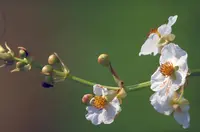
The plant forms upright clumps of long, lance-shaped leaves that emerge from the water or wet soil, creating a bold vertical accent. In suitable conditions it may produce small white flowers on slender stalks above the foliage.

This species thrives in consistently wet or shallowly flooded sites and prefers full sun to light shade with organically rich, mucky or silty soil. Understanding how to care for bulltongue arrowhead mainly involves providing stable moisture and avoiding prolonged drying of the root zone.

Main Plant Requirements

Care Difficulty

Moderate Care

Light Preference

Full Sun

Water Requirements

Aquatic

Temperature Preference

Warm Climate

Hardiness Zone

8–11

Soil Texture

Loamy, Clay, Organic-rich

Soil pH

Acidic (5.5–6.5), Slightly acidic (6.5–7.0)

Soil Drainage

Waterlogged tolerant

Fertilization

Minimal (feed rarely)

Get Personalized Care Plan

Scan your plant to receive care tips personalized for your specific plant

Available on iOS and Android

How to Care for the bulltongue arrowhead

This emergent wetland plant thrives with abundant direct light in most outdoor settings.

  • Provide 6–8 hours of direct sun daily; full sun encourages compact, sturdy growth and heavier flowering for bulltongue arrowhead.
  • Plant in sites with morning sun and optional light afternoon shade in very hot climates to prevent leaf scorching and excessive water loss.
  • Tolerates light partial shade (3–4 hours sun), but stems may elongate and flowering can decrease, especially in late summer when day length shortens.

This aquatic species prefers consistently saturated conditions rather than alternating wet and dry cycles.

  • Grow in shallow standing water 5–20 cm deep or in soil that stays constantly mucky; never allow the root zone of Sagittaria lancifolia to dry out completely.
  • In pond margins, watch for wilting, browning leaf tips, or cracked mud as signs the water level is too low and adjust depth or irrigation promptly.
  • Soft, yellowing leaves, foul odor, or rotting crowns indicate stagnant, oxygen-poor water; improve water movement or reduce organic buildup instead of adding more water.

This warm-temperate wetland plant grows best in mild to hot conditions and is sensitive to hard frost.

  • Optimal growth occurs around 70–86°F (21–30°C), with steady expansion of leaves and rhizomes in late spring and summer.
  • Established plants tolerate short dips to about 25–30°F (-4 to -1°C), but repeated freezes can damage foliage and may kill crowns in exposed sites.
  • Handles summer heat up to about 95°F (35°C) if roots stay submerged; in shallow ponds, deeper zones buffer sudden temperature swings between seasons.

This semi-aquatic species needs consistently high humidity to thrive, especially when grown indoors.

  • Aim for 60–80% humidity; lower levels are tolerated only if roots stay in saturated or shallow standing water.
  • Crisping leaf tips, reduced growth, and rolled leaves indicate humidity stress or excessively dry surrounding air.
  • Increase humidity by using wide water trays around the pot, grouping aquatic plants, or partially submerging bulltongue arrowhead containers in larger water features.

This plant prefers saturated, organic-rich substrates that mimic shallow marsh or pond margins.

  • Use a heavy loam rich in clay and organic matter, such as 2 parts garden loam, 1 part compost, and 1 part fine sand or aquatic plant soil.
  • Soil should hold water constantly and can stay waterlogged, but avoid loose, peat-only mixes that float or erode easily.
  • Aim for slightly acidic to neutral pH, around 6.0–7.2, which supports nutrient availability and healthy root development in Sagittaria lancifolia.
  • Cap the surface with a thin layer of coarse sand or fine gravel to reduce clouding in water and help anchor the roots.

This species is well suited to container growing in water gardens or tubs.

  • Choose a wide, heavy container at least 25–30 cm deep so the dense root system can anchor and the tall foliage does not tip the pot.
  • Use pots without drainage holes only when the entire container is treated as an aquatic basket that sits below the waterline in a pond or tub.
  • Place the container where water depth just covers the soil surface by 5–10 cm to stabilize moisture while preventing the crown from being buried too deep.

Sagittaria lancifolia grown in ponds or rich, mucky soil needs only modest supplemental feeding.

  • Use a balanced aquatic or general-purpose fertilizer (for example 10-10-10) or a thin layer of compost incorporated into the planting zone.
  • Feed established plants every 4–6 weeks during spring–summer growth, using pond tabs or lightly broadcast granular product.
  • Apply fertilizers at 1/2–3/4 label strength to avoid excess nutrients and algae in water bodies near bulltongue arrowhead stands.
  • Stop feeding in late fall as growth slows, and do not fertilize during winter dormancy.

Pruning Sagittaria lancifolia is mainly a matter of hygiene and managing clump density.

  • Trim yellowing, dead, or damaged leaves at the base during the growing season using clean, sharp scissors or hand pruners.
  • In late fall or early spring, remove old flower stalks and tattered foliage to tidy the plant and support fresh growth.
  • Thin crowded shoots by cutting out a few whole stems, which improves water flow, light penetration, and stand structure.
  • Disinfect tools before and after use to limit disease spread in wetland plantings.

This species is usually grown in ponds or bogs, so management focuses on dividing and transplanting rather than frequent repotting.

  • Look for dense, congested clumps, reduced vigor, or rhizomes pressing against container edges as signals to divide or transplant.
  • Plan moves for early spring, just as new shoots appear, or early fall in mild climates to reduce heat stress.
  • Every 2–3 years, lift clumps, gently rinse soil from roots, and separate healthy sections with several shoots each.
  • Replant divisions at the same depth, keep roots consistently wet, and shade briefly if needed to limit transplant shock.

Sagittaria lancifolia is commonly propagated by division, with seed used mainly for larger or restoration plantings.

  • Divide mature clumps in early spring or early fall, separating rhizome pieces that each carry several healthy shoots and roots.
  • Replant divisions into shallow water or saturated soil, maintaining consistent moisture and moderate light for steady recovery.
  • For seed, collect mature fruits, clean, and sow in trays kept in shallow water at 68–77°F with bright, indirect light.
  • Keep seedlings submerged just enough to cover the soil surface and transplant once they form several true leaves.

In mild to moderate climates, this wetland plant usually overwinteres in place with minimal attention.

  • In regions with occasional light frost, submerged crowns often survive while foliage dies back naturally.
  • In colder areas, add a 5–8 cm mulch layer over soil around shore plantings to insulate rhizomes.
  • Sink containers deeper in ponds below ice level, or move potted plants into a cool, frost-free space with water kept above the crown.

Care Tips

Control Water Depth

In ponds or tubs, keep the rhizomes 5–20 cm below the water surface and adjust the planting basket height seasonally so the foliage stays above water without being submerged by fluctuating water levels.

Use Planting Baskets

Grow in mesh aquatic baskets filled with heavy loam so you can lift, divide, or relocate clumps easily without disturbing the whole pond bed or causing excessive water cloudiness.

Manage Nutrient Runoff

Site plants where they can intercept mild nutrient runoff from lawn edges or filters, but avoid positioning them directly under strong fertilizer outflows to prevent weak, overly lush growth and algae blooms around the roots.

Divide Aging Clumps

Every 2–3 years, lift baskets or shallowly rooted stands in late spring, slice large rhizome masses into smaller sections with several healthy shoots each, and replant to maintain vigorous growth and prevent overcrowding.

Support Emergent Stems

In windy, exposed sites, place the containers close to pond edges, rocks, or low edging so tall emergent stems are buffered from strong gusts and less likely to bend or snap during storms when caring for bulltongue arrowhead.

Common Pests and Diseases

Leaf miner larvae

This pest feeds inside submerged or emergent leaves, creating pale, winding tunnels that weaken the foliage. Symptoms include distorted, yellowing blades that break down faster in moving or shallow water.

Solution

Remove and discard heavily mined leaves to reduce the larval population, then monitor new growth closely. In small ponds or tubs, encourage natural predators like fish or aquatic insects, and avoid overfertilizing, which can promote lush, tender growth that is more attractive to leaf miners when growing bulltongue arrowhead.

Aquatic snails

These insects are not involved; instead, small herbivorous snails rasp away tissue from young leaves and petioles, leaving ragged holes and transparent patches. Damage is most visible on tender new growth and can slow plant establishment in new plantings.

Solution

Hand-pick snails from stems and leaf bases during routine maintenance and dispose of them away from the water body. For contained water gardens, reduce hiding places such as dense debris, use snail traps or barriers, and rinse nursery stock before introduction to limit new infestations.

Spider mites

This pest becomes an issue when plants are grown in containers or at pond edges under hot, dry, or sheltered conditions. Symptoms include fine stippling, dull or bronzed leaves, and fine webbing, mainly on emergent foliage above the water line.

Solution

Rinse emergent leaves thoroughly with a firm stream of water, including the undersides, on several consecutive days to dislodge mites. Increase ambient humidity around container plants, remove heavily damaged leaves, and, if needed, apply an insecticidal soap labeled for mites, keeping it off open water and aquatic animals.

Bacterial leaf blight

This disease causes water-soaked spots on leaves that quickly turn brown, often with yellow halos and irregular shapes, especially in crowded or nutrient-rich plantings. Symptoms include premature leaf collapse and reduced vigor of clumps in warm, stagnant water.

Solution

Remove and discard affected leaves as soon as symptoms appear and avoid letting them decompose around the plants. Improve water circulation, reduce dense overcrowding, and limit high-nitrogen fertilization; in managed ponds, rotate or thin stands to reduce splash spread between leaves.

Leaf spot fungus

This disease produces small, round to elongate brown or purple spots on emergent leaves that may merge into larger dead patches. Symptoms include gradual thinning of foliage and premature senescence, especially in late summer or in sites with poor air movement around emergent growth.

Solution

Cut and remove spotted or dying leaves, including any floating debris, and dispose of them away from the water feature. Provide better spacing between clumps, maintain good water quality, and if the plant is grown in containers, avoid overhead watering of emergent leaves to reduce leaf wetness duration.

Interesting Facts

Arrowhead leaf dimorphism

This species produces two distinct leaf forms: submerged leaves that are narrow and ribbon-like, and emergent leaves that are thick, lance-shaped, and strongly veined, an adaptation to fluctuating water levels in marshes and ditches.

Specialized wetland anchor

Its thick rhizomes and dense fibrous roots form a compact mass that stabilizes soft, muddy substrates, helping to protect shorelines from erosion in low-energy freshwater and slightly brackish habitats.

Wildlife food resource

The starchy underground structures and seeds of this plant serve as food for ducks and other waterfowl, while its tall foliage offers shelter and spawning surfaces for fish and aquatic invertebrates.

Botan icon

Did you know?

In parts of the southeastern United States, this species is considered a key component of freshwater marsh restoration projects because it tolerates periodic flooding, mild salinity, and nutrient-rich runoff, making it useful for improving water quality and rebuilding degraded wetland structure.

FAQs about bulltongue arrowhead

This species spreads steadily by rhizomes and self-seeding in shallow water or saturated soil. In small ponds or rain gardens, it can form dense clumps, so periodic thinning and removal of unwanted seedlings help keep it controlled.

Grow Healthy Plants with Botan Care

Keep your plants happy and healthy with plant identification, disease detection, and easy care guidance.


Botan plant care app — identify plants on mobile

Explore More Plants