eastern yampah Care (Perideridia americana)

Also known as: thicket parsley, wild dill, yampah, eastern eulophus
eastern yampah

About eastern yampah

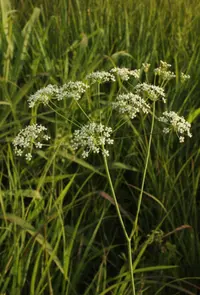
Eastern yampah (Perideridia americana) is a perennial herb in the carrot family, valued for its slender, feathery foliage and delicate white flower clusters. It forms upright stems from a thickened root and has a fine, airy texture in mixed plantings.

This species is native to central and eastern North America, where it grows in open woods, prairies, and moist meadows. It prefers sun to light shade, with reasonably moist, well-drained soils.

Gardeners who want to care for eastern yampah should know it behaves like a modest, adaptable wildflower rather than a showy ornamental. Once established, it is generally low-maintenance but does not tolerate very dry, compacted, or heavily shaded sites.

Main Plant Requirements

Care Difficulty

Moderate Care

Light Preference

Full Sun

Water Requirements

Moderate Water

Temperature Preference

Cold Hardy

Hardiness Zone

4–8

Soil Texture

Loamy, Silty, Organic-rich

Soil pH

Acidic (5.5–6.5), Slightly acidic (6.5–7.0)

Soil Drainage

Moist but well-drained

Fertilization

Minimal (feed rarely)

Get Personalized Care Plan

Scan your plant to receive care tips personalized for your specific plant

Available on iOS and Android

How to Care for the eastern yampah

This North American native prefers consistent light that mimics bright, open woodland edges.

  • Provide 4–6 hours of direct morning sun with light afternoon shade; full sun all day is suitable only where summers stay mild.
  • Allow dappled or high, filtered light under sparse trees; eastern yampah also tolerates bright partial shade, especially in hotter regions.
  • Watch foliage for stress: pale, floppy stems suggest too little light, while scorched, crispy leaf tips or rapid wilting in midday sun indicate excessive exposure.

This species prefers steady moisture but is sensitive to prolonged saturation.

  • Aim for evenly moist, not soggy, soil; allow the top 2–4 cm to dry slightly between natural rain events or supplemental watering.
  • Use deep, infrequent watering that soaks the root zone in well-drained, loamy soil to reduce root rot risk; avoid standing water around the crown.
  • In hot, dry periods, watch for drooping foliage and dry, crumbly surface soil as cues to water, and for yellowing, soft stems as signs of overwatering in Perideridia americana.

This temperate perennial handles a wide climate range but grows best in moderate conditions.

  • Active growth is strongest around 60–75°F (16–24°C), with cooler nights promoting sturdy stems and healthy root development.
  • Dormant roots typically survive winter down to about 0–5°F (-18 to -15°C) when planted in the ground with natural soil insulation and mulch.
  • The foliage tolerates brief heat up to about 90–95°F (32–35°C) if soil moisture is maintained, but extended extreme heat or hard frost can damage above-ground growth.

This species is adapted to average outdoor humidity and usually needs no special adjustment in typical US gardens.

This species prefers moist, loose soil that stays aerated yet never waterlogged.

  • Use a loamy mix with high organic matter, such as garden loam blended with compost and some coarse sand.
  • Aim for slightly acidic to neutral pH, roughly 6.0–7.0, to support nutrient availability and root health.
  • Ensure strong drainage by avoiding heavy, compacted clay and by loosening planting areas 20–30 cm deep before sowing or planting.
  • In heavier soils, increase aeration and drainage by working in coarse sand or fine gravel along with well-rotted compost.

This plant can be grown in containers, but long taproots make it more demanding than typical herbs.

  • Choose a deep pot at least 30–40 cm tall to give the taproot room to extend without bending or circling.
  • Use a tall, weighty container or add stones at the base to keep the pot stable as foliage elongates.
  • Select a breathable material such as unglazed clay to help excess moisture evaporate and reduce root rot risk when growing eastern yampah.

This North American native thrives in modest soils and usually needs only light feeding.

  • For eastern yampah in poor soil, apply a thin layer of compost in early spring to support steady growth.
  • Use a balanced NPK fertilizer at 1/4–1/2 strength once in mid to late spring if foliage looks weak or pale.
  • Avoid summer overfeeding; excess nutrients can reduce root quality and encourage soft, weak top growth.
  • Do not fertilize during fall and winter dormancy, as the plant naturally slows metabolic activity.

Perideridia americana needs minimal pruning, mainly to maintain plant health and safe seed production.

  • Prune in late fall or very early spring, once foliage has died back or before new growth emerges.
  • Remove dead, damaged, or diseased stems at the base using clean, sharp hand pruners.
  • Thin overly crowded flowering stems if seed spread is a concern, improving airflow and stand structure.
  • Avoid heavy cutting of green growth during the season, which can weaken roots and reduce future vigor.

This taprooted perennial is better transplanted young and is rarely kept long term in containers.

  • Transplant seedlings or young plants in early spring or early fall, when temperatures are mild and soil is moist.
  • Look for signs such as roots circling a pot or stalled top growth if grown temporarily in containers.
  • Move plants infrequently, ideally only once, to avoid taproot damage that can reduce survival.
  • Water thoroughly after transplanting, then keep soil evenly moist and shaded for 1–2 weeks to limit transplant stress.

Perideridia americana is most reliably propagated from seed under cool, natural conditions.

  • Collect ripe seeds in late summer to early fall and sow them outdoors in fall for natural cold stratification.
  • Use a free-draining, low-fertility seed mix and keep it evenly moist but not waterlogged.
  • Provide cool to cold winter exposure, then brighter light in spring as germination begins.
  • Division is rarely used because the taproot is sensitive; if attempted, handle roots gently and replant promptly.

This cold-hardy perennial tolerates typical winter conditions across much of its native range and needs little intervention.

  • After foliage dies back, allow stems to dry, then remove them if tidy appearance is desired.
  • Apply a light mulch layer (2–5 cm) in colder climates to buffer freeze–thaw cycles around the root zone.
  • Container-grown plants benefit from moving pots into an unheated garage or sheltered spot to prevent root freeze.

Care Tips

Root access mapping

In late fall, flag or lightly stake clumps before foliage dies back so you can accurately locate crowns for future harvest, division, or study when caring for eastern yampah.

Harvest rotation planning

Divide the planting into small sections and only harvest mature roots from one section per year, allowing 2–3 years of regrowth in the other sections to maintain a long-lived, self-renewing patch.

Selective seed collection

Leave at least 30–50% of the ripened seed heads on the plants when collecting seed for propagation to sustain natural reseeding and genetic diversity in your stand.

Weed shading strategy

Use a low, open mulch such as light straw between rows to suppress annual weeds while keeping soil surface visible so that emerging seedlings and young foliage are not smothered.

Patch edge monitoring

Inspect the margins of the planting each season and rogue out any look-alike umbellifers with unknown identity to reduce the risk of accidentally mixing toxic species into your stand.

Common Pests and Diseases

Carrot rust fly

This pest lays eggs in the soil and the larvae tunnel into the slender roots, causing brown, corky tunnels and distorted taproots. Symptoms include stunted growth and reduced vigor, especially in plants grown in heavier soils.

Solution

Use fine mesh or floating row covers from early spring to prevent adults from reaching the soil surface to lay eggs, and rotate plantings away from previous umbellifer beds for at least 2–3 years. Harvest promptly, remove and destroy infested roots, and avoid leaving thinning debris in the bed, which attracts egg‑laying adults.

Crown and root lesions

This disease complex is caused by soilborne fungi that create brown, sunken lesions on the crown and upper root, sometimes girdling the plant. Symptoms include yellowing foliage, reduced growth, and premature dieback in poorly drained or compacted soils.

Solution

Improve drainage with raised beds or well‑amended soil, and avoid overwatering or prolonged soil saturation. Remove and discard affected plants and avoid replanting umbellifers in the same spot for several years to reduce pathogen buildup, a key point in Perideridia americana care.

Leaf spot

This disease causes small, water‑soaked spots that expand into tan to brown lesions on leaves, sometimes with darker margins. Symptoms include premature leaf yellowing and reduced photosynthesis if many spots merge.

Solution

Remove and destroy affected leaves to reduce the source of fungal spores, and water at soil level instead of overhead to keep foliage dry. Increase spacing or thin crowded stands to improve airflow, and if needed, apply a labeled copper or sulfur fungicide in cool, damp periods according to product directions.

Aphids

These insects feed on sap from tender stems and leaves, leading to curling, yellowing, and sticky honeydew that can encourage sooty mold. This pest often concentrates on new growth and flowering stems.

Solution

Dislodge colonies with a strong stream of water, and encourage natural predators such as lady beetles by avoiding broad‑spectrum insecticides nearby. For persistent infestations, use insecticidal soap or a light horticultural oil, coating the undersides of leaves and repeating at 5–7 day intervals as needed.

Leaf miners

These insects create winding, pale tunnels within the leaf blades as larvae feed between the upper and lower leaf surfaces. Symptoms include serpentine trails and premature browning of heavily affected leaves.

Solution

Hand‑remove and discard mined leaves as soon as trails appear to interrupt the life cycle before larvae pupate in the soil. Use lightweight row covers to keep adults from laying eggs on foliage, and rotate umbellifer plantings each year to reduce local populations.

Interesting Facts

Edible taproot crop

Perideridia americana produces a slender, crisp taproot that was widely used as a traditional wild food by some Indigenous peoples in North America, eaten raw or cooked for its mild, carrot-like flavor.

Umbel flower specialist

This species bears its small white flowers in flat-topped compound umbels typical of the carrot family, which support a wide range of small pollinating insects such as native bees, flies, and wasps over an extended blooming period.

Prairie and savanna native

Perideridia americana is naturally found in open prairies, savannas, and light woodlands of central and eastern North America, where it grows in well-drained, often slightly calcareous soils and contributes to native grassland plant diversity.

Botan icon

Did you know?

Despite being in the same botanical family as several highly poisonous species like poison hemlock and water hemlock, Perideridia americana has a long documented history as a traditional food plant, which has made careful botanical identification an important topic in ethnobotanical studies.

FAQs about eastern yampah

All main parts of this species are edible and have a mild, carrot-like flavor. Correct identification is critical, since it resembles some poisonous umbel relatives. Harvest only from clean, unsprayed sites and avoid degraded roadsides.

Grow Healthy Plants with Botan Care

Keep your plants happy and healthy with plant identification, disease detection, and easy care guidance.


Botan plant care app — identify plants on mobile

Explore More Plants