Wind training
In the first 3–4 years, allow moderate, non-damaging wind exposure or gently flex young branches by hand once a week to promote stronger wood and better wind resistance.

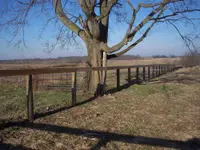
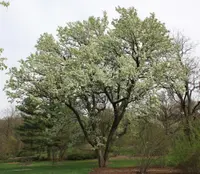
Hackberry, Celtis occidentalis, is a hardy deciduous tree commonly used in urban and rural landscapes. It is known for its rounded crown, rough warty bark, and small, berry-like fruits that attract birds.
This species naturally occurs across much of North America, often in floodplains, woodlands, and along roadsides. It tolerates pollution, wind, and a wide range of soils, which makes it relatively easy to establish.
Understanding how to care for hackberry is straightforward because it adapts well to different conditions. It generally prefers full sun, moderate moisture, and well-drained soil, but copes well with short dry periods once established.

Care Difficulty
Easy Care

Light Preference
Full Sun

Water Requirements
Low Water

Temperature Preference
Cold Hardy

Hardiness Zone
3–9

Soil Texture
Sandy, Loamy, Clay

Soil pH
Slightly acidic (6.5–7.0), Slightly alkaline (7.0–7.5)

Soil Drainage
Well-drained

Fertilization
Minimal (feed rarely)
Scan your plant to receive care tips personalized for your specific plant
Available on iOS and Android
Celtis occidentalis is a sun-loving deciduous tree that develops strongest growth and branching in open light conditions.
Celtis occidentalis is drought-tolerant once established but needs consistent moisture during its first few years.
This hardy North American tree tolerates a wide temperature range and is well suited to many outdoor climates.
Celtis occidentalis handles a wide humidity range and usually does not need special humidity management.
Celtis occidentalis adapts to many soils but grows best in deep, moderately moist, well‑drained ground.
This species can be grown in containers only for the short to medium term, as it eventually becomes too large.
Celtis occidentalis is a tough native tree that usually needs minimal fertilization in average garden soil.
Pruning Celtis occidentalis focuses on structure, safety, and clearance rather than frequent shaping.
This species is rarely kept long term in containers, so management focuses on timely outdoor transplanting rather than repeated repotting.
Celtis occidentalis is most often propagated from seed, which allows production of many young trees for restoration or landscape use.
This tree is fully cold hardy across most temperate regions and usually needs no special winter care once established.

Plant Health Check
Not sure what's wrong with your plant? Check your plant's health inside the app.
The rough, corky, wart-covered bark of hackberry provides shelter for many insects and spiders, which in turn attract insect-eating birds.
Common hackberry is a key larval host plant for several North American butterflies, including the hackberry emperor and tawny emperor, whose caterpillars feed almost exclusively on its leaves.
This species tolerates urban stress factors such as air pollution, soil compaction, road salt, and drought better than many native shade trees, which is why it is often used as a street and park tree.

Pale, nipple-like galls often seen on hackberry leaves are formed when tiny psyllid insects manipulate leaf tissue as they feed, creating protected microhabitats where their young can develop.
This species is generally medium-fast growing. Young trees often add 30–60 cm per year under good conditions, sometimes more. Growth slows as it matures, especially in poor soil, compacted sites, or dry, exposed locations.
Keep your plants happy and healthy with plant identification, disease detection, and easy care guidance.