Timed succession sowing
Sow small patches every 2–3 weeks in late spring and early summer so flowering and seed maturity are staggered, which reduces the risk of losing the entire crop to a single heatwave or storm event.

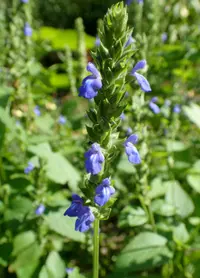
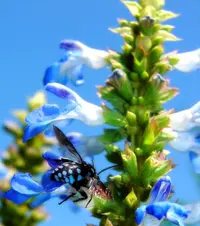
Chia, Salvia hispanica, is an annual herb in the mint family grown mainly for its small, nutrient-rich seeds. It forms upright, branching stems with soft green leaves and tall flower spikes with blue or whitish blooms. This species is native to central and southern Mexico and parts of Central America, where it grows in warm, seasonally dry habitats. It is generally easy to grow from seed and can adapt to containers, raised beds, and garden soil with good drainage. The plant prefers full sun, moderate moisture, and loose, well-drained soil. These traits make it a suitable option for beginners learning how to care for chia.

Care Difficulty
Easy Care

Light Preference
Full Sun

Water Requirements
Moderate Water

Temperature Preference
Tropical / Frost Sensitive

Hardiness Zone
9–11

Soil Texture
Sandy, Loamy, Organic-rich

Soil pH
Acidic (5.5–6.5), Slightly acidic (6.5–7.0)

Soil Drainage
Well-drained

Fertilization
Minimal (feed rarely)
Scan your plant to receive care tips personalized for your specific plant
Available on iOS and Android
Salvia hispanica needs strong light to produce dense foliage and abundant flowers.
Watering for Salvia hispanica focuses on moist but not saturated soil during active growth.
Stable warmth supports fast, healthy development throughout the growing season.
This species grows well in typical indoor humidity and only rarely shows humidity-related stress.
Salvia hispanica prefers loose, well-aerated mineral soil that drains quickly yet holds moderate moisture.
This species is suitable for container growing outdoors in sunny, well-ventilated positions.
Salvia hispanica is a light feeder that benefits from modest nutrition during active growth.
Salvia hispanica benefits from light, well-timed pruning to support sturdy stems and flowering.
This annual species is more often transplanted outdoors than repotted long term in containers.
Salvia hispanica is most commonly propagated from seed because plants are fast-growing annuals.
This warm-season annual does not tolerate frost and usually finishes its life cycle before winter.

Plant Health Check
Not sure what's wrong with your plant? Check your plant's health inside the app.
This species was a major food crop for Aztec and other Mesoamerican cultures, valued alongside maize and amaranth as a dense source of edible seeds.
Its tiny seeds are unusually high in alpha‑linolenic acid, a plant-based omega‑3 fatty acid, which makes them nutritionally distinct from many other grain and pseudo-grain crops.
The plant initiates flowering when nights become longer than a critical length, so it behaves as a short‑day species, which strongly influences where and when commercial growers can produce seed efficiently.

Modern domesticated chia likely descends from at least two geographically distinct wild populations in Mesoamerica, so current genetic studies treat it as a crop with multiple domestication centers rather than a single origin.
Yes. The seeds are the main edible part and are eaten raw, soaked, or ground in drinks, cereals, and baking. Young leaves can be used sparingly as a mild leafy herb in salads or teas.
Keep your plants happy and healthy with plant identification, disease detection, and easy care guidance.