Bank erosion control
On sloped sites, plant in staggered rows across the slope and lightly pin young branches to the soil with biodegradable stakes to speed mat formation and stabilize the bank.

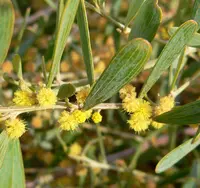
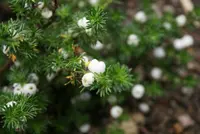
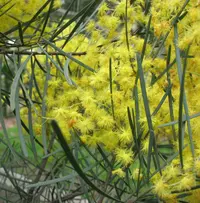
Bank catclaw (Acacia redolens) is a low, spreading shrub or groundcover from arid regions of Australia, often used on banks, roadsides, and dry slopes. It forms dense, trailing mats of fine foliage with small, rounded leaf-like phyllodes and soft yellow puffball flowers. This growth habit helps control erosion and suppress weeds, which makes it useful in low-maintenance landscapes. The plant is adapted to heat, dryness, and poor, well-drained soils, so it is generally easy to keep alive once established. Light to moderate water and full sun to light shade usually suit it well, which simplifies how to care for bank catclaw in many climates.

Care Difficulty
Easy Care

Light Preference
Full Sun

Water Requirements
Low Water

Temperature Preference
Warm Climate

Hardiness Zone
8–11

Soil Texture
Sandy, Loamy, Rocky

Soil pH
Slightly acidic (6.5–7.0), Slightly alkaline (7.0–7.5)

Soil Drainage
Well-drained

Fertilization
Minimal (feed rarely)
Scan your plant to receive care tips personalized for your specific plant
Available on iOS and Android
Acacia redolens thrives in bright, open sites with plenty of direct sun.
Acacia redolens prefers infrequent, deep watering once established.
This species is adapted to warm, dry climates with mild winters.
Acacia redolens tolerates a wide humidity range and usually does not need special humidity management indoors or outdoors.
Acacia redolens prefers lean, sharply drained soil that mimics arid, sandy habitats.
This species can be grown in containers when the pot and setup limit water retention and support its spreading habit.
Acacia redolens needs modest feeding, especially when young or container-grown.
Pruning Acacia redolens helps maintain a dense, tidy groundcover form and removes weak growth.
Bank catclaw is usually grown in the ground, so focus on careful transplanting rather than frequent repotting.
Acacia redolens is most often propagated from seed, with cuttings used less frequently.
Acacia redolens is relatively cold tolerant in mild climates but benefits from some winter attention in cooler areas.

Plant Health Check
Not sure what's wrong with your plant? Check your plant's health inside the app.
This low, spreading shrub is widely used on slopes in dry regions because its dense root system helps bind and stabilize loose or disturbed soils, especially along roadsides and embankments.
The foliage and young stems release a noticeable sweet, resinous fragrance, particularly in warm weather, which is one reason this species was selected as an ornamental groundcover.
Unlike many tree-form acacias, this species typically grows as a trailing or prostrate shrub, forming broad, low mats that can spread several meters wide while staying relatively low in height.

In parts of California and other Mediterranean-climate regions where it has been widely planted for erosion control, this species has naturalized and is considered environmentally invasive in some areas because it can outcompete local native groundcovers and shrubs.
This species spreads laterally through low, arching stems and can cover large areas over time. In mild climates it may behave aggressively, so use edging, regular pruning, and spacing controls where naturalization is not desired.
Keep your plants happy and healthy with plant identification, disease detection, and easy care guidance.