Use sturdy supports
Install a rigid trellis, wire panel, or taut fencing at planting time and tie new vines with soft ties every 15–20 cm to prevent wind damage and stem breakage as the plant rapidly climbs.

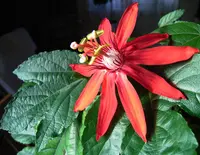
Perfumed passionflower, Passiflora vitifolia, is a fast-growing tropical vine known for its striking red flowers and rich fragrance. It climbs by tendrils and can quickly cover supports, fences, or trellises in warm climates.
In nature, it occurs in Central and South America, where it grows in humid, frost-free areas. The leaves are shaped somewhat like grape leaves, giving the plant a dense, lush look.
This species is moderately easy to grow if given warmth, bright light, and evenly moist, well-drained soil. Gardeners who learn how to care for perfumed passionflower find it rewarding due to its showy blooms and scented flowers.

Care Difficulty
Moderate Care

Light Preference
Full Sun

Water Requirements
Regular Water

Temperature Preference
Tropical / Frost Sensitive

Hardiness Zone
10–11

Soil Texture
Loamy, Sandy, Organic-rich

Soil pH
Acidic (5.5–6.5), Slightly acidic (6.5–7.0)

Soil Drainage
Moist but well-drained

Fertilization
Moderate (every 2–4 weeks)
Scan your plant to receive care tips personalized for your specific plant
Available on iOS and Android
This tropical vine needs strong light to flower well but benefits from some protection from harsh sun.
This species prefers consistently moist but not waterlogged soil, especially during active growth.
This tropical passionflower favors warm, stable temperatures and is sensitive to cold and frost.
This species prefers consistently moist, moderately humid air to support vigorous growth and flowering.
This fast-growing vine needs airy, sharply draining soil that stays evenly moist but never waterlogged.
This species adapts well to container growing when given adequate support and root space.
This tropical vine responds well to moderate, balanced feeding during active growth.
Thoughtful pruning helps Passiflora vitifolia stay manageable and flower well.
Container-grown plants and young vines benefit from timely repotting or transplanting.
This species is commonly propagated from both cuttings and seeds.
This tropical vine is frost-tender and needs protection in regions with cold winters.

Plant Health Check
Not sure what's wrong with your plant? Check your plant's health inside the app.
This species has long, tubular, bright red flowers specifically shaped for hummingbird pollination, unlike the purple or white flowers of many other passionflowers that are aimed at bee pollinators.
Its deeply lobed leaves resemble those of grapevines, which is reflected in the species name vitifolia, meaning grape‑leaved.
The plant produces elongated orange to yellow fruits that contain aromatic pulp used locally for drinks and flavoring, although the fruits are more seedy and less commercially important than those of the cultivated passion fruit species.

In parts of its native Central and South American range, this vine often grows in disturbed edges of tropical forests and along fences, where its showy red flowers can form dense displays that serve as important nectar corridors for migrating and resident hummingbirds.
Poor flowering usually comes from insufficient maturity, stress after repotting, or nutrient imbalance, especially excess nitrogen. Ensure the plant is well-established, avoid frequent root disturbance, and use a balanced, low-nitrogen fertilizer during the active growing season.
Keep your plants happy and healthy with plant identification, disease detection, and easy care guidance.