Mulch the crown
Apply a thin, airy mulch layer around but not over the crown to keep roots cool, reduce heaving in freeze–thaw cycles, and limit weed competition without risking crown rot.

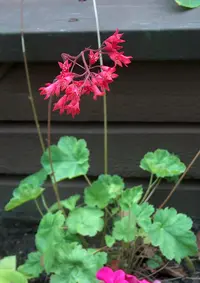
Coralbells, Heuchera sanguinea, is a compact, clump-forming perennial grown mainly for its delicate bell-shaped flowers and neat mound of foliage. It is often used as an edging plant, in mixed borders, or in containers for soft color accents.
In the wild, it occurs on rocky slopes and open woodlands in parts of North America, which explains its tolerance for lean, well-drained soils. Its fibrous roots and hardy nature make it relatively straightforward to grow, especially in temperate climates.
Light shade, consistent but not excessive moisture, and well-drained soil usually support healthy growth, making it easier to learn how to care for coralbells without much difficulty.

Care Difficulty
Moderate Care

Light Preference
Partial Shade

Water Requirements
Moderate Water

Temperature Preference
Cold Hardy

Hardiness Zone
4–9

Soil Texture
Loamy, Sandy, Organic-rich

Soil pH
Acidic (5.5–6.5), Slightly acidic (6.5–7.0)

Soil Drainage
Moist but well-drained

Fertilization
Light (every 4–6 weeks)
Scan your plant to receive care tips personalized for your specific plant
Available on iOS and Android
Heuchera sanguinea prefers bright, gentle light that avoids harsh midday sun.
This species prefers evenly moist, well-draining soil rather than extremes of wet or dry.
This hardy perennial tolerates a wide temperature range but performs best in moderate conditions.
Heuchera sanguinea handles a wide humidity range and usually does not need special humidity management outdoors.
Heuchera sanguinea prefers loose, moist, well‑drained soil that does not stay waterlogged.
Heuchera sanguinea grows well in containers when moisture and root space are managed carefully.
Heuchera sanguinea benefits from modest, measured feeding rather than heavy fertilization.
Heuchera sanguinea benefits from light, targeted pruning to keep clumps dense and flowering well.
Transplanting and occasional lifting help maintain vigorous Heuchera sanguinea clumps in beds or containers.
Heuchera sanguinea is commonly propagated by division, with seeds and basal cuttings as secondary options.
Heuchera sanguinea is generally cold hardy but benefits from simple winter protection, especially in colder regions.

Plant Health Check
Not sure what's wrong with your plant? Check your plant's health inside the app.
This species produces tall, airy stems with many tubular red flowers that are specifically shaped for hummingbird pollination, which is why it is much more attractive to hummingbirds than many other Heuchera species with less vivid blooms.
In the wild, it is native to rocky slopes and open woodlands of the southwestern United States and northern Mexico, which explains its tolerance for well-drained, slightly dry soils compared with some other shade perennials.
Unlike many woodland perennials that flower briefly, this species can bloom from late spring into midsummer under suitable conditions, providing an extended nectar source for pollinators and long-lasting ornamental color.

Heuchera sanguinea was one of the first Heuchera species widely used in 19th- and early 20th-century European hybridization programs, and many modern coralbell cultivars still trace part of their parentage back to this species, which strongly influenced the red flower color prized in ornamental breeding.
Brown, crispy leaf edges usually come from drought stress, excess sun exposure, or high fertilizer salts. Check soil moisture, move to gentler light if needed, and flush the soil with water to remove built‑up fertilizer.
Keep your plants happy and healthy with plant identification, disease detection, and easy care guidance.