Protect root zone
Lay a 3–5 cm layer of fine bark mulch around the base, keeping it a few cm away from the stems, to keep roots cool and moist while still allowing good air flow.

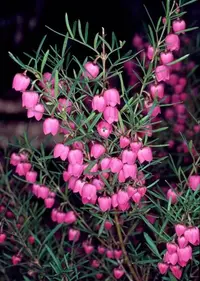
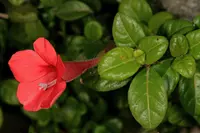
Red boronia (Boronia heterophylla) is a small evergreen shrub valued for its bright, bell-shaped pink to deep rose flowers and fine, aromatic foliage. It typically forms a compact, upright bush, making it suitable for mixed borders and container growing in mild climates.
This species is native to southwestern Western Australia, where it grows in cool, moist, well-drained soils. It is considered somewhat challenging because it dislikes root disturbance, poor drainage, and prolonged heat or dryness.
Gardeners who care for red boronia usually provide cool conditions, bright filtered light, and consistently moist but not waterlogged soil to keep it healthy and flowering well.

Care Difficulty
Hard Care

Light Preference
Partial Shade

Water Requirements
Keep Soil Moist

Temperature Preference
Cool Climate

Hardiness Zone
9–10

Soil Texture
Sandy, Loamy, Organic-rich

Soil pH
Strongly acidic (4.5–5.5), Acidic (5.5–6.5)

Soil Drainage
Moist but well-drained

Fertilization
Minimal (feed rarely)
Scan your plant to receive care tips personalized for your specific plant
Available on iOS and Android
Boronia heterophylla needs bright light but is sensitive to harsh sun exposure.
Boronia heterophylla prefers consistently moist but never saturated soil.
This species prefers mild conditions with protection from temperature extremes.
This shrub prefers moderate, slightly moist air and reacts poorly to very dry conditions.
Boronia heterophylla needs sharply drained, airy soil that stays lightly moist but never waterlogged.
This species can be grown in containers but needs careful moisture control and root space.
Boronia heterophylla prefers light feeding and is sensitive to excess nutrients.
Pruning helps maintain Boronia heterophylla as a compact, floriferous shrub.
Boronia heterophylla dislikes root disturbance, so repotting or transplanting must be done carefully and infrequently.
Propagation of Boronia heterophylla is possible but moderately challenging for home growers.
Boronia heterophylla is only moderately frost tolerant and needs some winter protection in colder climates.

Plant Health Check
Not sure what's wrong with your plant? Check your plant's health inside the app.
This species is naturally restricted to moist, sandy or peaty soils along streams and seasonally wet flats in southwestern Western Australia, where it often grows under taller shrubs and low trees.
The foliage and flowers contain numerous tiny oil glands that release a strong, sweet, citrus-like fragrance when touched or warmed, a common trait in the Rutaceae family expressed particularly intensely in this species.
It produces masses of deep pink to rose tubular flowers along slender stems mainly in late winter to spring, creating high floral density that makes cultivated plants appear almost entirely covered in color at peak bloom.

Boronia heterophylla has a relatively restricted wild distribution in southwestern Western Australia and is considered vulnerable to habitat loss and hydrological changes, so some conservation and cultivation programs view growing red boronia as a way to help reduce collection pressure on wild populations.
Lack of flowers often comes from stress: root disturbance, pruning at the wrong time, or high heat and low humidity. Avoid heavy pruning after flowering, keep roots cool, and protect from hot, drying winds.
Keep your plants happy and healthy with plant identification, disease detection, and easy care guidance.