American Wisteria Care (Wisteria frutescens 'Amethyst Falls')

Also known as: Wisteria
American Wisteria

About American Wisteria

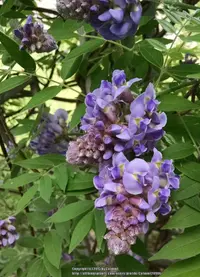
American wisteria (Wisteria frutescens 'Amethyst Falls') is a deciduous woody vine valued for its compact growth and repeat flowering. It produces cascading clusters of soft purple, lightly scented blooms above fresh green foliage. Native to the southeastern United States, this species is generally less aggressive than Asian wisterias and is easier to manage on small trellises, pergolas, or fences. Gardeners who want to know how to care for American Wisteria benefit from its relatively restrained growth and good adaptability. It prefers sun to light shade, evenly moist but well-drained soil, and consistent structural support as it matures.

Main Plant Requirements

Care Difficulty

Moderate Care

Light Preference

Full Sun

Water Requirements

Moderate Water

Temperature Preference

Cold Hardy

Hardiness Zone

5–9

Soil Texture

Sandy, Loamy, Clay

Soil pH

Acidic (5.5–6.5), Slightly acidic (6.5–7.0)

Soil Drainage

Moist but well-drained

Fertilization

Minimal (feed rarely)

Get Personalized Care Plan

Scan your plant to receive care tips personalized for your specific plant

Available on iOS and Android

How to Care for the American Wisteria

This compact vine flowers best with strong outdoor light exposure across the growing season.

  • Provide 6–8 hours of direct sun daily; morning sun with some light afternoon shade helps prevent leaf scorch in hot climates.
  • Tolerates light partial shade (about 3–4 hours sun), but flowering will be reduced, especially on north or heavily shaded east exposures.
  • In summer, watch for leaf curl, crispy edges, or washed-out color as signs of excessive sun, and for long, weak shoots as signs of insufficient light when caring for American Wisteria.

This vine prefers steadily moist but not waterlogged soil, especially while establishing.

  • Water when the top 3–5 cm of soil feels dry, applying a deep soak at the root zone rather than frequent light sprinkling.
  • Ensure soil drains freely; standing water for more than a few hours, yellowing leaves, or soft stems suggest overwatering or poor drainage.
  • In spring and summer, expect to water more during hot, dry spells; in fall and winter, reduce frequency but do not allow prolonged drought, especially in the first 1–2 years.

This hardy vine tolerates a wide temperature range once established in the landscape.

  • Active growth and flowering occur best around 65–85°F (18–29°C), with good performance in typical spring and summer conditions.
  • Mature plants withstand winter lows near 0°F (−18°C) when properly sited, going fully dormant and leafless during the cold season.
  • In periods above 90°F (32°C), expect some stress; provide mulch to cool the root zone and extra water during heat waves, especially for young plants.

This vine handles typical outdoor humidity well and rarely needs special humidity management.

This vine prefers deep, well-drained, moderately fertile loamy soil that stays evenly moist but not saturated.

  • Aim for a loam or sandy loam with 20–30% organic matter such as compost to support strong root growth.
  • Provide sharp drainage using coarse sand or fine gravel in the lower mix layer to prevent waterlogging and root rot.
  • Keep soil pH slightly acidic to neutral, around 6.0–7.0, avoiding highly alkaline conditions that reduce nutrient availability.
  • In heavy clay, improve aeration by working in coarse compost and pine bark fines before planting Wisteria frutescens 'Amethyst Falls'.

This species is suitable for container growing when the pot and support structure are chosen carefully.

  • Use a tall, heavy container to counterbalance vigorous top growth and reduce the risk of tipping in wind.
  • Select a potting mix formulated for trees or shrubs so the large root system receives both moisture retention and air spaces.
  • Position the container where the vine can climb a fixed trellis or railing that is anchored independently of the pot for stability.

This native vine usually needs modest feeding, as excessive nutrients can reduce flowering.

  • Apply a balanced slow-release fertilizer (around 10-10-10) at half strength once in early spring as growth starts.
  • On average to poor soils, top-dress with a thin layer of compost in spring instead of high-nitrogen products.
  • During summer, skip further feeding unless growth is very weak; then use a dilute balanced liquid at 1/2–1/4 strength monthly.
  • Stop fertilizing American Wisteria in late summer and avoid any feeding during dormancy in fall and winter.

Thoughtful pruning keeps Wisteria frutescens 'Amethyst Falls' flowering well and under control.

  • Carry out main pruning in late winter while the plant is leafless, using sharp bypass pruners or loppers.
  • Remove dead, damaged, or crossing stems first to reduce disease risk and improve air flow.
  • Shorten long whips produced in summer to 2–4 buds to encourage more flowering spurs and compact growth.
  • In summer, lightly thin congested areas on supports, guiding remaining shoots to maintain the desired framework.

This wisteria is usually grown in the ground, with transplanting focused on young plants before they become too woody.

  • Look for roots circling the container, poor drainage, or stalled growth as signals a young plant needs more space.
  • Plan transplanting or potting-on for early spring or early fall when weather is cool and soil moisture is stable.
  • Move up only 1–2 pot sizes or into a well-prepared ground site with loose, well-drained soil and sturdy support.
  • Handle the root ball gently, keep roots shaded and moist, then water deeply and mulch lightly to reduce transplant stress.

New plants of Wisteria frutescens 'Amethyst Falls' are most reliable from cuttings and layering rather than seed.

  • Take semi-ripe stem cuttings in late spring to midsummer, using 8–10 cm pieces with at least 2 nodes.
  • Insert cuttings in a moist, free-draining mix, keep humidity high, and maintain warmth around 70–75°F for rooting.
  • For simple layering, bend a flexible stem to the soil in spring, wound slightly, pin down, and cover with soil.
  • Allow layered sections to root for several months, then sever from the parent and transplant carefully during cool weather.

This vine is generally cold hardy in much of the US and needs only modest winter attention once established.

  • Tolerates typical winters in USDA zones 5–9, with woody stems surviving normal frost once well rooted.
  • In late fall, add a 5–8 cm layer of mulch around the root zone, keeping it slightly away from the main stem.
  • Container plants are more vulnerable; place pots against a sheltered wall or move to an unheated garage or cold frame.
  • Avoid winter pruning beyond removing clearly dead wood so buds for spring flowering remain intact.

Care Tips

Early framework training

In the first 2–3 years, select 1–3 strong main stems and tie them loosely and vertically to a sturdy support to create a permanent framework that will carry the vine’s weight long term.

Support strength check

Before the plant reaches full size, reinforce pergolas, arbors, or railings with weatherproof screws and cross-bracing, as mature vines become woody and heavy enough to deform weak structures.

Root zone protection

Keep a 30–45 cm grass-free, lightly mulched ring around the base to reduce competition for moisture and nutrients and to protect shallow feeder roots from mower and string trimmer damage.

Flower bud preservation

In late winter, avoid cutting back the short spur-like side shoots with fat buds along older wood, since these are the structures that will carry most of the current season’s flowers.

Targeted pest scouting

From late spring through summer, inspect young shoots and flower clusters weekly for aphids, scale, and caterpillars, and treat early with a strong water spray or labeled insecticidal soap as part of caring for American Wisteria.

Common Pests and Diseases

Wisteria borer

This pest is a clearwing moth larva that tunnels inside stems, causing wilting, dieback, and weak, hollow canes. Symptoms include frass (sawdust-like material) near entry holes and sudden collapse of affected shoots.

Solution

Prune out and destroy infested stems below visible entry holes, then dispose of them away from the plant. Keep the vine vigorous with proper watering and fertilizing, and consider using trunk wraps or timing a labeled systemic insecticide during adult moth flight if borer pressure is high in the area.

Japanese beetle

These insects feed heavily on foliage and flower clusters, often skeletonizing leaves and reducing flowering. Damage is most noticeable in mid-summer when large groups gather on the vine.

Solution

Hand-pick beetles in the early morning into a container of soapy water and remove heavily infested flower clusters if needed. Avoid placing beetle traps near the plant, and consider using row covers on young plants or applying a targeted contact insecticide in the evening if defoliation becomes severe.

Aphids

These insects cluster on new growth, soft stems, and undersides of leaves, sucking sap and causing curling or distortion. This pest also excretes sticky honeydew, which can lead to sooty mold on leaves and surrounding surfaces.

Solution

Dislodge colonies with a strong stream of water, repeating every few days, and prune out badly infested shoot tips. If populations remain high, apply insecticidal soap or neem oil thoroughly to new growth, making sure to treat the undersides of leaves.

Leaf spot

This disease causes small to medium brown or tan spots on leaves, sometimes with darker margins and yellowing around the lesions. Symptoms include premature leaf drop in wet, humid conditions, especially when foliage stays damp for long periods.

Solution

Remove and discard affected leaves from the plant and ground to reduce fungal spores, and water at the base to keep foliage dry. Improve airflow by thinning crowded stems and, if needed, apply a labeled ornamental fungicide early in the season during prolonged wet weather as part of broader American Wisteria care instructions.

Crown gall

This disease produces rough, woody galls or swellings at the base of stems or on roots, which can interfere with water and nutrient flow and lead to gradual decline. Symptoms include stunted growth, reduced flowering, and poor vigor over time.

Solution

Carefully dig out and destroy severely affected plants, including as much of the root system as possible, and avoid replanting wisteria or other highly susceptible species in the same spot for several years. Sanitize pruning tools with a disinfectant between cuts and purchase nursery stock from reputable suppliers that monitor for crown gall.

Interesting Facts

Compact native climber

This cultivar is a selection of the North American species Wisteria frutescens and stays significantly more compact than Asian wisterias, typically flowering well on shorter vines, which makes it more suitable for smaller gardens and structures.

Blooms at young age

Compared with many wisterias that may take many years to flower, this plant is known to begin blooming at a relatively young age from nursery size, so gardeners see its pendant lilac flower clusters much sooner than with traditional wisteria vines.

Less aggressive growth

Unlike Chinese and Japanese wisterias, this selection has a less vigorous and less invasive growth habit, reflecting its origin from a native species that coevolved with North American ecosystems and tends to be easier to manage on arbors and pergolas.

Botan icon

Did you know?

The flower clusters of this cultivar often appear in multiple flushes from late spring into summer, rather than in a single short spring display, so it can provide intermittent color over a longer season than many traditional wisteria forms.

FAQs about American Wisteria

Lack of flowers usually comes from too little light, excessive nitrogen fertilizer, or pruning at the wrong time, which removes flower buds. Young vines may also need several years to reach flowering maturity, even in good conditions.

Grow Healthy Plants with Botan Care

Keep your plants happy and healthy with plant identification, disease detection, and easy care guidance.

Botan plant care app — identify plants on mobile

Explore More Plants