Early trellis training
Install a sturdy trellis, fence, or wire panel before the vine starts vigorous growth, then loosely tie young shoots with soft ties so the plant climbs where you want it and does not tangle into nearby shrubs or structures.

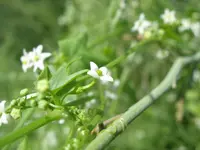
Desert starvine (Brandegea bigelovii) is a delicate, twining vine native to arid regions of the southwestern United States and northern Mexico. It typically scrambles over shrubs or fences, using tendrils to climb.
The plant has deeply lobed, light green leaves and small white star-shaped flowers, followed by decorative, spiny seed capsules. Its fine texture and airy growth give it a light, open look rather than dense cover.
This species is adapted to dry, rocky habitats and prefers well-drained soil, full sun, and low to moderate moisture. These desert origins make it drought-tolerant but sensitive to overwatering, which shapes how to care for desert starvine in cultivation.

Care Difficulty
Moderate Care

Light Preference
Full Sun

Water Requirements
Low Water

Temperature Preference
Warm Climate

Hardiness Zone
8–11

Soil Texture
Sandy, Loamy, Rocky

Soil pH
Slightly acidic (6.5–7.0), Slightly alkaline (7.0–7.5)

Soil Drainage
Well-drained

Fertilization
Minimal (feed rarely)
Scan your plant to receive care tips personalized for your specific plant
Available on iOS and Android
This desert vine thrives in strong light typical of arid habitats but still benefits from some protection from intense afternoon sun.
This drought-adapted climber prefers deep, infrequent watering and fast-draining soil.
This species is adapted to warm desert conditions and dislikes prolonged cold or frost.
This arid-climate vine handles low humidity well and rarely needs special humidity management indoors.
This species prefers very fast-draining, sandy soil that mimics its native desert washes.
This vine is suitable for container growing when its trailing and climbing habit is supported.
This desert native vine needs minimal feeding, and overfertilizing can cause weak, lush growth in Brandegea bigelovii.
Pruning helps manage the vigorous, twining habit of Brandegea bigelovii and keeps it within its support structure.
Desert starvine is more often transplanted outdoors than kept long term in containers, but young plants may need occasional repotting.
Brandegea bigelovii is most often propagated from seed, which allows many new plants from a single vine.
This desert vine is frost sensitive and benefits from simple winter protection in cooler climates.

Plant Health Check
Not sure what's wrong with your plant? Check your plant's health inside the app.
This vine is native to arroyos and desert washes of the Sonoran and Mojave regions, where it exploits brief pulses of moisture after seasonal rains to complete much of its growth and flowering.
The small white flowers have 5 lobes and a distinct star-like outline created by fringed petal margins, which is the origin of the common name desert starvine.
Although it looks delicate, this species is a member of the Cucurbitaceae (cucumber and gourd family) and climbs by wiry tendrils that anchor it onto shrubs and fences for support.

Brandegea bigelovii often uses desert shrubs as living trellises, weaving through their branches to lift its foliage and flowers above the hot ground surface, which likely reduces heat stress and improves access to pollinators in its arid habitat.
This vine can spread quickly by scrambling and twining, especially in warm, dry climates with poor, open soils. In gardens it is not usually invasive but may need periodic pruning and monitoring to prevent unwanted spread.
Keep your plants happy and healthy with plant identification, disease detection, and easy care guidance.